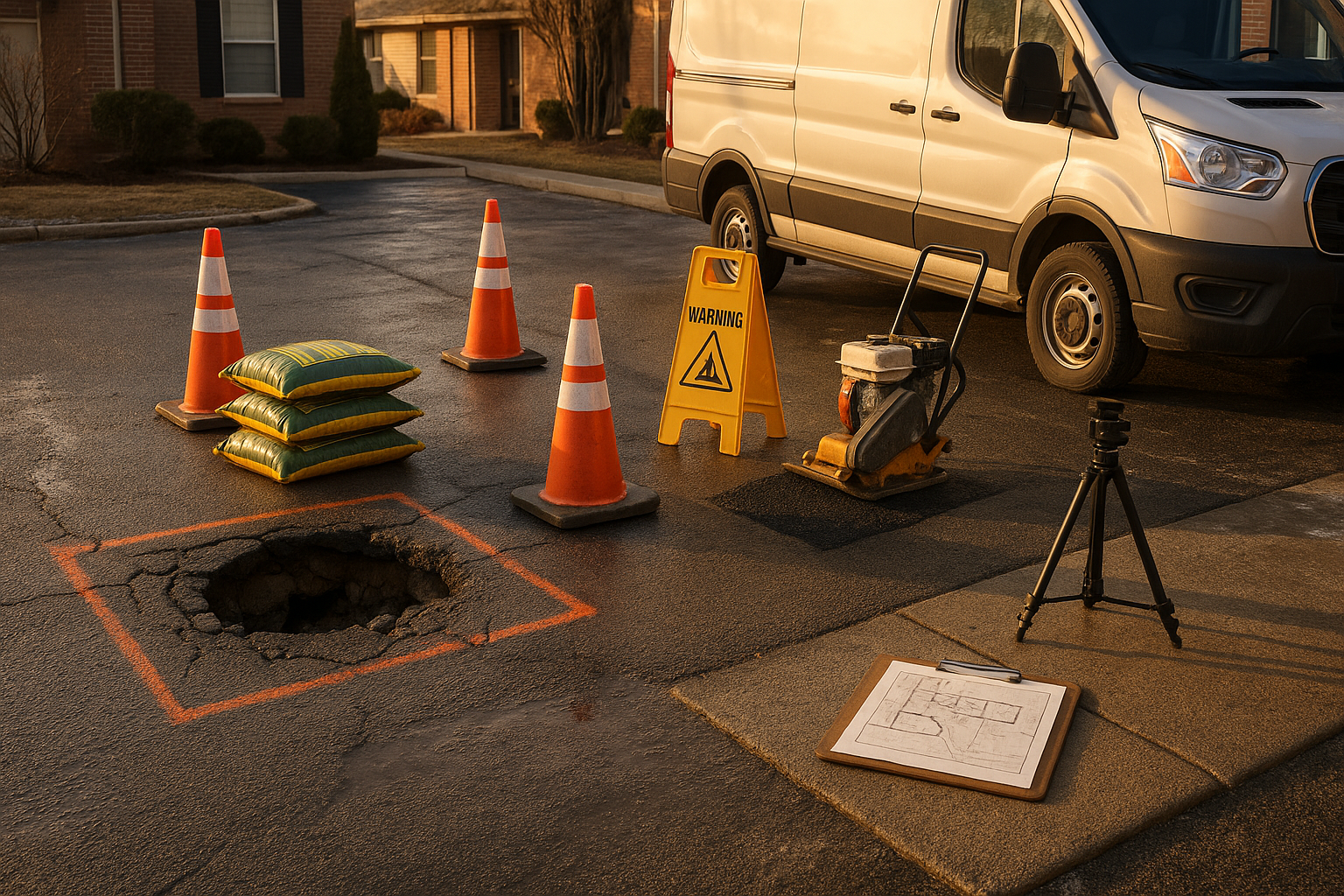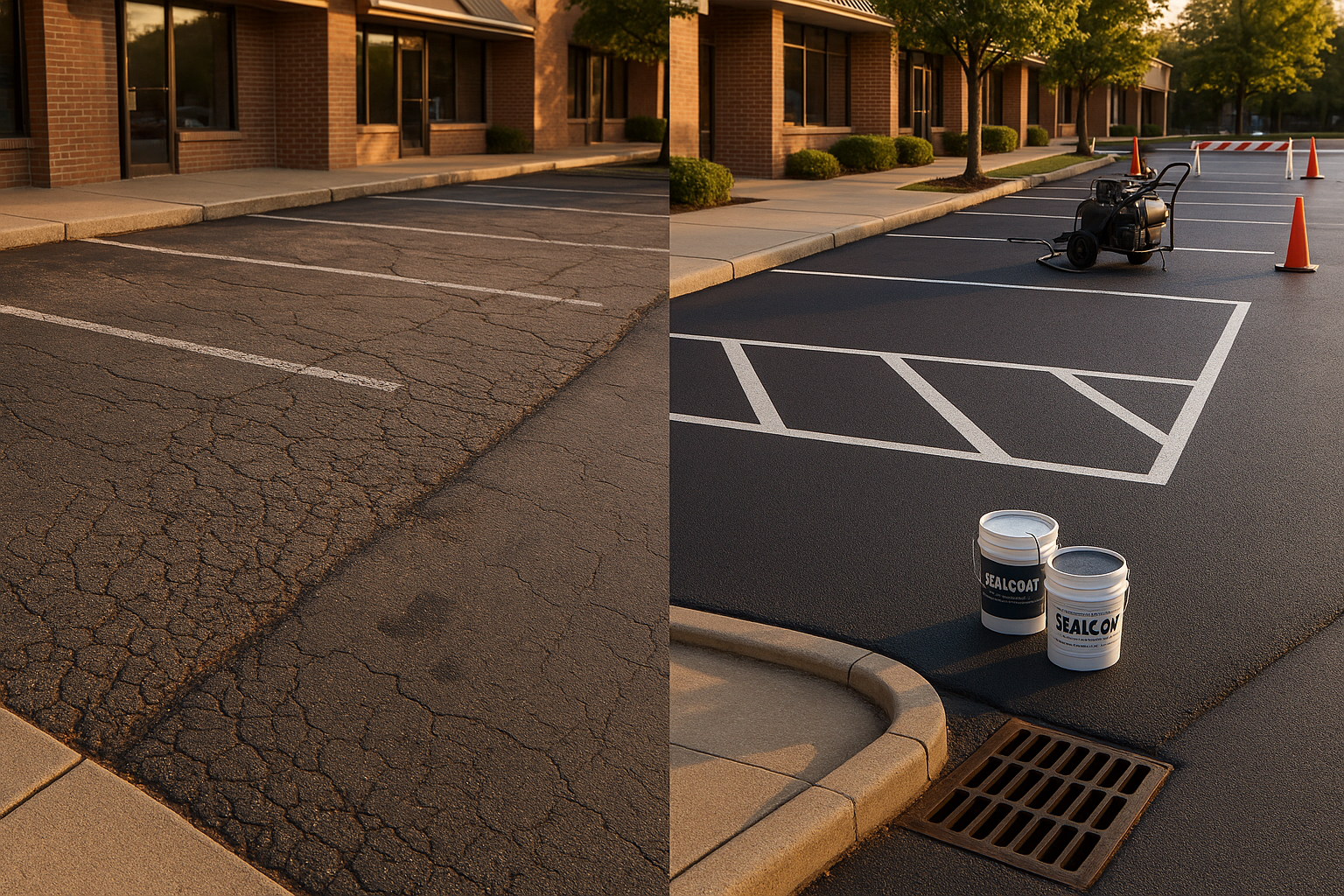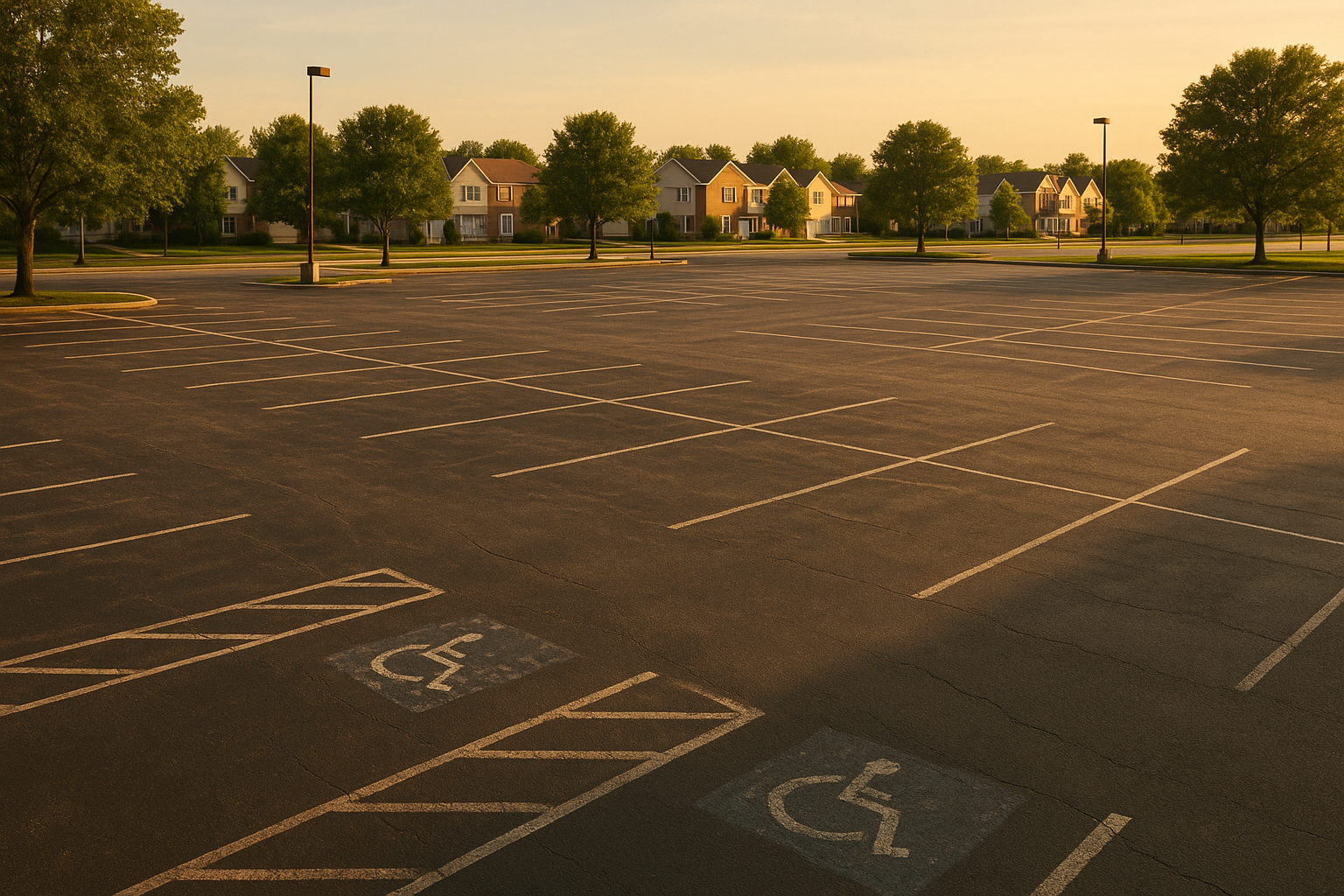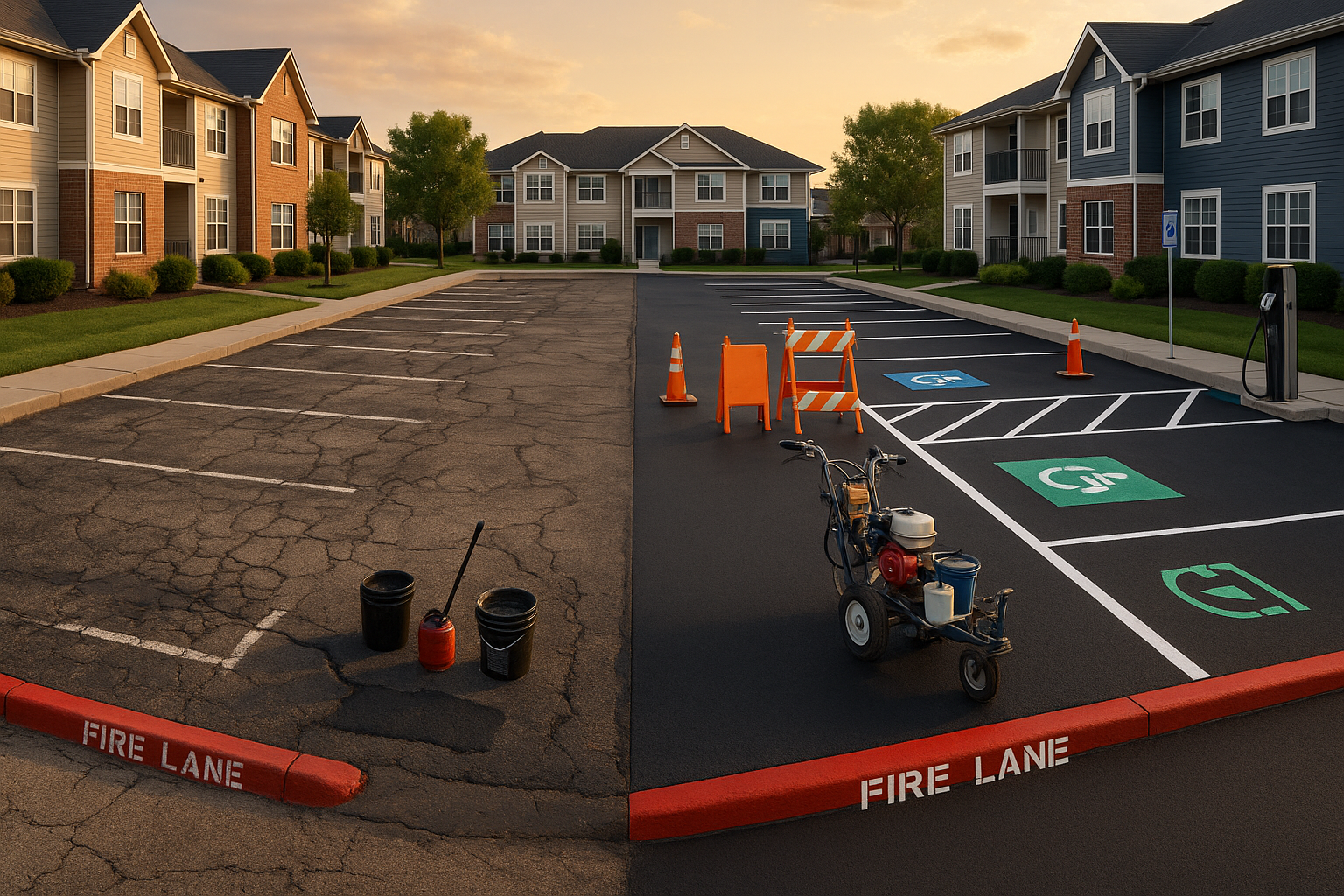
Last March, I got a call from a stressed-out property manager in Fishers. Her residents were furious—faded parking lines, potholes swallowing tires, and a fire lane that looked like a guessing game. She’d put off maintenance because she didn’t know where to start. Sound familiar? Apartment parking lot maintenance isn’t just about looks; it’s about keeping people safe, avoiding fines, and making sure residents don’t start a petition. Here’s a playbook to handle it like a pro, tailored for Indianapolis-area complexes from Carmel to Greenwood.
Why Bother with a Parking Lot Overhaul?
Think about it—your parking lot is the first thing residents and visitors see. Cracked asphalt, ghosted lines, and potholes the size of a pizza box don’t exactly scream “well-managed property.” But beyond curb appeal, there’s real risk. In Indianapolis, freeze-thaw cycles chew up asphalt fast. Snow plows scrape off paint like a spatula on frosting. And if your fire lanes and ADA spots aren’t up to code? That’s a fine waiting to happen. (And an angry letter from the fire marshal isn’t fun.)
Good apartment parking lot maintenance cuts resident complaints, lowers liability, and actually saves money long-term. When you’ve got a clear plan, you’re not scrambling every spring to patch things up.
Start with a Smart Plan
Before any paint hits the pavement, grab a coffee and walk the lot with a clipboard. You’re looking for traffic patterns—where people actually park, and where they ignore lines. (That corner stall nobody uses? Maybe it’s too tight.) Count cars at different times; notice if visitors hog resident spots. This is especially true in complexes near busy corridors like those in Broad Ripple or downtown Indy.
Map out a phasing plan. You can’t shut down the whole lot on a Tuesday—residents need their spaces. That’s where overnight striping comes in. We’ve done it in places like Westfield and Noblesville, working 10 p.m. to 5 a.m. so nobody loses a spot during the day. Communication is half the battle: give residents 48–72 hours’ notice with a simple map showing what’s happening and when. Trust me, a little heads-up prevents a lot of angry voicemails.
Pick the Right Stuff for Indiana Weather
Paint choice matters. Most apartment lots in Indy do fine with waterborne traffic paint, the same type used on roads. It’s affordable and dries quick. But high-traffic areas—like entry drives or dumpster corrals—might benefit from MMA (methyl methacrylate), which is tougher and lasts longer. Ask for reflective glass beads sprinkled on top; they make lines pop at night, which is a lifesaver for residents coming home late. (Nobody wants to accidentally park in their neighbor’s spot in the dark.)
And here’s a thing: don’t stripe over cracks. You’ll just be doing it again next year. Fill those gaps first—check out our guide on crack filling vs. patching vs. repaving. And if your lot’s sealcoated (which it should be every couple of years in this climate), make sure the surface is fully cured before laying down fresh lines.
Layout Tricks That Actually Work
A good layout isn’t just about fitting more cars—it’s about flow. Indiana law has specific rules for ADA parking, and most multifamily properties need at least one van-accessible space near the accessible entrance. (Read the full rundown here.) Don’t forget visitor stalls: mark them clearly with stencils so residents don’t get territorial. If you’ve got EV chargers—and more complexes in Zionsville and Fishers are adding them—stripe those stalls with green icons so they don’t get ICE’d.
Fire lanes are another biggie. That red curb paint isn’t just decorative; it tells the fire department where they can set up in an emergency. We’ll often combine curb painting with fresh fire lane stencils and signage so there’s no confusion. (And nobody gets towed, because that’s a whole drama.) Speaking of signs, if your posts are tilted or rusted, swap them out during the same visit—it’s efficient.
Don't Let Indiana Seasons Ruin Your Lines
Timing is everything in central Indiana. The best windows are late spring (April–May) and early fall (September–October). You want pavement temperatures between 45° and 90°F, and no rain for at least 24 hours. I’ve seen crews rush a job in March during a warm snap, only to have a late freeze peel the paint off like a sunburn. Hate that.
Plan to restripe right after sealcoating, which ideally happens every 2–3 years. (We break down the schedule here.) Late winter is for assessing damage: potholes and cracks. Summer is for fixing that damage, then fall is for fresh paint. It’s a rhythm that works.
Keeping Residents Happy During the Work
No matter how careful you are, somebody will move a cone and park where they shouldn’t. It’s like a law of nature. But you can minimize drama. Phase the project building-by-building: finish one section before moving to the next. Use bright barricades and clear signage. If you’re working overnight, noise is usually minimal—just the low hum of a striping machine. Still, notify residents a few days in advance with a note on their door or an email blast. Tell them exactly which stalls will be closed and when. And give a firm tow-away warning for non-compliance. (It sounds harsh, but if a car is parked on wet paint, that’s a re-do you don’t want to pay for.)
We once did a lot in Brownsburg where the manager handed out flyers with a QR code to a live map showing progress. People loved it—they felt in the loop.
A Maintenance Schedule You Can Stick To
Apartment parking lot maintenance isn’t a once-a-decade thing. Do a quick walk-through quarterly: look for fresh cracks, faded lines, and standing water. (Puddles near drains mean sloped markings might need checking.) Restripe every 12–24 months, depending on how brutal the winter was. If you notice your lines looking thin after one plow season, consider a more durable paint type next time.
Bundling services saves money. Many properties we work with—in Carmel and Avon alike—combine sealcoating, crack filling, and restriping into one contract. That way you’re not paying for multiple mobilizations. Check out our parking lot refresh guide for a full walkthrough.
What Does This Cost, Really?
I get it—budgeting for maintenance feels like a guessing game. But it doesn’t have to be. A clear quote should break down prices by the lineal foot for lines, per stall for stencils, per curb foot for fire lane painting, and per sign for installation. Ask for add-ons itemized separately: glass beads, EV icons, extra numbering. That way you see exactly what you’re paying for, and you can decide what fits your budget now versus later.
Stop Guessing and Get a Plan
That Fishers manager I mentioned earlier? She eventually did a site walk with us. We mapped out a phased plan, fixed the potholes first, then came back in September for a full restripe with fresh ADA markings and fire lane curbs. Her residents actually sent thank-you notes. (Well, one did. But still.)
If your lot is starting to look a little neglected, don’t wait until you’re fielding complaints. Reach out for a no-pressure site review and quote. We’ll walk the property with you, sketch out what’s needed, and give you a schedule that respects your residents’ lives. No surprises, just a solid plan.
Ready for a free lot assessment?
We walk the lot, photograph the problems, and hand you a written plan — no pressure, no obligation.