Last February I got a call from a shop owner in Broad Ripple. A delivery truck had clipped the corner of his storefront while backing into the alley. Nothing crazy, but the brick facade was cracked and the glass door frame was bent. He said, “I thought bollards were just for warehouses. Now I’m looking at a $4,000 repair.” That’s how most people think about bollard installation—like it’s some industrial afterthought. But around Indianapolis, from Castleton to Speedway, these steel posts are the cheapest insurance you can buy for a building, a gas meter, an EV charger, or a row of shopping carts that always seems to roll into a car.
Why Bollards Matter Around Indianapolis
Think about what actually happens in a parking lot. Cars creep forward too far. Snowplows push against curbs. Delivery drivers misjudge the turn. A bollard doesn’t stop a car going 40 mph, but it sure stops a 5 mph nudge before it becomes a broken window or a sheared gas meter. In Zionsville, we’ve seen a line of bollards save a dental office’s front glass when an elderly driver hit the gas instead of the brake. In Greenwood, a row of steel pipe bollards kept a snowplow from caving in a transformer pad.
That’s the point: bollards are there for the moments when something goes slightly wrong. And around here, with freeze-thaw cycles and deicing salts eating away at foundations, a little extra protection goes a long way.
Picking the Right Bollard for Your Site
Not all bollards are the same. For real impact protection, you want steel pipe bollards—typically schedule 40 or 80—filled with concrete. These are the ones you see outside grocery stores and gas stations. They bend a little on a hard hit, but they don’t snap. Then you have surface-mounted bollards, which bolt onto existing concrete. Those work when you can’t dig, like on a parking deck or a thin slab. Removable bollards are a whole other beast: they lift out of a ground sleeve so you can open up a fire lane or a delivery entrance. And locking bollards let you keep the post in place but take out the lock to swing it down. We’ve installed both in Fishers, where a church needed occasional access for a food truck but still wanted to block cars from driving onto the lawn.
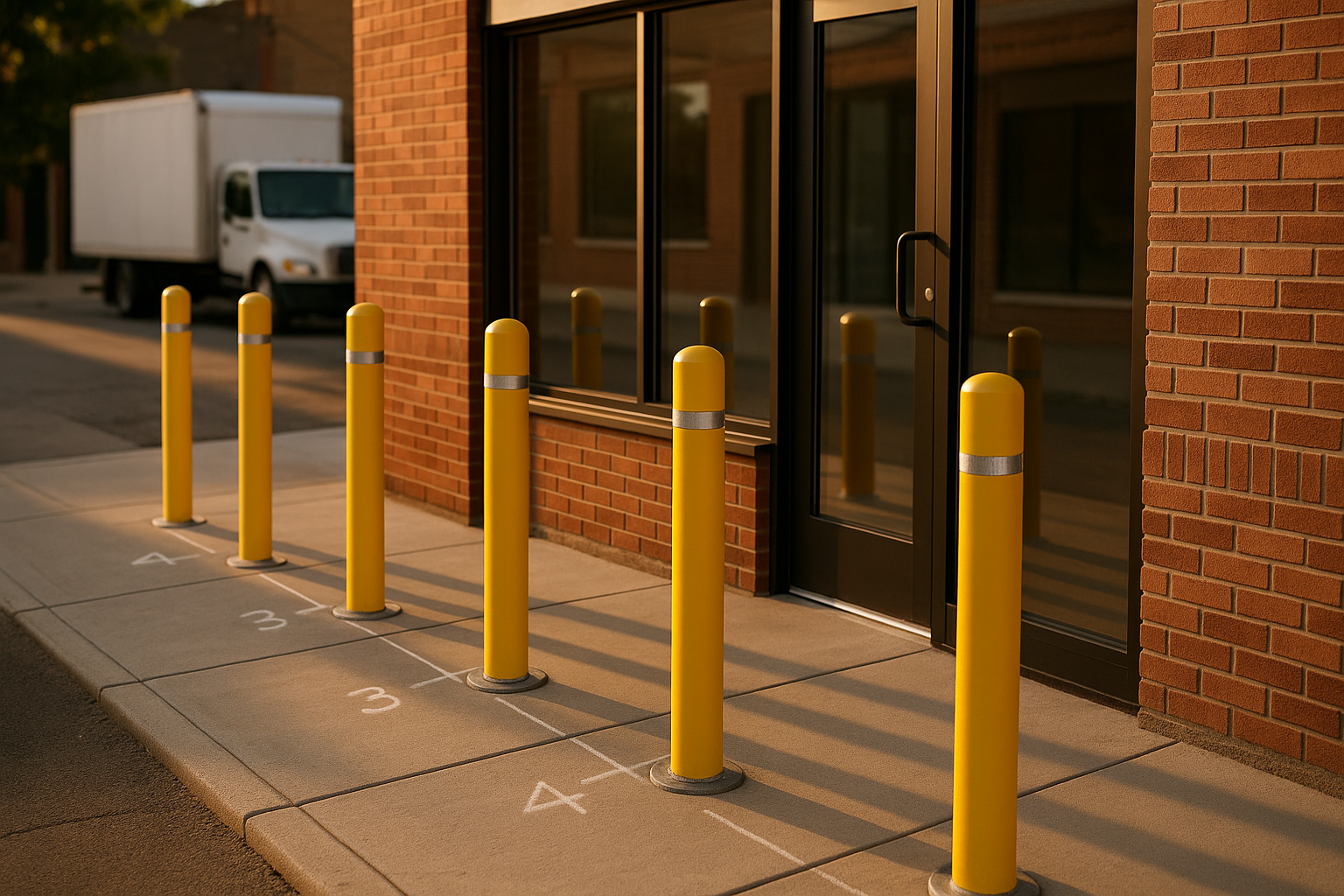
Then there’s the finish. In a city that salts roads all winter, painted steel rusts fast. Hot-dip galvanized steel holds up way better. HDPE sleeves—those colored plastic covers that slide over the steel—are even more durable and you can get them in safety yellow, red, or a custom color to match your brand. Reflectivity matters too. A bollard with a reflective band on top is a lot less likely to get hit at night. For more on visibility and safety, check out our parking lot lighting guide.
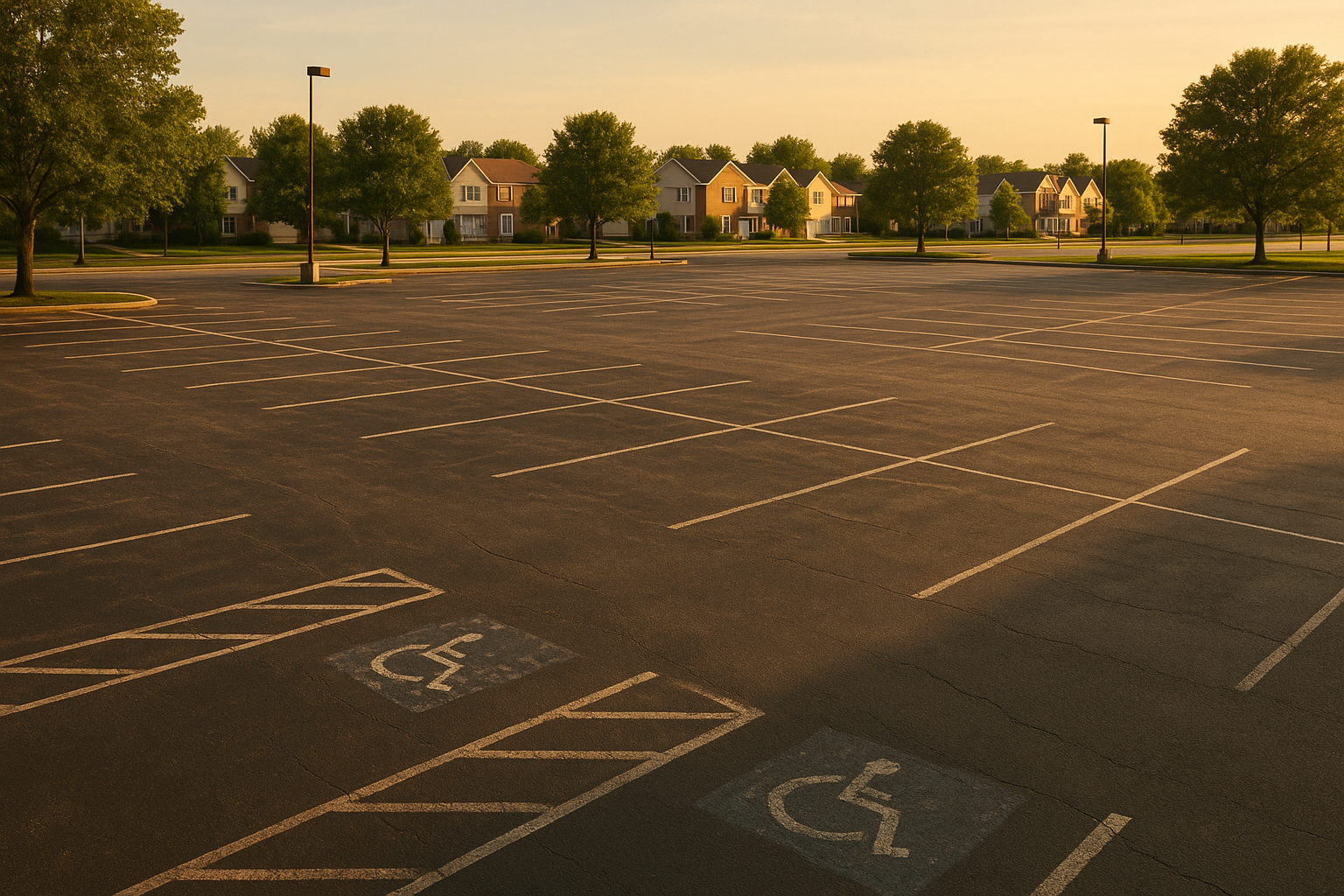
Spacing is tricky. Too far apart and a car can squeeze through. Too close and you block wheelchairs or strollers. The general rule is 4 to 6 feet center-to-center, and you want at least 3 feet of clear space from the bollard to a storefront or door. ADA rules say you need a clear path of at least 36 inches (ideally 48) along sidewalks. We’ve seen plenty of violations in Broad Ripple where bollards were placed too tight for a walker to pass. That’s a lawsuit waiting to happen. So measure twice, drill once. If you’re also dealing with uneven sidewalks, you might need ADA ramp repairs to keep the whole path compliant.
What Actually Happens During Installation
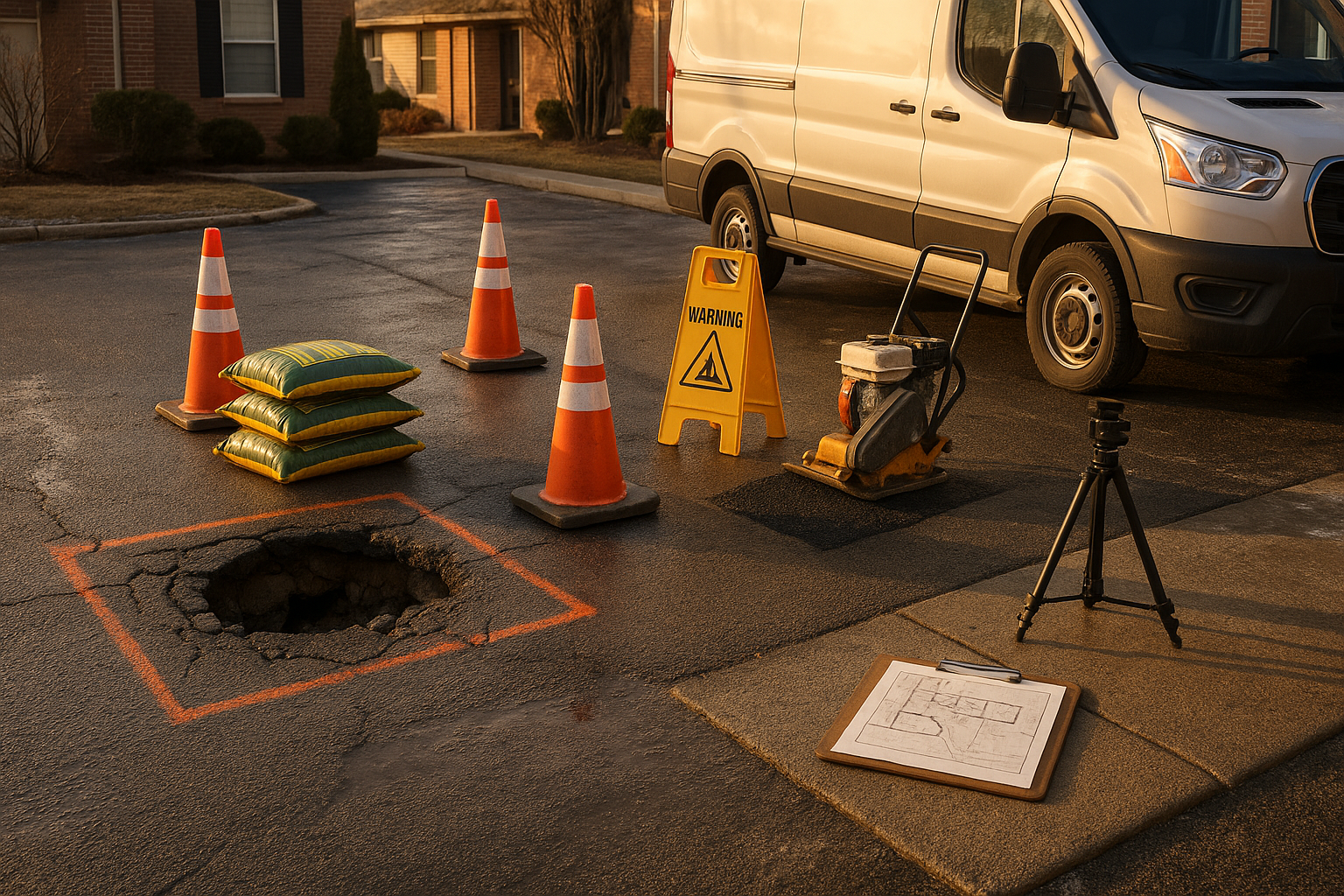
Here’s the part nobody tells you about bollard installation: it’s not just digging a hole and dropping in a pipe. In Central Indiana, you’re digging down about 42 inches to get below the frost line. That’s deeper than the post is wide. You need a reinforced concrete footing, usually at least 18 inches in diameter, with a rebar cage. And because our clay soil holds water, you want a few inches of drain rock at the bottom so freeze-thaw doesn’t heave the whole thing up. If drainage is already a problem, catch basin repair might be needed before you add bollards.
If you’re installing on asphalt, we saw-cut a square, dig out the base, set the pipe, and pour concrete. Then we patch the asphalt around it. On concrete, we either core-drill a hole and set the post with epoxy and a concrete collar, or we saw-cut a bigger square and pour a new footing if the slab is too thin. For a loading dock area, you might want taller bollards—42 to 48 inches above grade—because trailers sit high. And if you’re worried about hitting a utility line, call Indiana 811 before you dig. We always do. Hitting a gas line on 82nd Street is not how you want your Tuesday to go.
The actual install is usually quick—a few hours for a small set, a day for a larger job. We can phase it so you keep one entrance open. And if you’re in a busy retail corridor like Mass Ave or the airport area, we schedule after hours or on a Sunday morning to avoid blocking traffic. The goal is to get in, get it done, and leave the lot cleaner than we found it.
Costs, Permits, and the Fine Print
So how much does bollard installation cost in Indianapolis? It depends. A basic steel pipe bollard set in concrete runs $150 to $400 per post, installed. If you want a sleeve, add $50 to $150. Removable or locking bollards start around $300 and go up from there, because the ground sleeve and hardware cost more. And if you’re in Carmel or Zionsville where the architecture is fancier, you might want a decorative cover—that can push a single bollard over $600.
Do you need a permit? On private property, usually not, as long as you stay out of the public right-of-way. But if the bollards will sit on a sidewalk or near a street, you might need to talk to the city. Indianapolis has rules about clear widths and visibility. We’ve walked property managers through that before—it’s not as scary as it sounds, but it pays to check.
Get a Site Walk Before You Commit
The worst thing you can do is buy a bunch of bollards and eyeball the layout. I’ve seen a guy in Plainfield install six posts to protect his dumpster pad, only to realize they blocked the trash truck’s turning radius. Now he has to unbolt them every pickup. Don’t do that.
Instead, get a pro to walk your lot with you. We’ll mark out where the bollards actually need to go, check the utility lines, measure the ADA clear widths, and give you a line-by-line quote. That way you know exactly what you’re getting, how much it costs, and when it’ll be done. And if you ever add EV chargers or trench a new drainage line, we’ll make sure the bollards still work with the new layout. Because bollards should be part of your whole parking lot plan, not an afterthought.
If you’re tired of worrying about every delivery truck or fender bender, give us a call or fill out the quick form on our quote page. We’ll come out, take a look, and give you a straight answer. No pressure, no jargon. Just a plan that keeps your building safe and your insurance agent happy.
Ready for a free lot assessment?
We walk the lot, photograph the problems, and hand you a written plan — no pressure, no obligation.