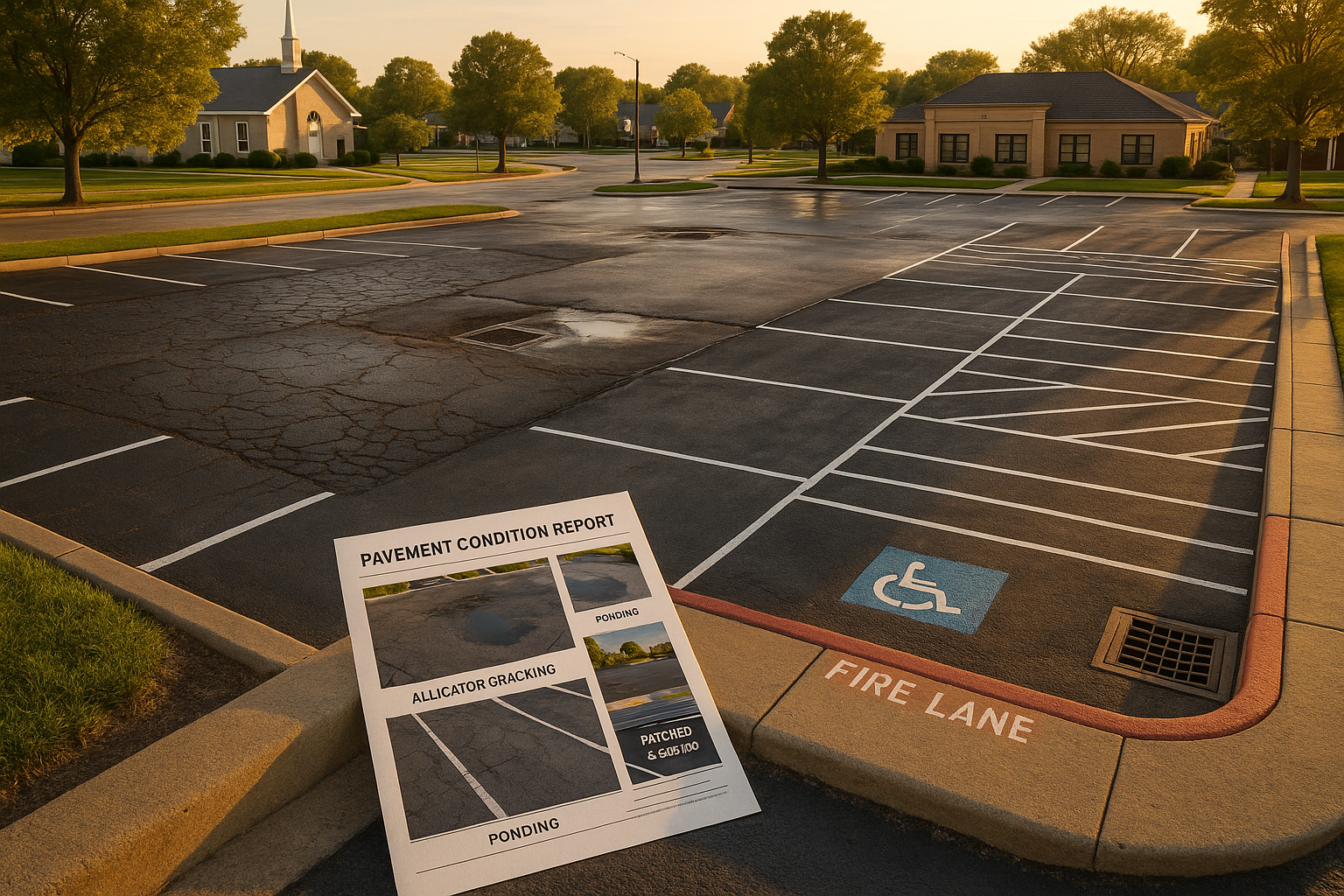
I’ll never forget the call from a church trustee in Greenwood. They’d just paid a crew to restripe the lot, and within six months, the fresh lines were already cracking and peeling like old paint. He was frustrated — felt like he’d thrown money away. When we walked the lot together, I pointed to the alligator cracks and the ponding by the drain. The striping didn’t fail because of bad paint. It failed because the pavement underneath was failing, and nobody had ever handed him a pavement condition report that spelled it all out.
That’s the thing — too many property managers and business owners in Indianapolis think a pavement condition report is just fancy paperwork. But honestly? It’s the single most useful tool you can have before you spend a dime on striping or sealcoating. So let’s walk through what’s actually in one, what the scores mean, and how you’d use it to plan smarter.
What’s Actually in a Pavement Condition Report?
Think of a pavement condition report like a doctor’s checkup, but for your parking lot. It’s not just a guy walking around with a clipboard. You get a structured, photo-documented assessment that rates your asphalt using a PCI-style score — that stands for Pavement Condition Index. Most reports break your lot into sections and give each area a number from 0 (failed) to 100 (perfect). Those numbers tell you exactly what to fix first.
But the report goes a lot deeper than one number. You’ll see close-up photos of cracks, raveling, and potholes. There’s a drainage and cracking inspection that flags places where water sits after a storm (a big deal here in Indy, where freeze–thaw cycles wreck pavement). The report also checks line striping quality, ADA stall markings, fire lane stencils, and curb paint. Basically, it’s your lot’s report card, with specific notes on what needs work now, what can wait, and how to phase the whole thing.
We’ve done hundreds of pavement assessments around Marion and Hamilton counties, and the most useful reports include an annotated site map. That way, you can hand it to your board or your maintenance crew and everyone knows what’s happening where.
Why You Need This Before You Restripe
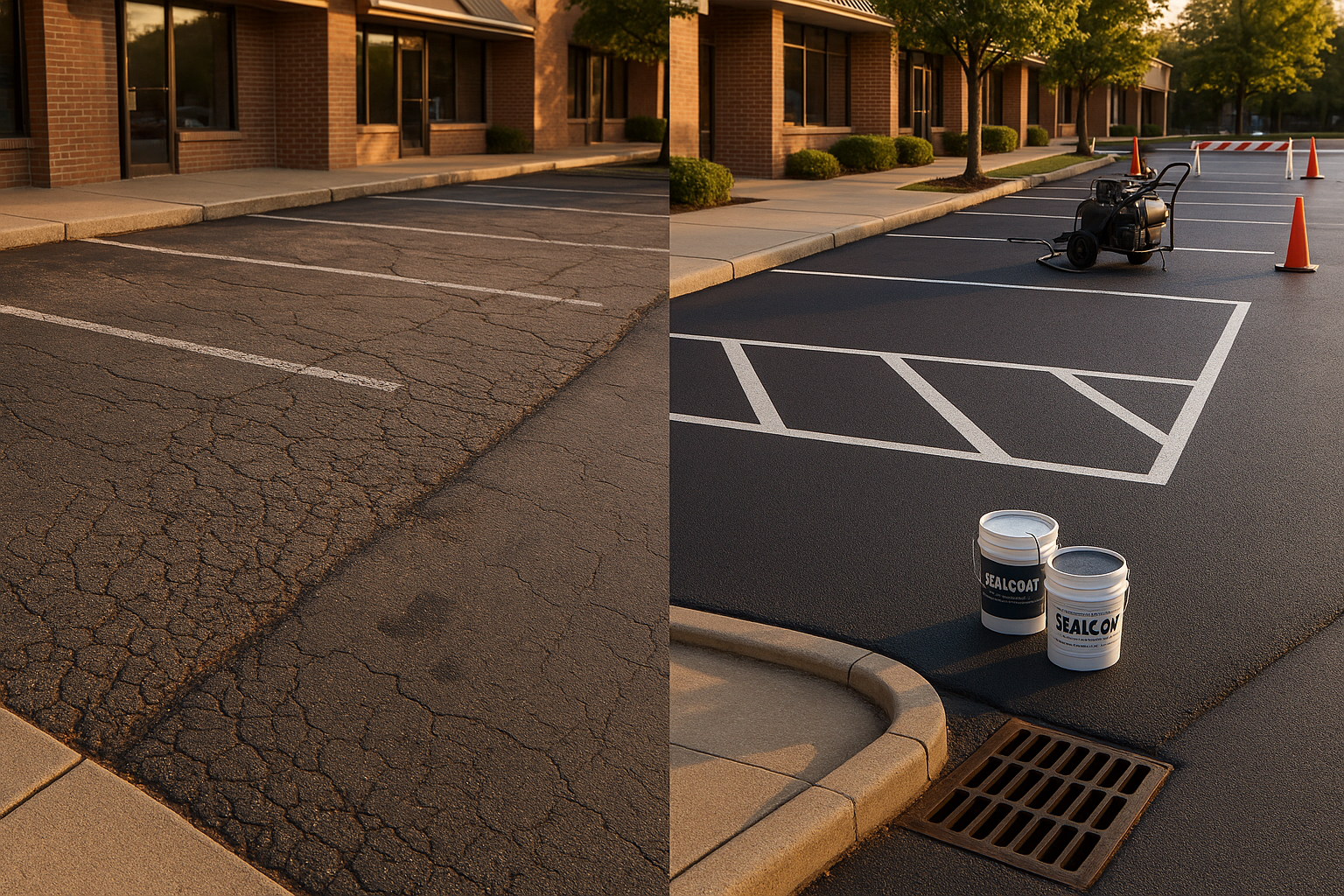
Ever see a freshly striped lot where the lines start peeling off after one winter? That’s because the paint got laid over cracks that were still moving. A pavement condition report catches those problems before you stripe. It’s your best shot at getting the maximum line striping lifespan out of your investment.
Plus, there’s the compliance piece. If you run a business or manage a property, you’ve got to have your ADA striping compliance and fire lane striping requirements in order. A good report spells out exactly which stalls need to be widened, where the access aisles are missing, and whether your fire lane is clear and visible per Indiana code. We’ve heard from property managers in Fishers and Westfield who got fined because their fire lane markings faded out over the winter. That’s a cost a pavement condition report can help you avoid.
And here’s an opinion from years of sweating on Indy asphalt: never, ever restripe in late fall if you can avoid it. The humidity and dropping temps mess with dry times. A report usually includes a little timing guidance — like the best sealcoating schedule Indiana can offer runs from late May through early September. Striping can stretch into October if the weather holds, but you want those beads to stick. We cover that in our planning-first approach. We’ve written a whole piece on the best sealcoating window in Indiana.
For more specifics on keeping fire lanes looking sharp, check out our full guide on fire lane striping requirements.
How PavementPros Builds Your Report
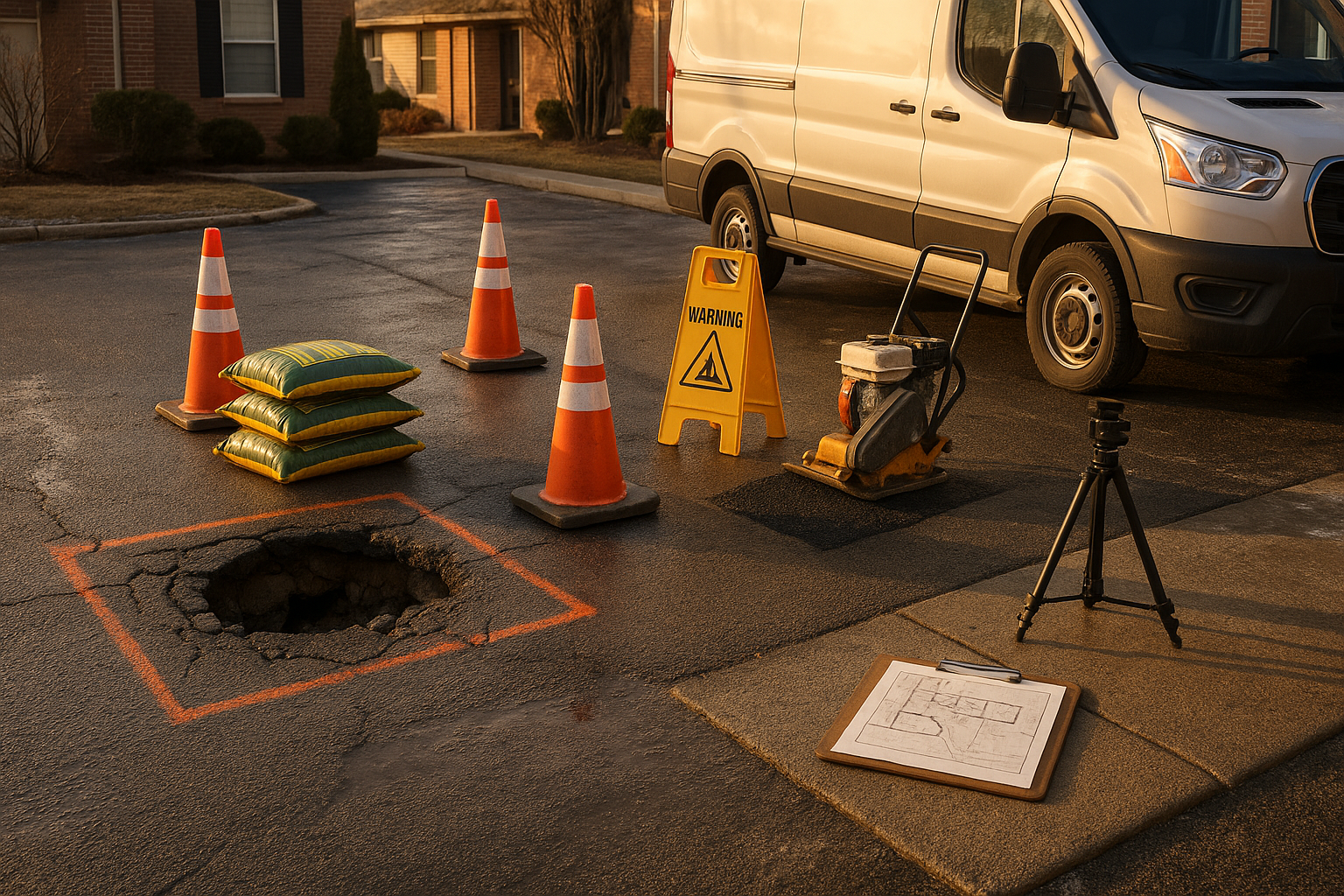
So how do we actually put a pavement condition report together? It starts with a simple site walk. No fancy equipment — just a trained eye and a camera. We look for the obvious stuff: alligator cracking near dumpster pads, ruts where trucks turn, raveling along the edges. But we also check drainage. In Indiana, ponding near catch basins after a heavy storm can soften the base and lead to potholes in a hurry. That’s a line item you’ll see in your report under “drainage and cracking inspection.”
We also do a full parking lot safety audit without calling it that — we’re checking for trip hazards, loose wheel stops, faded stop bars, and signage that’s twisted or missing. And we’ll eyeball your current layout. A lot of older lots in Broad Ripple or downtown Indy have wasted space that could be fixed with a restripe. If you’re interested, we’ve written about restriping to fit more spaces.
The report you get back isn’t a hundred-page engineering document. It’s a clean PDF with photos, notes, a PCI-style rating for each zone, and a phased scope of work. No guesswork. We even include an itemized quote for the striping and repairs, so you can take it to your board or just book the first step.
Making Sense of the Scores and Next Steps
When you flip through your report, you’ll see numbers. A section with a PCI above 70 might just need a clean and a fresh coat of paint. Something in the 40–60 range? Probably crack sealing and sealcoating first. Below 30, and we’re talking about patching or even a partial repave. But here’s the thing: you’re not locked into a full rebuild. A good report gives you options — phase the work over two or three years, or do the critical stuff now and the rest later.
We’ve helped a medical office in Carmel stretch their asphalt maintenance plan over 18 months. Year one: fix the drainage and patch the worst cracks. Year two: sealcoat and restripe everything. Their budget stayed predictable, and their patients had a safe, smooth lot the whole time.
And no, it’s not a stamped engineering study. If you need that for a civil project, you’ll need a licensed engineer. But for everyday property managers, a practical pavement condition report from a contractor who knows local conditions is more than enough to make smart decisions. It’s a tool for budgeting parking lot maintenance, not a legal document.
Speaking of budgets, a plan like this helps you avoid those emergency calls when a pothole opens up in January. You can line-item your costs and plug them into facility capital planning without surprises.
Easy Next Step? Just Schedule a Walk
You don’t need to stress about disrupting tenants. We work nights and weekends around here — done it at churches in Noblesville and retail centers in Avon. A pavement condition report takes a couple hours on site, and we’ll have your draft back inside a few days. No pressure, no sales pitch.
If you’re in Indianapolis, Carmel, Fishers, or anywhere nearby, grab a spot on our calendar for a free assessment. We’ll walk your lot, snap the photos, and hand you a written report with a phased striping and maintenance plan — plus an itemized quote so you know what things cost. That’s it. You can take it from there or let us handle the work. Either way, you’re making a call with your eyes open.
Ready for a free lot assessment?
We walk the lot, photograph the problems, and hand you a written plan — no pressure, no obligation.