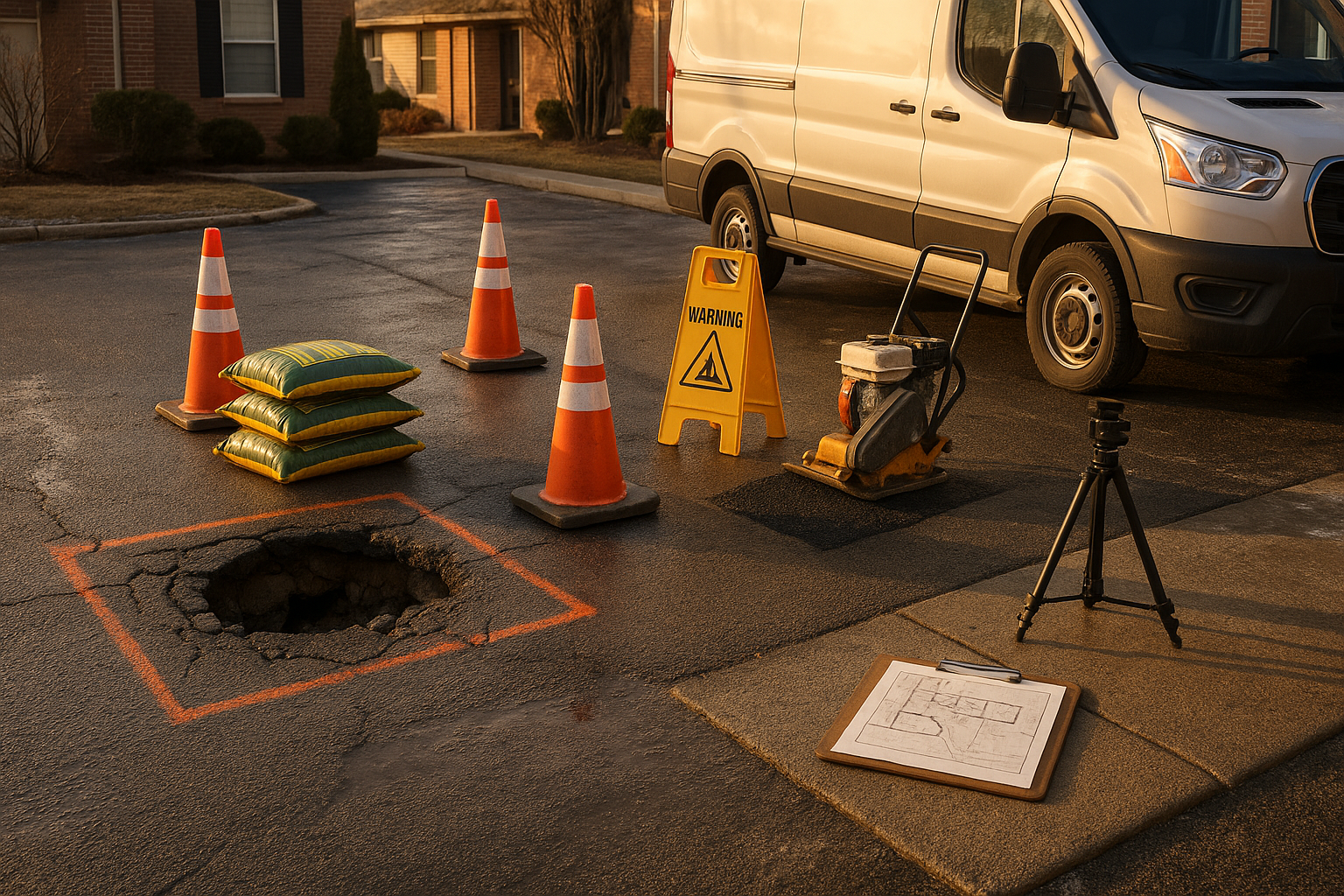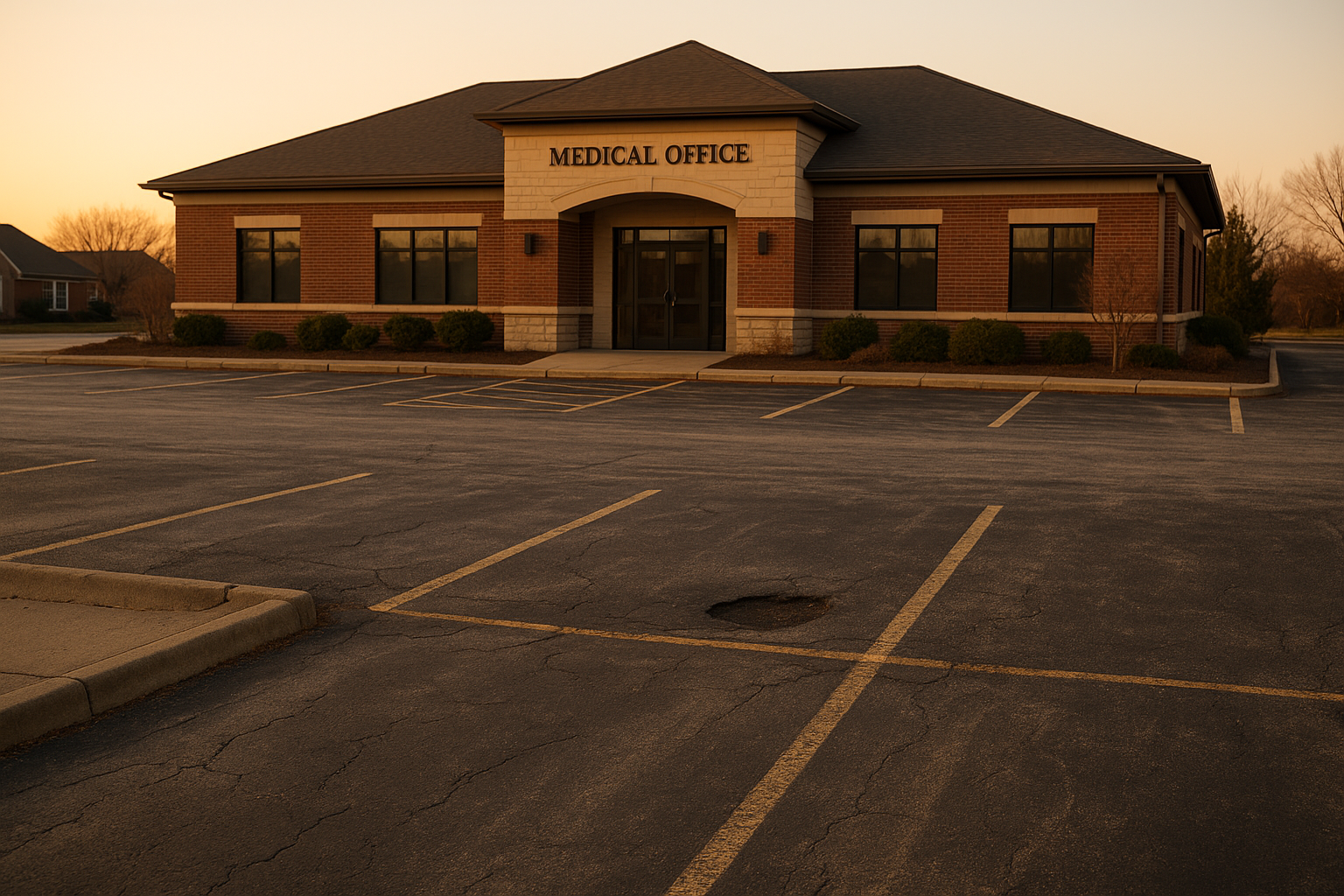
I remember waiting outside an Indianapolis clinic while my mom had a follow-up after knee surgery. Getting her to the door was a puzzle: faded lines, no visible crosswalk, a pothole near the entrance. Another patient almost tripped. Mom said, 'I almost told them never to schedule me here again.' When your medical office lot looks bad, patients notice and remember. Good medical office parking lot maintenance isn't just paint — it's the first impression that tells patients you care.
Why Clear Markings Matter at a Medical Office
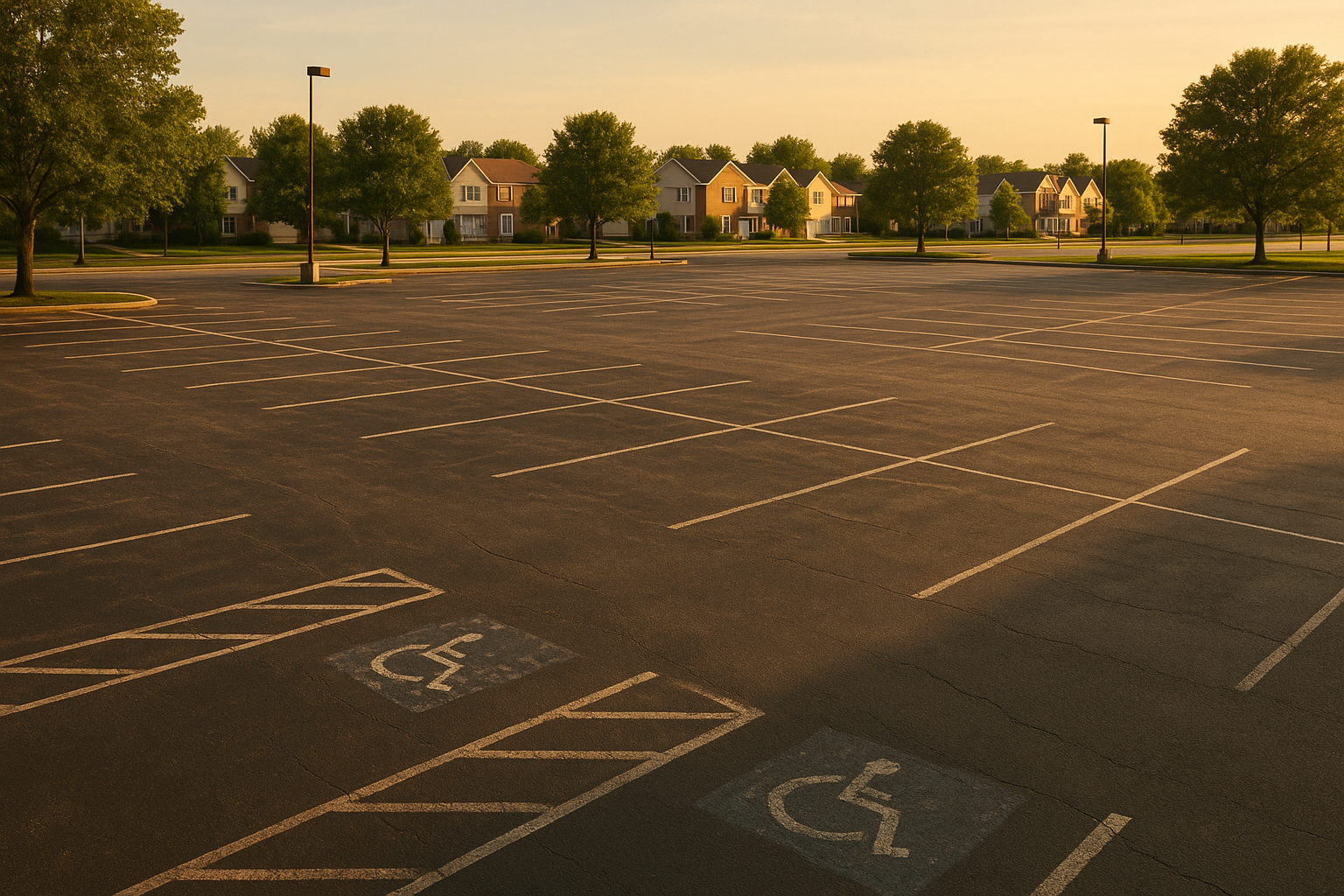
Think about who uses your lot: elderly patients, people with injuries, parents with kids. Faded striping causes confusion, dangerous parking, and liability headaches. In high-turnover areas like downtown Indy or Carmel, clear medical office parking lot striping reduces accidents and complaints. A well-maintained lot lowers liability — if someone slips because of a faded crosswalk, you could be on the hook. That's why consistent medical office parking lot maintenance is a smart investment. A clean, well-marked lot tells patients you've thought about their needs.
ADA Rules Are Non-Negotiable
ADA compliance can feel like alphabet soup, but it mostly comes down to making sure everyone can get inside. The ADA parking requirements Indiana clinics follow include the right number of accessible stalls, at least one van-accessible space with a wide access aisle, clear markings, and signs at the right height. The accessible route from those spots to the entrance has to be well-marked and obstacle-free. Every clinic manager I've talked to worries about getting it wrong. The key is documenting what you've done: photos, a marked-up site plan, maybe notes on the paint specs. I've seen lots in Greenwood and Avon where the blue paint looked okay but the access aisle was too narrow. That's an easy fix if you measure, but most people don't think to check.
Fire Lanes and Emergency Access
This one makes people nervous because it's about making sure fire trucks and ambulances can get through. Marion County fire lane requirements are enforced locally, and inspectors can be picky. You need red-painted curbs, the words 'FIRE LANE' stenciled clearly, and the lane kept wide enough. If the paint is faded or half-chipped by snowplows, you might get a citation. I heard about a clinic in Fishers that got a warning because their red curb had faded to a pink smear. A good medical office parking lot maintenance plan includes regular checks on fire lane visibility, especially after winter. For the nitty-gritty, check our fire lane striping guide.
Keeping the Office Open During Work
The biggest fear from managers is shutting down the entrance or cutting off patient parking. You can't close for a week. That's where a parking lot phasing plan helps. Work gets done in stages — tackle the patient drop-off zone and a few ADA stalls first, then move to the back. Night or weekend work is standard; it's quieter and you avoid paint smells during appointments. We use low-VOC traffic paint and fast-dry pavement marking paint so fumes are minimal and cars can park again quickly. A small dental office in Zionsville got striped on a Sunday. Monday morning, the lot looked new and nobody missed an appointment.
Materials That Survive Indiana Weather
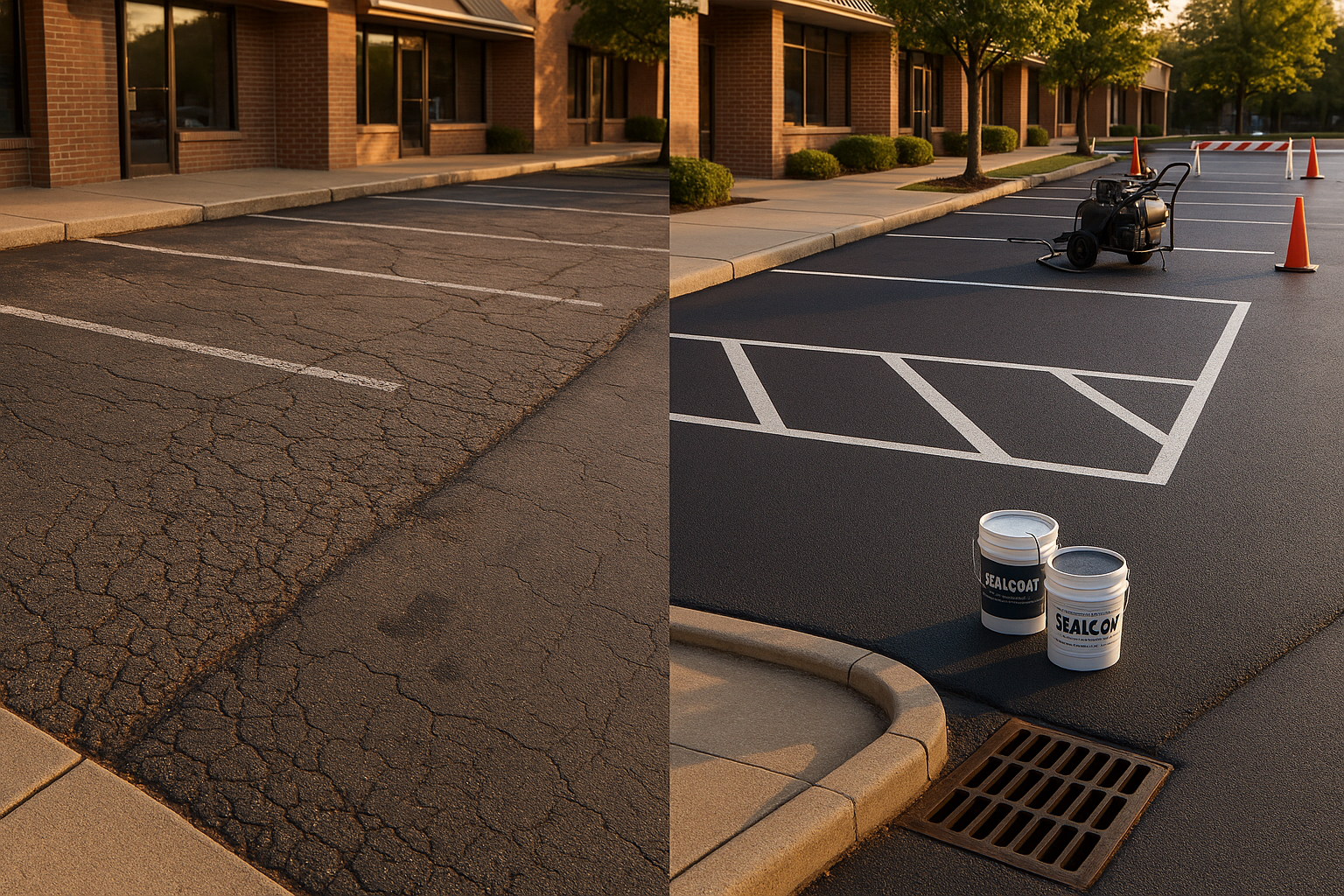
Our weather swings hard: freeze-thaw cycles, de-icing salts, and snowplows all beat up parking lots. That's why we use high-quality latex traffic paint with glass bead reflective markings for most medical office parking lot maintenance. The beads make lines visible at night or in rain. For areas like crosswalks, healthcare facility crosswalk markings need to pop. In high-wear spots — say, a drive-through pharmacy pickup — thermoplastic or epoxy might be better; they cost more but last. Before painting, we repair potholes, fill cracks, and clean the surface. Striping over dirt or moisture is a waste. Late spring through early fall is the ideal window; you need pavement temps above 50°F. A snowplow-friendly striping layout also helps — placing stripes where blades are less likely to scrape.
How Often to Restripe
Most Indianapolis medical offices restripe every 12 to 24 months. If you follow a sealcoating and restriping schedule — sealcoat every 2–3 years — you'll restripe right after. Skip a cycle and your lot turns into a blank gray slab that confuses patients. I tell clinic managers in high-traffic spots like Plainfield and Noblesville: don't go beyond two years. After sealcoating, wait 24–48 hours before striping; fresh paint usually dries in under an hour for parking. More on scheduling here.
Signage, Curbs, and Wheel Stops
Stripes get the attention, but curb paint red and yellow, wayfinding signs, wheel stops, and bollards do the heavy lifting. Red curbs mean no parking, yellow marks caution, and signs direct people. Wheel stops protect sidewalks and buildings. After a job, we walk with the clinic manager to check everything. A Brownsburg dental office got a wave of compliments after we repainted their curbs bright yellow and added 'Patient Pick-Up' stencils. It's the little things. (More on wheel stops here.)
What Affects the Cost?
The line striping cost per stall Indianapolis varies based on layout complexity, prep, paint type, glass beads, and extras like curb painting or signage. A simple lot costs less; a big clinic with fire lanes and drop-off loops costs more. I always recommend spending a bit more on durable materials to avoid a redo after one winter. Remember, cold-weather striping usually fails — paint won't cure right. So most medical office parking lot striping happens April through October. Fast-dry paint means minimal parking loss.
Ready for a Lot That Feels Safe?
If your Indianapolis-area medical lot has seen better days — faded lines, potholes, a fire lane that's pink instead of red — let's talk. We'll visit, walk the property, work up a phasing plan that won't disrupt patients, and give you a clear written quote. No pressure. Just a solid medical office parking lot maintenance plan that keeps everyone safe and your practice looking sharp. Book a site assessment here.
Ready for a free lot assessment?
We walk the lot, photograph the problems, and hand you a written plan — no pressure, no obligation.