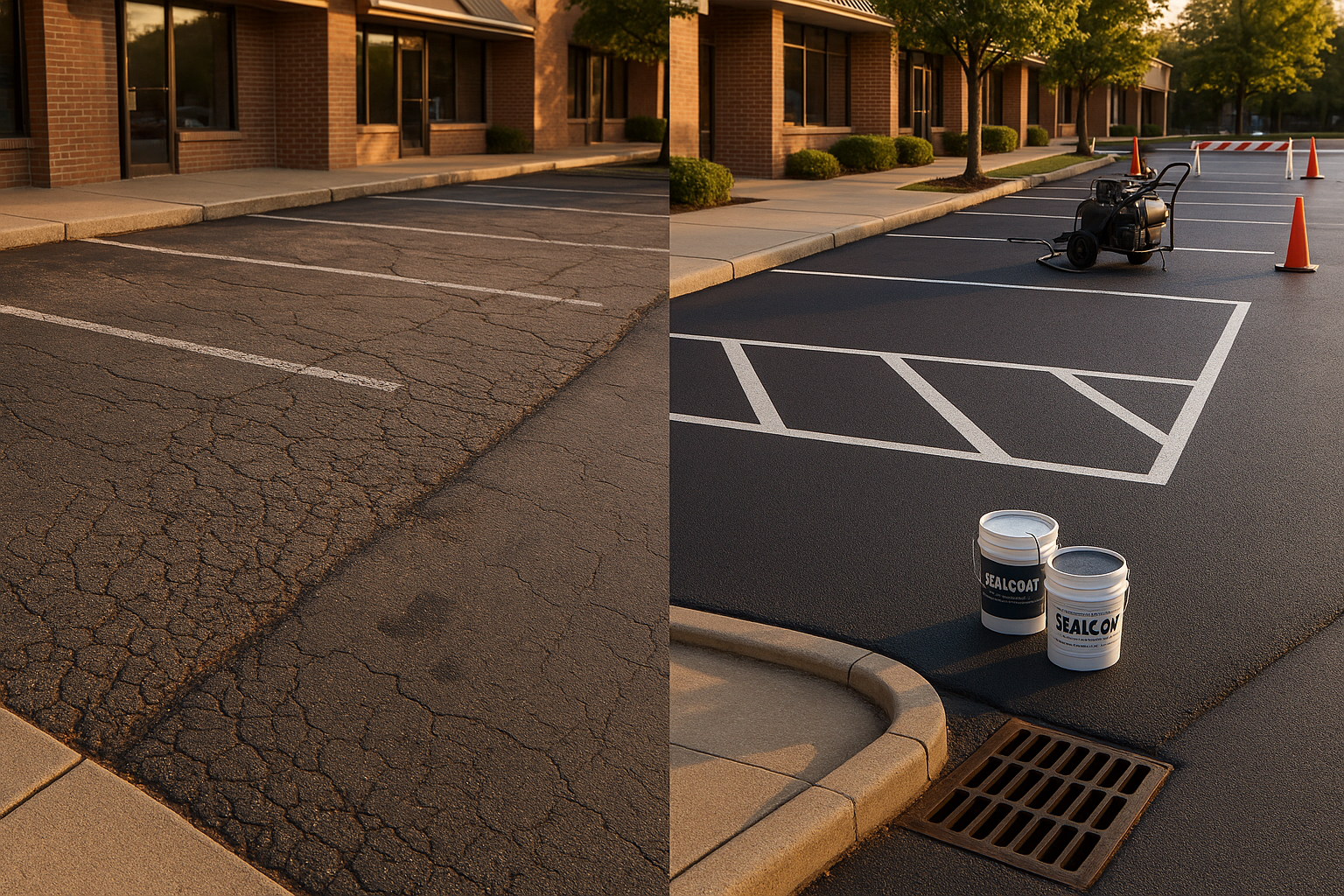
I got a call last spring from a property manager in Carmel. He was panicking because his newly sealcoated lot was peeling after just one winter. “I don’t get it,” he said. “We sealed it last April. Now it looks worse than before.” I went out to look, and the problem was clear: he’d sealcoated right over a web of alligator cracks without any crack repair first. That’s like painting over termite damage and hoping the house doesn’t collapse. It’s a classic sealcoating myth, and it cost him thousands.
The Biggest Sealcoating Myths That Bleed Money
Myth 1: Sealcoating Fixes Cracks and Potholes
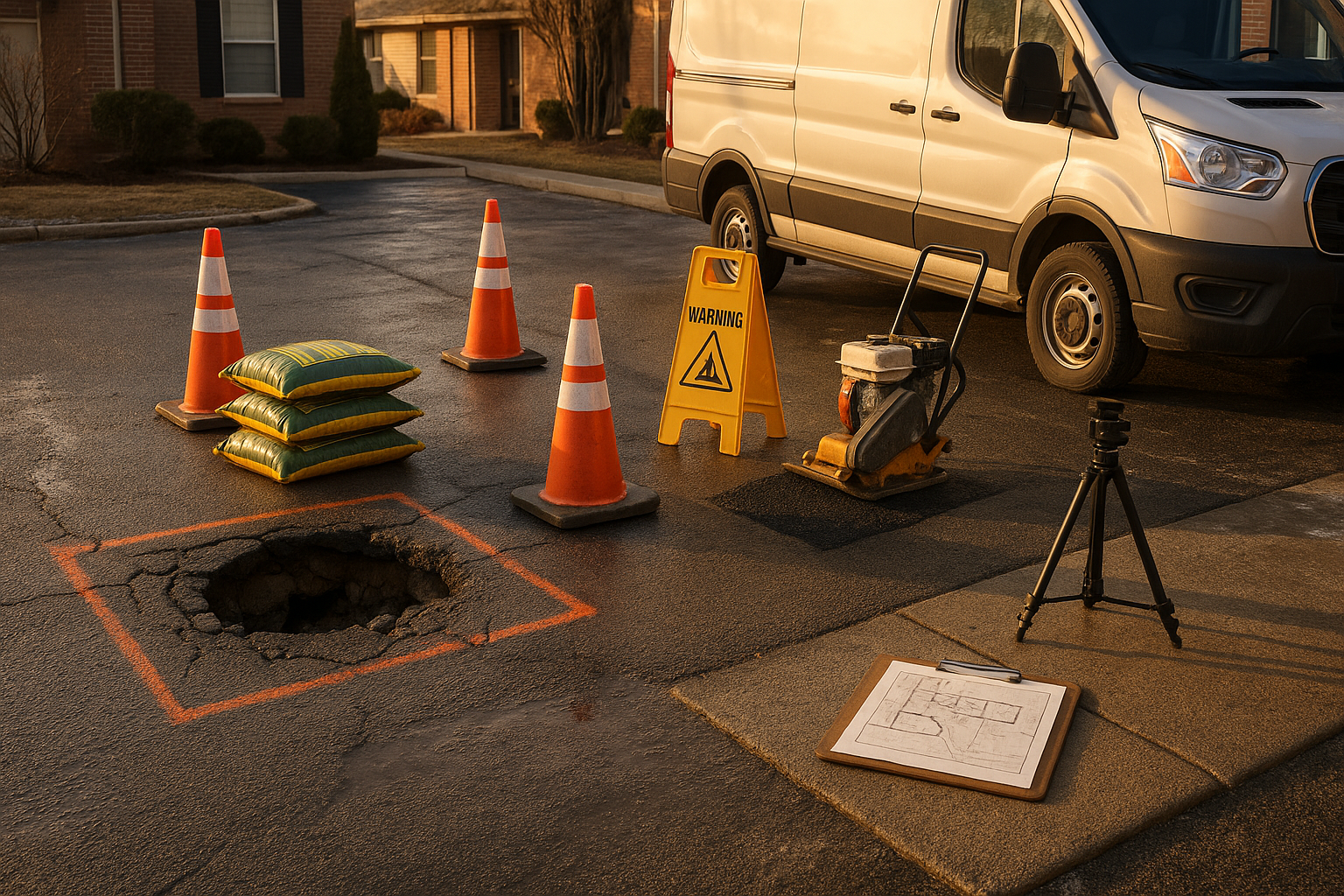
Nope. Sealcoat is a shield, not a surgery. It blocks UV rays, water, and salt, but it won’t lift a sunken base or fill a pothole. If you’ve got alligator cracking—those patterns that look like, well, alligator skin—that means the base is failing. No amount of sealcoat will stop that. You need to patch or resurface first. Once the pavement is sound, sealcoating extends its life and gives a clean slate for new striping. We see this a lot in older lots around Greenwood and Avon, where tree roots and clay soil shift the base. If you skip the prep, you’ll be redoing the whole job next year. For a full maintenance schedule that includes repairs, take a look at our guide on parking lot maintenance timing.
Myth 2: One Coat Is Always Enough
In a low-traffic residential cul-de-sac? Sure, one coat might do. But for a busy retail lot in Fishers or a medical office near I-465, you need two. Drive lanes get hammered by delivery trucks, snowplows, and constant turning. A second coat fills the hairline cracks that a single pass misses and builds a thicker film to handle salt and scrape. I’ve seen lots where the middle of the lane looks gray again after one season because they skimped on material. Two coats also give more uniform color—not for looks, but because it means consistent protection. Don’t let anyone tell you darker is better; it’s the solids content and coverage that count.
Myth 3: You Can Stripe Immediately After Sealcoating
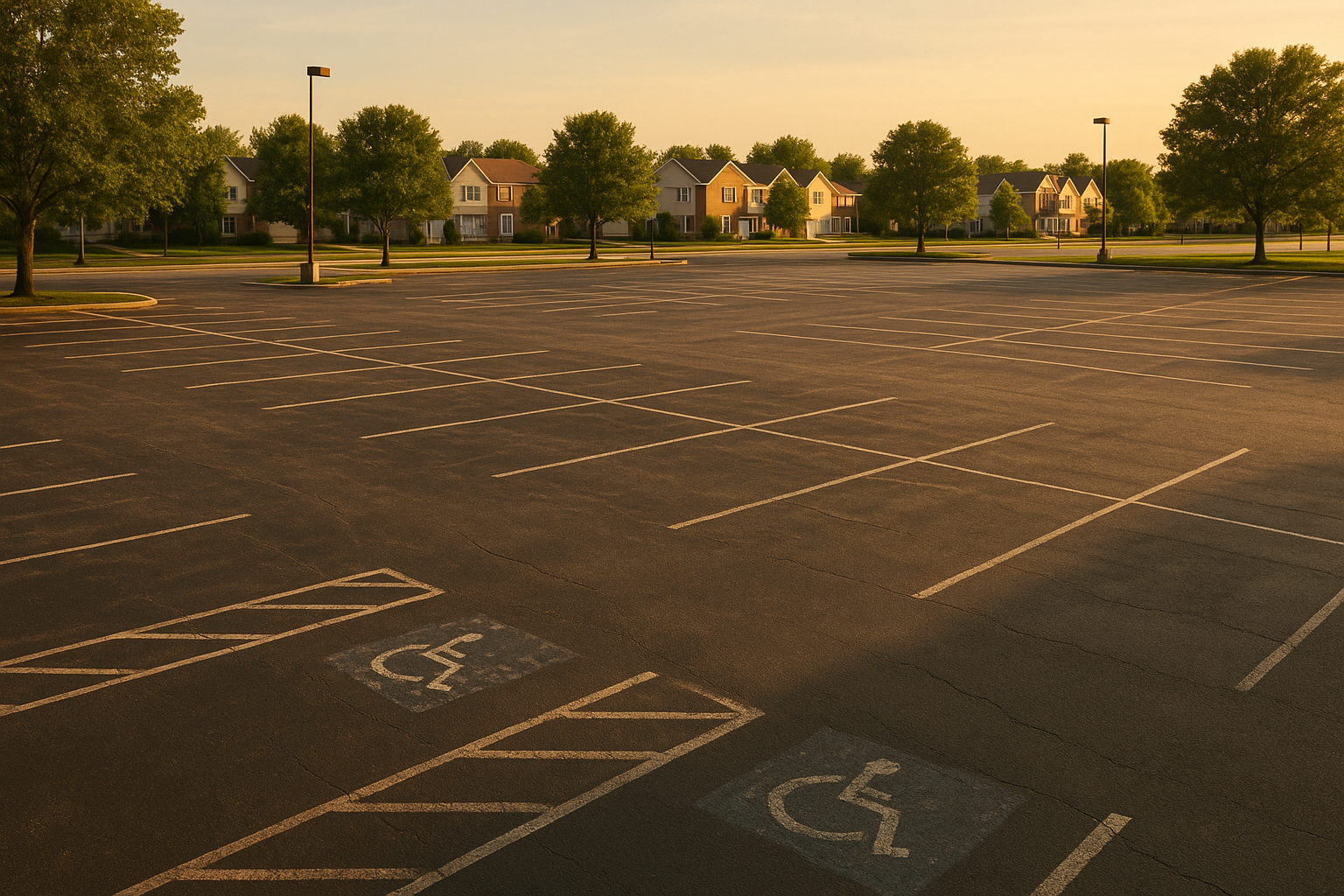
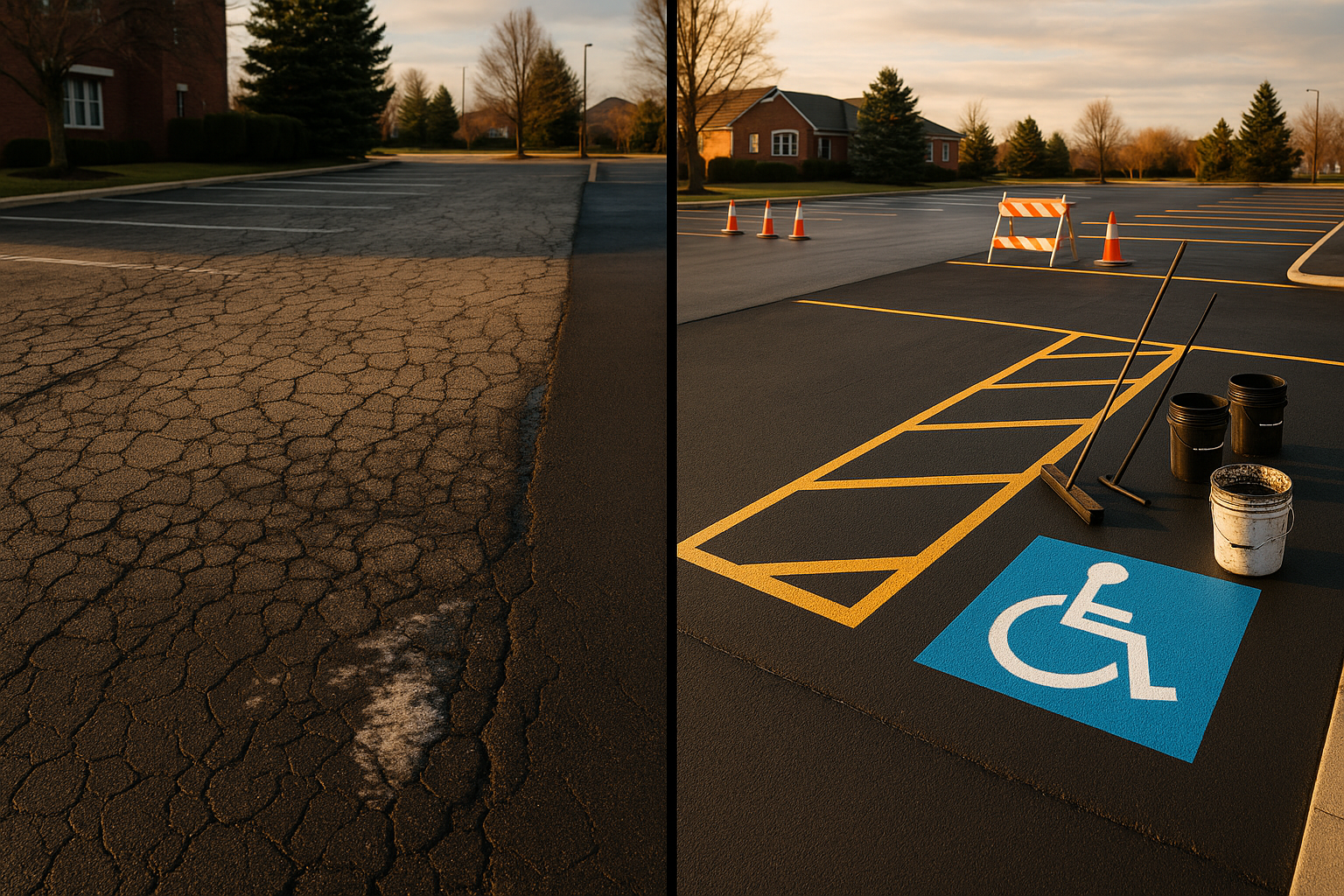
This one drives me nuts. In Indianapolis, with our humidity, sealcoat needs time to cure before you can paint lines. Spring and fall, you’re looking at 24–48 hours minimum, and that’s if temps are above 50 and rising. If it rains or the lot is shaded by buildings, add more time. I remember a church in Zionsville that rushed to stripe for Sunday service—they had cars tracking black tar into the sanctuary. Not a good look. The paint won’t bond properly, and you’ll have faded lines by Christmas. Wait until the sealcoat is fully dry and doesn’t transfer to touch. Then stripe. It’s the only way to get those crisp ADA stalls and fire lane markings that last. (We cover the rules for those markings in our article on fire lane striping requirements.)
Myth 4: Sealcoating Makes the Lot Slick
Some property owners worry about lawsuits if someone slips. Modern sealers include fine aggregate—like sand or polymer grit—that gives grip. You can even spec a heavier broadcast in high-pedestrian areas. I’ve tested it myself: after a rain, a properly sealed lot feels no slicker than bare asphalt. In snowy months, it’s actually safer because the sealcoat stops water from seeping in and freezing into icy patches. Just make sure your contractor isn’t using a cheap sealer without any traction additive. That’s where the skid problem comes from.
Myth 5: Sealcoating Is Just Cosmetic
No way. Sealcoating isn’t just to make your lot look fresh for a property review. It’s a barrier. UV rays oxidize asphalt binder, turning it brittle. Water gets in, freezes, expands, and cracks the surface. Deicing salts eat away at the surface too. All this adds up to premature aging. A proper sealcoat job—done with the right materials and timing—can double the life of your pavement. And it makes new striping pop, which actually improves safety and parking efficiency. If you’ve ever tried to navigate a lot with faded lines after dark, you know what I mean. For tips on repainting and maximizing your layout, check out our restriping guide.
How Indianapolis Weather Messes with Sealcoating (and What to Do)
Our freeze–thaw cycles are brutal. Water sneaks into tiny cracks, freezes overnight, and then expands—prying the pavement apart. Salt just accelerates the oxidation. That’s why sealing in the right window matters. In Indianapolis, the workable season runs from late April to early October. You can’t rush it in March when the ground’s still cold and frost heave is active. Fall can work if you get a stretch of warm, dry days. But watch the leaves—they’ll stick to wet sealcoat and ruin the finish. We did a lot in Brownsburg last October, and the owner was nervous about early frost. We timed it between two mild weeks, and it cured perfectly. The key is flexibility: a good contractor will watch the forecast and adjust. Also, phasing is your friend. You don’t need to shut down your entire business for days. We often do half a lot at a time so places in Carmel or Westfield can keep serving customers. That downtime myth? Just not true if you plan it right.
A Better Way to Protect Your Parking Lot
These sealcoating myths stick around because they sound like shortcuts. But in reality, they’re just routes to wasted money and early failure. If you want a maintenance plan that fits your budget, works around your schedule, and actually protects your pavement against Indiana’s winters, let’s talk. We’ll come inspect your lot—no charge—and give you a straight answer on what it needs. No upselling, no guesswork. Just a clear written plan with cure times, phasing, and a restriping date on the same work order. Request a site visit and quote today.
Ready for a free lot assessment?
We walk the lot, photograph the problems, and hand you a written plan — no pressure, no obligation.