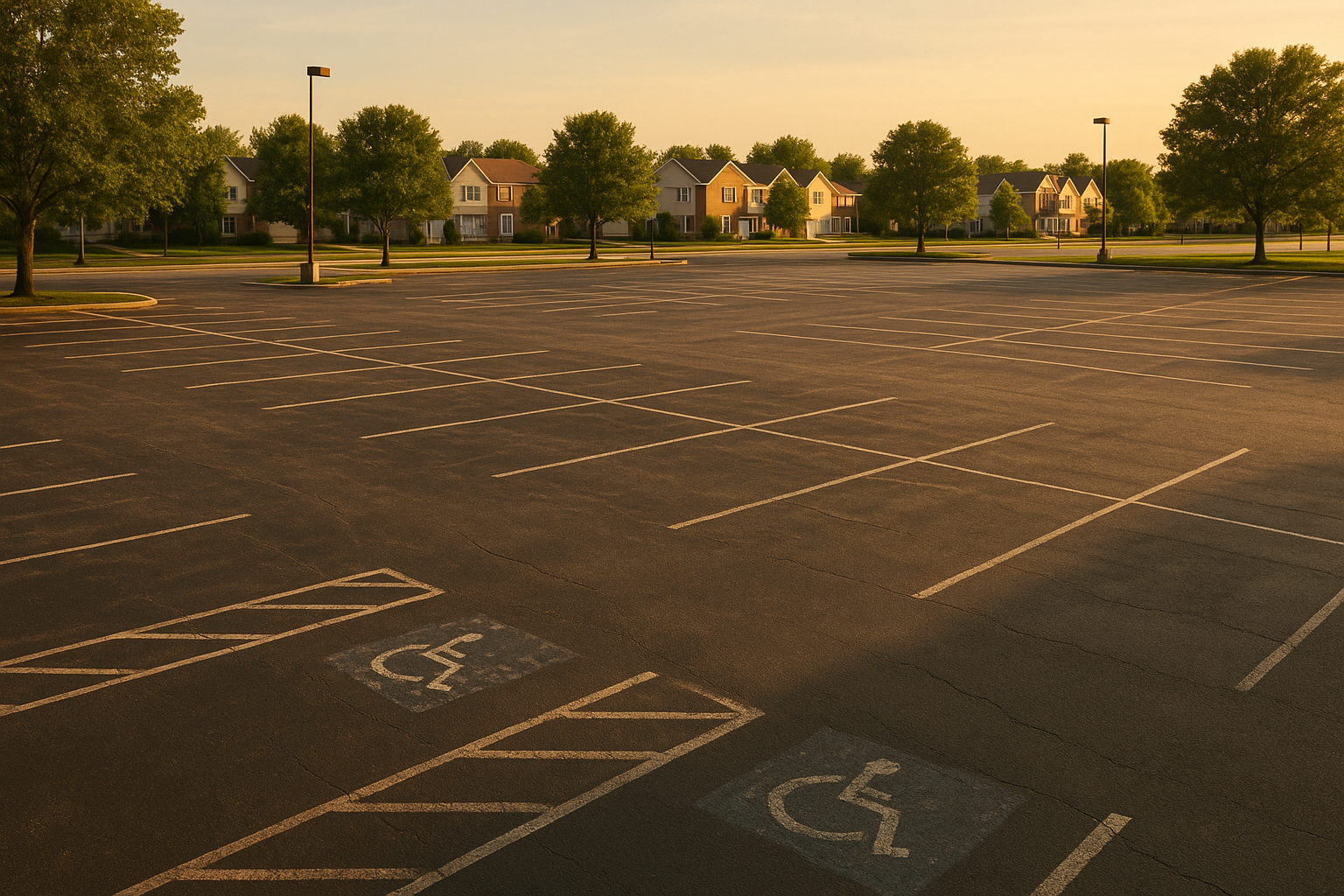
A friend of mine manages a small strip mall over in Greenwood. Last winter, he noticed the parking lines were getting faint. But with snow and ice on the ground, nobody really saw them anyway. Come spring, the lot looked like a Rorschach test. Drivers parked at weird angles, two spots from the door got blocked, and one morning a silver sedan almost backed into a minivan because the arrows were long gone. That near-miss was the push he needed. He called us at PavementPros and we had the lot restriped in a single Sunday. The difference? Night and day. And his tenants stopped complaining.
Clear parking lot line striping isn’t about prettiness. It’s about keeping people safe, avoiding fender-benders, and showing customers you care. In Indianapolis, with our wild freeze-thaw cycles, heavy rains, and snowplows scraping across blacktop, lines take a beating. So how often do you really need to restripe? And what’s the best way to do it without breaking the bank or shutting down your business? Let’s walk through it.
When Stripes Fade, Problems Start
Look, faded stripes cause real trouble. Drivers get confused, they park too close, fire lanes get blocked, and the lot feels chaotic. That chaos can lead to scraped bumpers or worse—a pedestrian stepping out between cars where no one expects them. For property owners, poor striping is a liability headache. If someone gets hurt because a stop bar was invisible or an accessible space wasn’t marked right, you could be looking at a lawsuit. Not to mention the city might fine you. So yeah, keeping those lines sharp isn’t optional. It’s as basic as mowing the lawn or fixing a leaky roof.
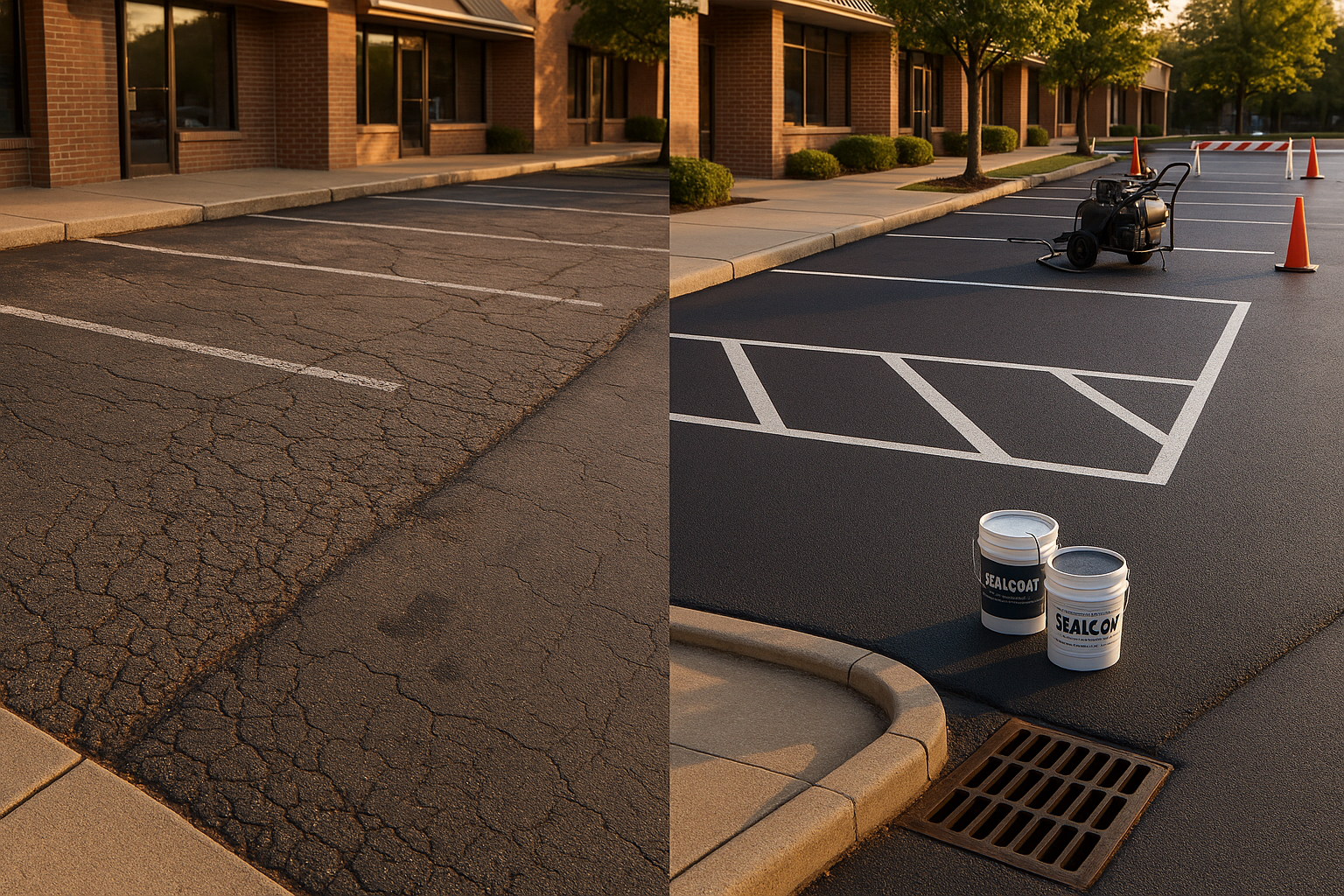
Around here, the Indianapolis climate just eats paint. Winter salt, plow blades, and the constant freeze-thaw cycle break down the bond between paint and asphalt. By the time May rolls around, lots can look like a checkerboard that’s been through the wash. That’s why most properties in Central Indiana need restriping every 18 to 24 months. Some high-traffic lots—think busy grocery stores along Keystone Avenue or office parks near the Fashion Mall—might need a touch-up every 12 months. If you’ve sealcoated your lot (smart move, by the way), new striping is a must—fresh blacktop swallows up old lines. We usually sealcoat and stripe in one go to lock in that crisp, just-opened look.
How the Local Climate Calls the Shots
Indiana weather doesn’t play nice with paint. You can’t just stripe any old day. Those March days that tease 60° then drop to 30° overnight? Terrible for adhesion. Rain, even a heavy dew, will ruin a fresh line. At PavementPros, we target late spring through early fall for most striping jobs—dry pavement and steady temps above 50°F let the paint cure right. But we also carry cold-weather and fast-dry paints for those tricky April or October days when a church lot in Zionsville needs lines before Easter or a school in Fishers can’t wait until summer break.
Humidity matters too. That sticky August air can double the dry time, which means your lot might stay coned off longer. We always plan around your schedule—phasing the work so one section stays open while another cures. If you run a medical office in Carmel or a busy restaurant in Broad Ripple, we’ll do nights or weekends so your customers never see a closed sign.
Paint Types That Handle Indy Roads
You’ve got choices when it comes to parking lot line painting. Not all paints are equal, especially here. We use DOT-grade waterborne traffic paints most of the time. They’re tough, they flex with asphalt as it moves, and they’re low-VOC—better for the air and your crew. For extra nighttime visibility, we can mix in glass beads that sparkle under headlights. If you’re near a busy corridor like Michigan Road or US-31, those beads are a lifesaver.
Now, some folks ask about thermoplastic. That’s the thick, plastic-like stuff that gets melted on. It lasts longer—maybe 3 to 5 years—but it’s spendy and doesn’t bond as well to older asphalt. Unless you’ve got a brand-new lot or a high-speed area like a drive-through, we usually steer clear. Same with epoxy: great for indoor garages, not so much for an outdoor lot that sees salt. For most Indianapolis parking lots, waterborne paint with a refresher coat every couple years is the sweet spot.
ADA Compliance: It’s Not Just a Decal
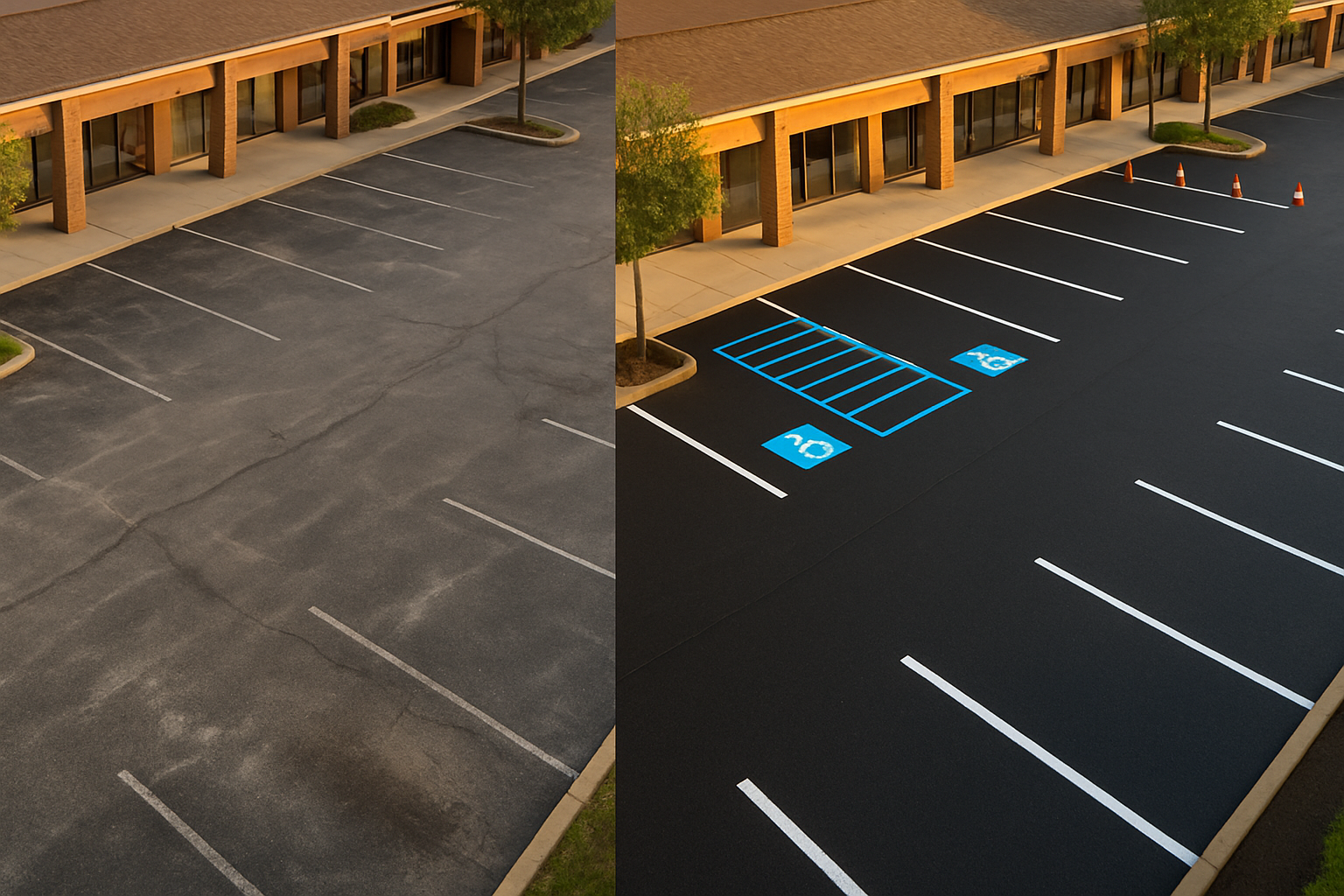
Accessible parking striping is serious business. The ADA sets specific rules for how many spaces you need, how wide they should be, where the access aisles go, and what the signs say. If your lot has 100 spaces, you need at least four accessible stalls, including a van-accessible one with that 8-foot-wide aisle. The blue lines and the symbol have to be exact. And here’s the kicker: during restriping, we often find that slopes have settled, so a supposedly flat access aisle now tilts just enough to roll a wheelchair into the car next door. That’s not compliant. We always check layout and ADA requirements before paint hits the ground. A fresh stripe job fixes the look, but fixing the layout keeps you out of court.
Fire lane striping and curb painting are just as non-negotiable. Red curbs need to be bright and unbroken, and the fire department prefers stenciled “FIRE LANE” markings they can spot from a truck. Don’t guess—local fire marshals in Noblesville or Plainfield will let you know if it’s not right.
How a Striping Project Actually Goes
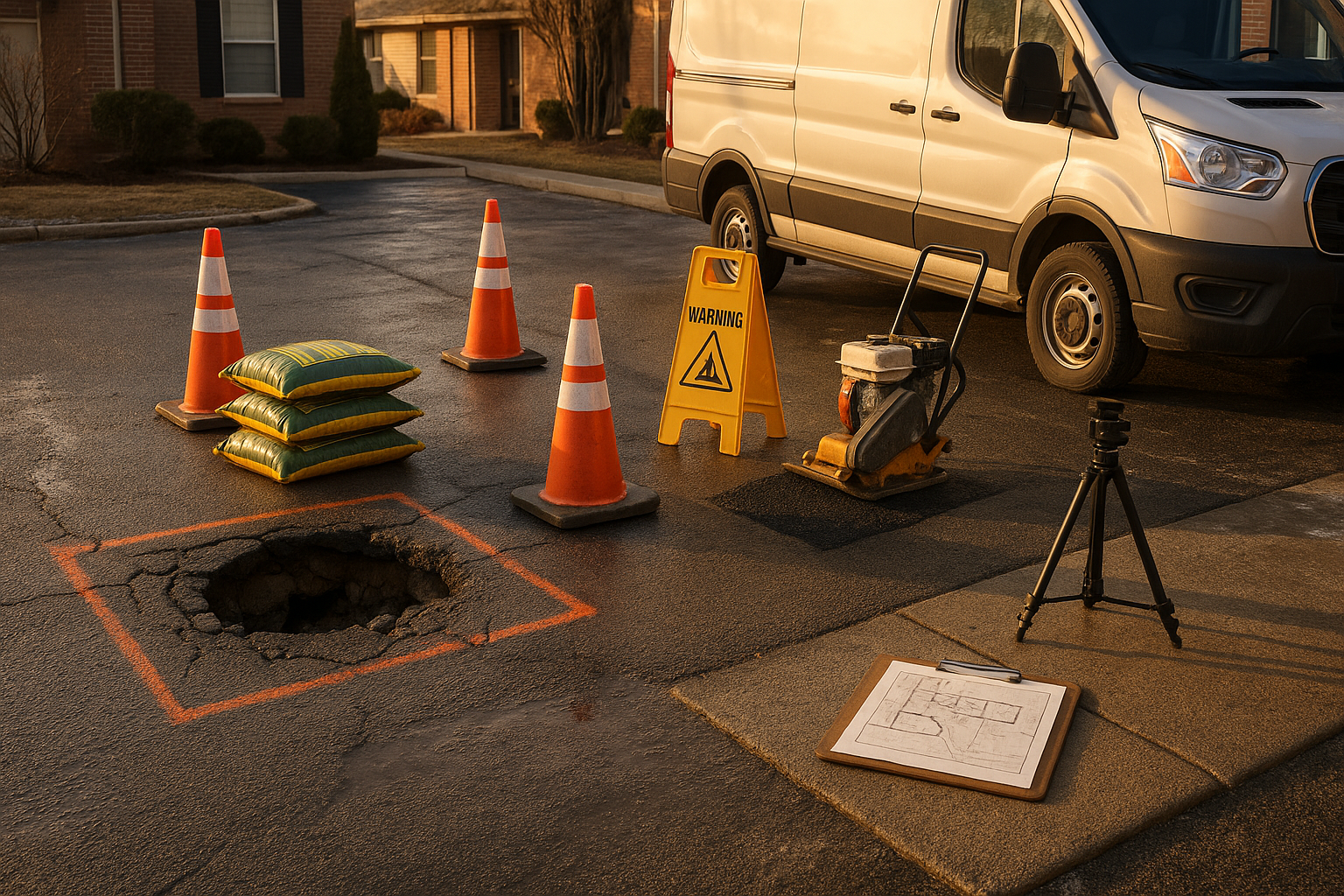
First, we don’t just show up and spray. We walk the site with you. We measure your stall dimensions (standard is 9 feet wide, 18 feet long, but some older lots are tighter—we can map to code). We check traffic flow, turning radii, and where trucks or delivery vans tend to go. If you’ve got arrows or pedestrian crosswalks, we plan those symbols so they make intuitive sense. Then we chalk out the new layout and let you approve it. This step catches mistakes before they’re permanent.
On striping day, the crew prepares the surface. We sweep, blow debris, and treat any oil spots with a primer. Dirty asphalt won’t hold paint, and winter sand grit is the enemy. Then we mask where needed—curbs, columns, drains—and start the actual line striping. The stripes go down in a steady pass; stencils get laid by hand. Cure time varies, but most lots are ready for cars within an hour or two, longer if it’s humid. We’ll put cones up and sometimes phase the reopen so you don’t lose business.
What It Costs—And How to Keep It Affordable
Cost depends on how many stalls, how complex the layout, and whether you need new ADA upgrades. A simple restripe over existing lines is cheaper than a full redesign. Adding parking stall numbering, directional arrows, or crosshatching adds time and paint. Mobilization (getting our gear to your site) and after-hours scheduling factor in too. Want a ballpark? Most small commercial lots in areas like Brownsburg or Avon run between a few hundred and a couple thousand dollars. It’s a small price compared to a fender-bender claim or an ADA complaint.
Some property owners try DIY striping with hardware-store spray cans. Honest truth? It looks terrible within a month. The paint fades fast, lines are wobbly, and you’ll end up calling us anyway. Others ask if we can just paint over what’s there. We can, but if the old lines were crooked, the new ones will be too. A quick layout check ensures your lot actually makes sense and fits modern car sizes.
Ready to See Your Lot in a New Light?
A sharp, well-striped lot tells your visitors you care. It guides them smoothly from entrance to exit, respects those with disabilities, and keeps fire routes clear. If your lines are fading, don’t wait for a close call. Let’s walk your property, sketch a plan, and give you a straightforward quote with no hidden fees. Whether you manage a church in Westfield, a dental office in Carmel, or a warehouse off Emerson, we’ve got a timeline that works.
Grab a spot on our calendar and we’ll come out, do an ADA check, map your layout, and get you a written scope of work. Fresh stripes change everything—and around here, they’re overdue more often than you’d think.
Ready for a free lot assessment?
We walk the lot, photograph the problems, and hand you a written plan — no pressure, no obligation.