Last spring, a property manager over in Carmel called me about a parking lot that turned into a shallow lake every time a thunderstorm rolled through. Customers were wading to the door, and the pavement had started to heave from all the standing water. He'd tried patching, adding a drain, even regrading—nothing stuck. Then he asked about permeable asphalt.
That question comes up more and more around Indianapolis, Fishers, and Greenwood. Business owners and property managers are tired of puddles, ice patches, and the constant battle with drainage. Permeable asphalt—sometimes called porous asphalt or pervious asphalt—is a different way to think about pavement. Instead of shedding water off the surface, it lets water soak through, fast. And for Indiana's weather, that can be a game-changer.
What Is Permeable Asphalt?
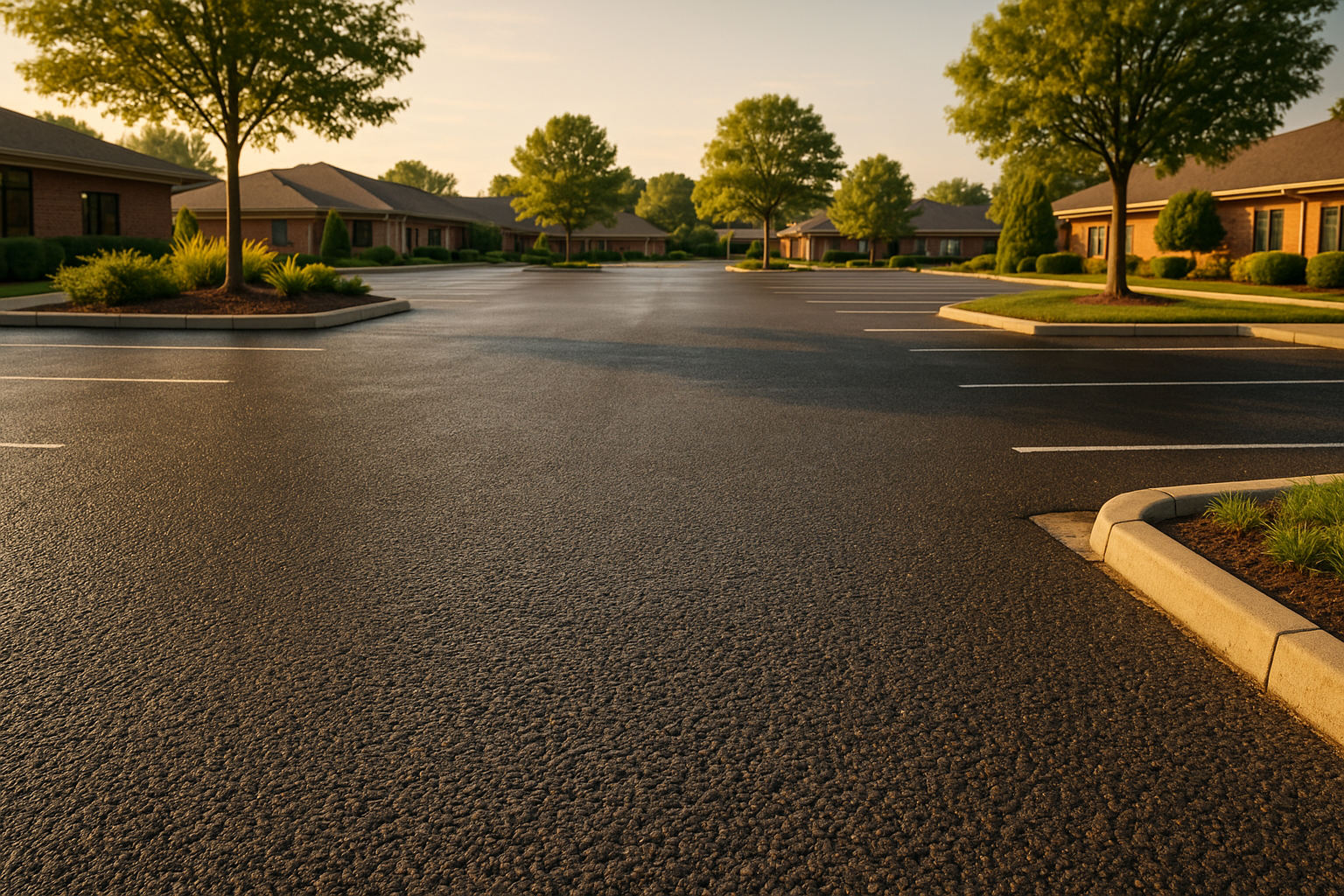
Think of standard asphalt like a plastic sheet. Water hits it, runs to the lowest point, and pools. Permeable asphalt is more like a sponge over a gravel bed. The top layer is a specially designed asphalt mix with tiny gaps between the stones—engineered to let water pass through quickly. Underneath sits a thick layer of open-graded stone (clean, crushed rock with no fine sand or dust). That stone reservoir holds the water temporarily, letting it slowly soak into the soil below or drain out through a pipe.
The result? A parking surface that sheds water almost immediately. You don't get those ankle-deep puddles after a summer downpour. And because the surface dries fast, you don't get the same slick, icy spots in winter that you do with conventional pavement.
Why Permeable Asphalt Makes Sense in Indianapolis
Here in central Indiana, we get some wild weather. Big thunderstorms in July dump an inch of rain in an hour. Then winter brings freeze-thaw cycles that turn every tiny puddle into a skating rink. Standard pavement just can't keep up. Permeable asphalt handles both problems at once.
During heavy rain, the water goes straight down instead of running off. That reduces standing water, which means fewer slip hazards and less damage to the pavement from freeze-thaw expansion. In winter, because the surface sheds water so fast, there's less water left to refreeze overnight. That's a real safety win for employees and customers.
But there's a catch: central Indiana has a lot of clay-heavy soil. Clay doesn't let water soak in very fast. So for a permeable asphalt installation, you need to test the soil infiltration rate. If the soil is too tight, you might need an underdrain—a perforated pipe at the bottom of the stone reservoir that carries excess water to a storm drain or drainage swale. That's not a dealbreaker, just part of good design. At PavementPros, we always check the soil and plan for proper drainage, whether that's full infiltration or a hybrid system with an underdrain.
Design and Base: Where the Magic Happens
The asphalt surface is just the top layer. What's underneath matters just as much. For permeable asphalt to work for years, you need the right base design.
That means an open-graded stone reservoir—often 12 to 24 inches deep, depending on the loads and soil conditions. No fines, no sand, nothing that could clog the voids. On top of that, we usually put a separation geotextile fabric between the stone and the native soil to keep soil particles from mixing in. If you're dealing with clay, that fabric is non-negotiable. We talked about geotextile in more depth in this post about asphalt base stabilization.
Edge restraints are another detail people forget. Without a solid edge, the stone reservoir can shift, and the asphalt can crumble. We use concrete curbs or dense-graded asphalt edges to lock everything in place. The whole system works best on gentle slopes—under 5% grade—so water stays in the reservoir long enough to soak in or drain out slowly. Steep slopes just push the water downhill too fast.
Now, permeable asphalt is not for every commercial site. If you have constant heavy truck traffic, fuel spills, or a site that collects a ton of dirt and debris, you might be better off with conventional pavement or a hybrid design. But for parking stalls, drive lanes, employee parking areas, and low-speed access roads, it's a solid choice. We always walk the site and talk through what will actually work before we quote anything.
Maintenance You Actually Need to Do
One of the biggest worries people have about permeable asphalt is clogging. They hear 'porous' and think it'll fill up with dirt and stop working. The truth is, with basic care, it keeps working. The key is vacuum sweeping—not power washing, which pushes fines deeper into the voids. We recommend a professional vacuum sweep at least twice a year, and maybe more if you have lots of trees dropping leaves or debris. In neighborhoods like Meridian-Kessler or older parts of Zionsville, fall leaf drop can be heavy, so a good sweeping after leaf season keeps the surface breathing.
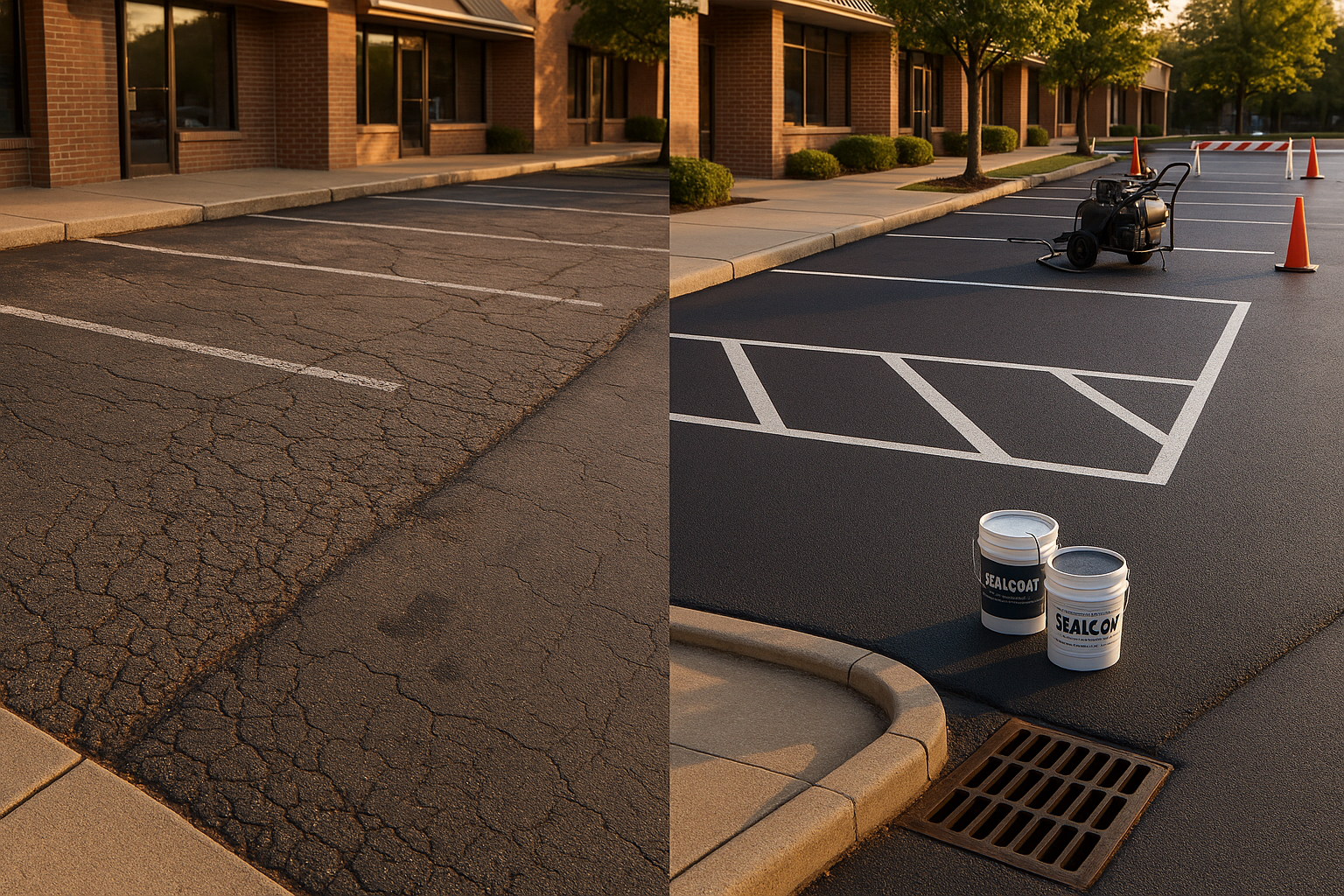
And here's the big one: never sealcoat permeable asphalt. Sealcoat fills the voids and kills the permeability. We see it happen—someone treats it like regular blacktop, slaps on a coat of sealant, and then wonders why the puddles came back. Don't do it. If the surface needs repair, we patch with permeable mix, not standard asphalt.
For winter, you can plow permeable asphalt just like normal, but use a rubber-edged blade or keep the blade slightly raised to avoid scraping the surface. Salt and standard de-icers are okay in moderation, but skip the sand—it clogs the pores. In fact, because permeable pavement dries so fast, you often need less salt to begin with. That's a nice bonus when plow trucks are spreading less material. For more on winter pavement care, check out this guide on snow plow damage to parking lots.
What It Costs and Whether It's Worth It
Let's be real: permeable asphalt costs more upfront than standard asphalt. The open-graded stone reservoir and extra site prep add to the bill. But you're not just paying for pavement; you're paying for a drainage system built into the parking lot. That can mean fewer catch basins, less pipe, and less grading. On some projects, we've seen the total project cost come close to conventional asphalt once you factor in the drainage work you'd otherwise need.
And in some Indianapolis-area municipalities, permeable pavement can help with stormwater utility fee credits. The City of Indianapolis and several surrounding communities have MS4 stormwater programs that encourage on-site infiltration. We can help you gather the documentation needed for any credits or permits. That doesn't happen automatically, but it's worth asking about.
If you're tired of puddles, ice patches, or drainage issues on your commercial property, let's take a look. We'll do a site assessment, test the soil, check the slope, and give you a clear scope and quote—including whether you need an underdrain or a hybrid design. No pressure, just real advice for your specific site. Request a permeable asphalt assessment here.
Ready for a free lot assessment?
We walk the lot, photograph the problems, and hand you a written plan — no pressure, no obligation.