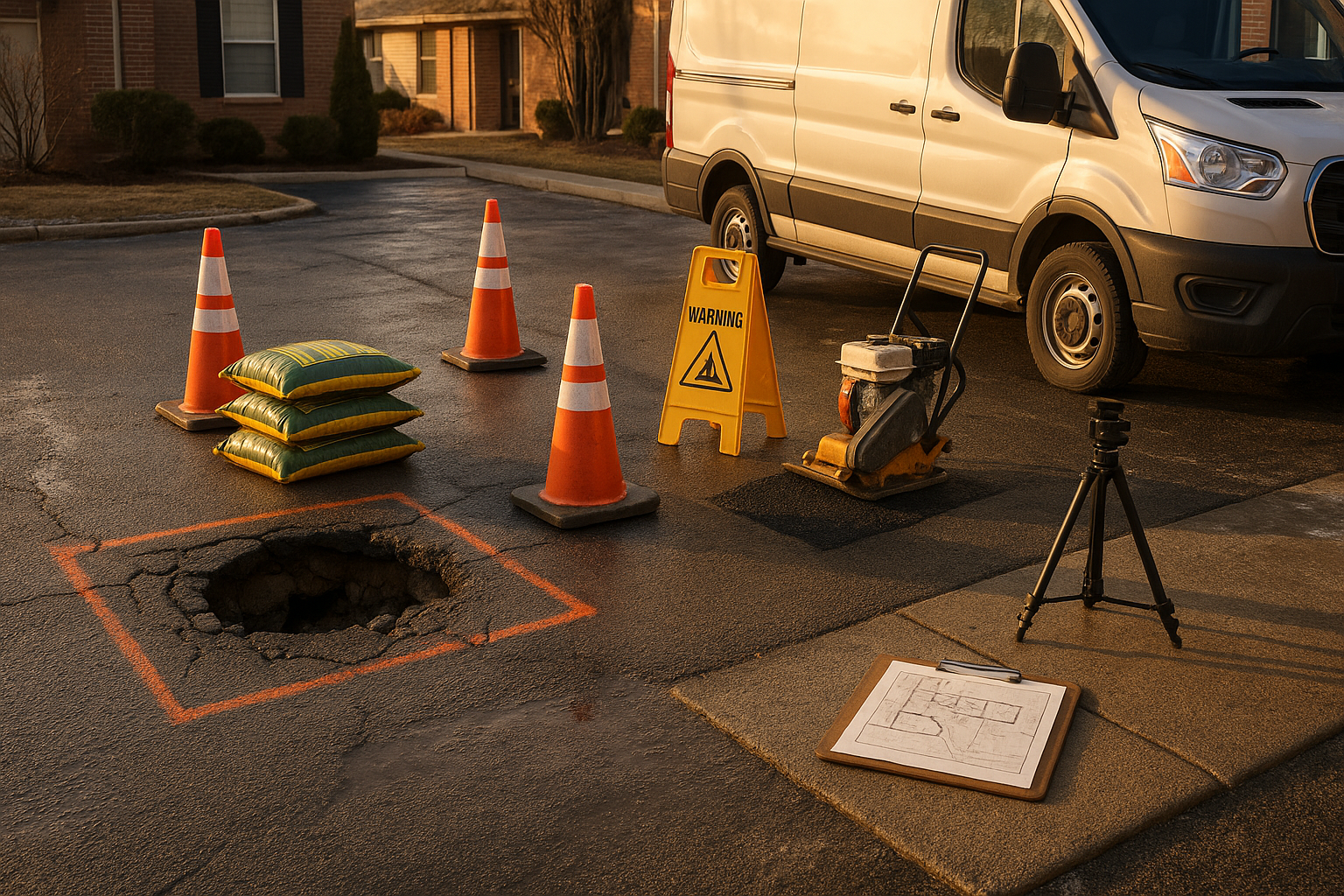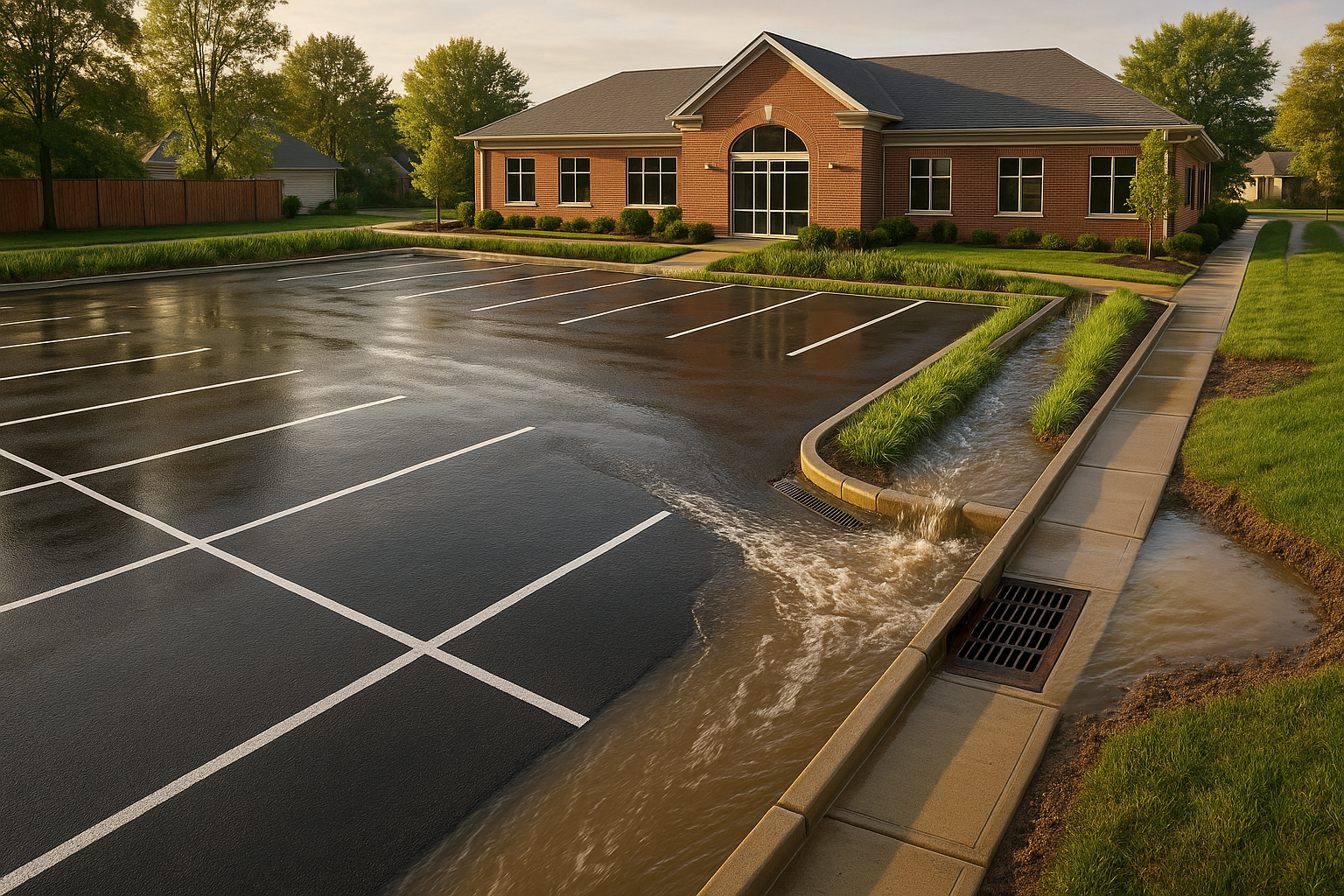
Mike owns a small medical office in Fishers. Last year he added 22 parking spaces to handle growth. The paving crew laid down fresh asphalt, striped it, and everyone was happy. Then came a July thunderstorm. Water sheeted off the new lot, overwhelmed the old catch basin, and flooded the neighbor's back yard. A few weeks later, Mike got a violation notice from Indianapolis DPW. He ended up tearing out a strip of his brand-new asphalt to install an underground detention system. The repair cost him almost as much as the original expansion. The worst part? A simple site walk and code check before paving would have caught it.
If you're managing a lot in Indianapolis, Carmel, Fishers, Zionsville, Westfield, Noblesville, Greenwood, Brownsburg, Avon, or Plainfield, stormwater detention requirements are not something you can skip. This stuff is baked into every Marion County drainage review.
What Stormwater Detention Actually Is (and Why Indianapolis Cares)
Most parking lots are impervious surface. You know, asphalt and concrete that don't let water soak in. When rain falls on a big open lot, the water runs off fast. If you don't slow it down, that runoff can flood nearby streets, yards, and basements.
Stormwater detention is basically a temporary holding area for that rush of rainwater. You store the water during the storm, then let it out slowly through a control structure, often a small opening called an orifice. Detention is different from retention. Retention holds water permanently (like a pond). Detention dries out after the storm passes.
Indianapolis sits on flat, clay-heavy ground. Water doesn't drain well naturally. Combine that with short, intense summer storms, and you get a lot of water moving fast. That's why the city has MS4 compliance rules and why the Indianapolis DPW stormwater manual requires detention on many paving projects. The goal is peak flow reduction. You're not reducing the total amount of water, just the rate it leaves your site.
When Do You Need Stormwater Detention on a Parking Lot Job?
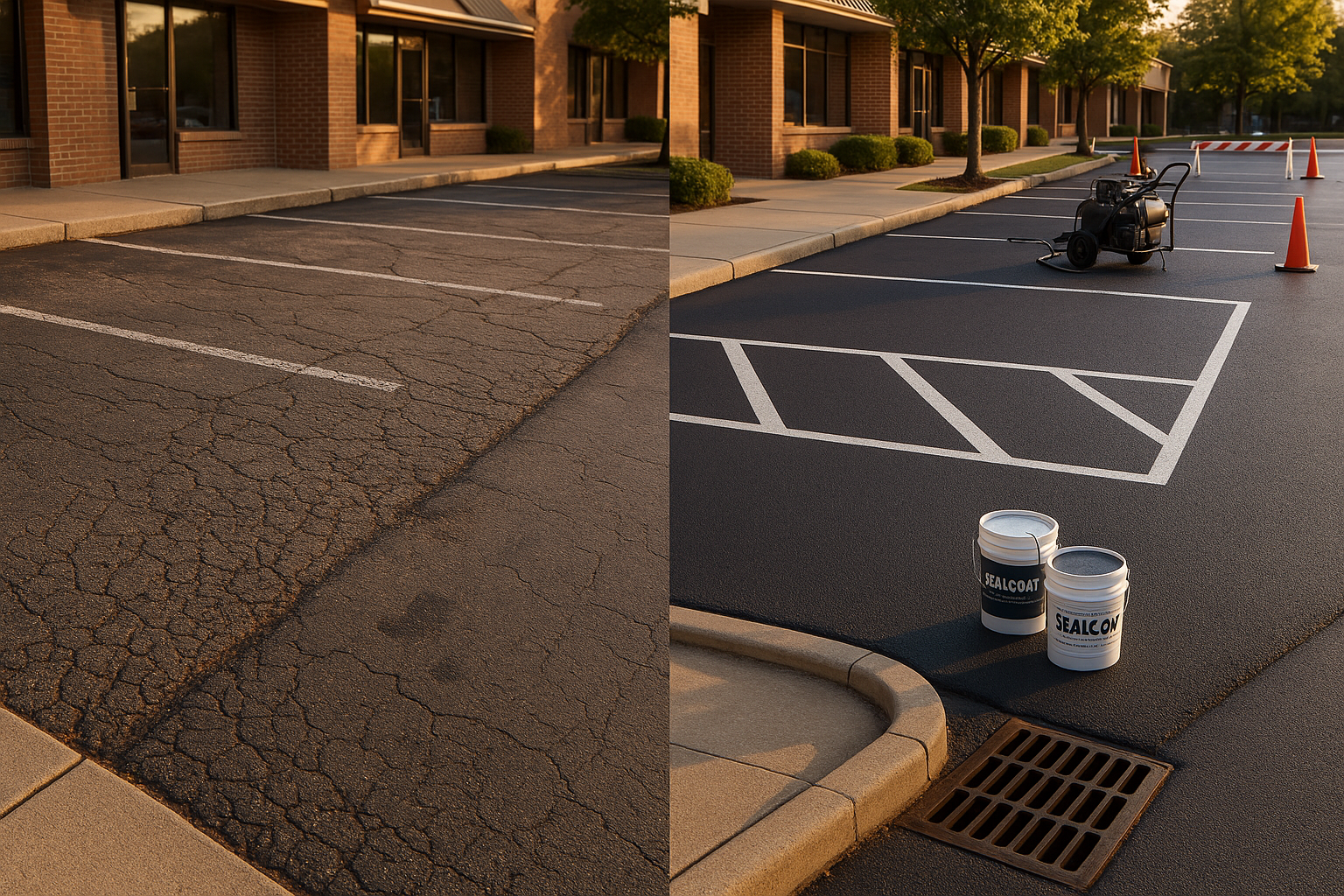
Here's the part that trips people up. A simple sealcoat or patch job? Probably not. A full mill-and-overlay? Usually still no, as long as you're not changing the footprint or drainage pattern. But expand your lot by even a few spaces, or tear out a gravel area and pave it, and you've just increased impervious surface. That triggers redevelopment thresholds under the Indianapolis DPW stormwater manual.
Same goes for any land disturbance over a certain size. The exact numbers change, so don't guess. The city updates their requirements periodically. A quick call to Indianapolis DPW or a pre-submittal meeting with a reviewer can save you a world of hurt. As a general contractor, PavementPros does this code check on every project. We don't start digging until we know what stormwater detention requirements apply.
Sizing and Design: The Engineer's Part (and Why You Can't Skip It)
Detention isn't something you eyeball. You need hydrologic calculations, usually done using something like TR-55. An engineer looks at pre-development runoff versus post-development runoff, picks a design storm (often a 10-year or 25-year event), and figures out how much storage you need. Then they design an orifice control structure so the water releases at an allowed rate.
This is not a DIY task. You need a licensed civil engineer in Indiana to seal the drainage report. The report goes to Indianapolis DPW as part of your stormwater review. If you're in a combined sewer area, you might also need to coordinate with Citizens Energy. PavementPros works with local engineers all the time. You bring us the site, we bring the paperwork.
Detention Options That Fit Tight Sites
"My site is too small for a pond," is the most common objection we hear. Fair. Most urban lots can't afford a big open basin. But you have options.
Underground detention systems are popular. Think of rows of plastic chambers or oversized pipes buried under the parking lot. They store water in the void space, then let it out slowly. You park on top, so you don't lose any spaces. We've installed these under lots in Broad Ripple, Fountain Square, and even tight suburban sites in Zionsville.
Another option is permeable asphalt Indianapolis contractors are starting to use more. Permeable asphalt has larger stone voids that let water soak through to a stone reservoir below. That reservoir acts as detention. It works well in freeze-thaw climates if you maintain it, and you can combine it with a bioswale along the edge to handle overflow.
For a small expansion, sometimes a shallow vegetated basin or a trench drain tied to an underground pipe does the job. The key is to talk to an engineer early, before you fall in love with a layout.
Making Drainage Work with Your Asphalt
Detention is only half the battle. The water has to get to the detention system. That means parking lot drainage design matters. Curb-and-gutter, catch basins, and inlets all have to slope the right way. If you grade the lot flat, water ponds in low spots and eventually breaks down the asphalt.
We see this all the time on older lots. A catch basin sits high, so water bypasses it. Or the asphalt heaves from freeze-thaw and creates a dam. That's why we spend extra time on site grading and asphalt paving. Positive flow, proper base compaction, and smooth transitions at inlets are non-negotiable.
If you're replacing a catch basin or adding new inlets, check out our catch basin repair guide. It covers what goes wrong and how to fix it right.
The Permit Process: DPW, BNS, and Staying Out of Trouble
Indianapolis doesn't mess around with stormwater permits. You need a site plan, a drainage report, and a Stormwater Pollution Prevention Plan (SWPPP) if you're disturbing land. The city's Department of Public Works (DPW) reviews stormwater. The Department of Business and Neighborhood Services (BNS) handles building and site permits. If you're in a combined sewer area, you'll also deal with utility coordination.
As a general contractor, PavementPros manages this whole dance. We submit the parking lot expansion permits and coordinate with the engineer. You don't have to figure out which form goes where. That alone can save you weeks.
Construction Without Shutting You Down
"We can't close the lot," is something every property manager says. Fair. Customers and tenants need access. That's why we phase the work. We pave half the lot, stripe temporary lines, and route traffic over to the finished side. Temporary drainage controls—silt fence, inlet protection, a small pump if needed—keep the site compliant while we work.
For an active medical office in Carmel, we did a full expansion plus underground detention in three phases. The clinic never closed. The only complaint we got was from a patient who had to walk an extra 50 feet to the front door.
Maintenance So You Don't Get Fined or Flooded
Once your detention system is in, you're not done. The city requires a stormwater detention maintenance plan. That means cleaning inlets, checking orifice plates for clogs, and vacuum sweeping permeable surfaces. Sediment is the enemy. If it plugs the control structure, your detention basin stops detaining, and you're back to square one.
Winter adds another layer. Snowmelt and refreezing can turn a small low spot into an ice rink. Keep inlets clear and make sure water drains away from walkways. A little maintenance now prevents a slip-and-fall lawsuit later.
Retrofits for Older Lots
Maybe your lot was built before today's rules. Now it floods every spring, and you're tired of patching potholes. You don't have to rip it all out. We can mill off the top layer, regrade low spots, and add inlets or short runs of pipe. Sometimes a discrete underground detention retrofit along the property line solves the problem without sacrificing parking.
If you're considering milling and overlay to fix drainage, read our guide on asphalt milling and recycling. It's cheaper than full reconstruction and can improve slope dramatically.
What Happens If You Skip Detention?
You might get lucky for a year or two. Then a big storm hits. Water backs up, floods the neighbor, washes out your base, and the city comes knocking. You'll get a violation, a stop-work order, or worse. And here's the kicker: fixing it after the fact costs more than doing it right the first time. Mike from Fishers can tell you.
Your Next Step: A Site Walk and Code Check
Stormwater detention requirements in Indianapolis don't have to be a mystery. But they do have to be addressed early. Before you call three paving companies for bids, call us for a site walk. We'll look at your lot, pull the Marion County drainage requirements, and tell you straight what you need—detention, no detention, or something in between. Then we'll put together a compliant paving-and-detention plan with a real schedule and a real price.
We work all over the metro: Indianapolis, Carmel, Fishers, Zionsville, Westfield, Noblesville, Greenwood, Brownsburg, Avon, and Plainfield. No jargon, no surprises, just a local general contractor who's done this a thousand times.
Book your free site assessment and code check here. We'll come out, walk the lot, and give you a straight answer.
Ready for a free lot assessment?
We walk the lot, photograph the problems, and hand you a written plan — no pressure, no obligation.