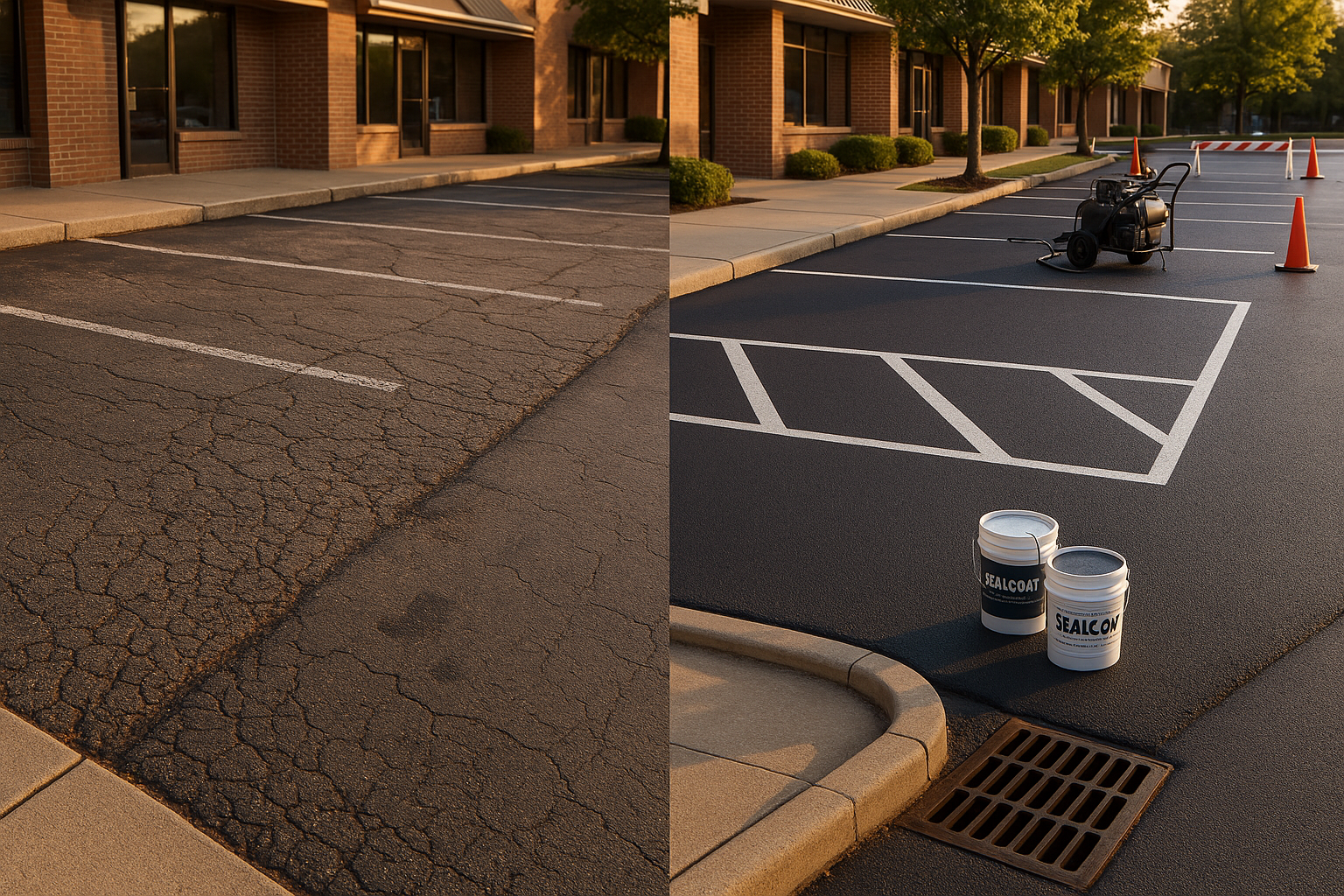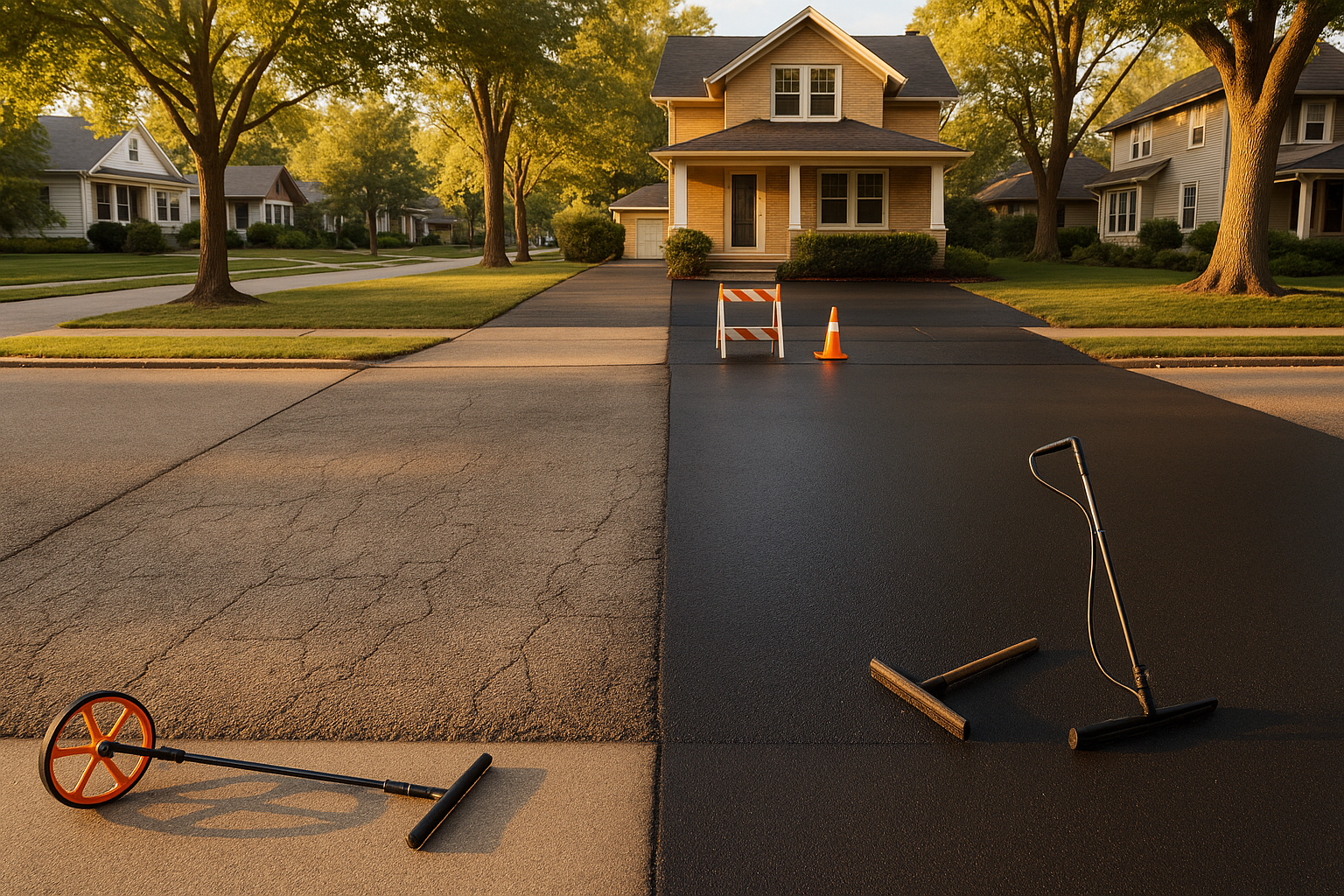
Last spring, a homeowner in Fishers called me in a panic. His blacktop driveway had turned that chalky gray color, with hairline cracks creeping in from the edges. He was sure he needed a full repave—something like eight grand. I took one look and told him the truth: your pavement isn't dead, it's just thirsty. A good blacktop driveway sealing job brought it back to life for a fraction of the cost. That's the thing people miss. Sealcoating doesn't fix structural problems, but it stops them before they start. And in Indianapolis, with our freeze-thaw cycles and road salt, skipping it is a gamble.
What Blacktop Driveway Sealing Actually Does
Sealcoating is like sunscreen for your driveway. It blocks UV rays that dry out the asphalt binder and cause oxidation—the main reason your blacktop turns gray and brittle. Snow, ice, and de-icing salts make it worse. If you've ever seen raveling (that loose gravel on the surface), you know what neglect looks like. See raveling asphalt surface loss for a closer look. Sealcoating also repels water, which is huge here because water seeps into tiny cracks, freezes, expands, and cracks them wider. A $300 sealcoat beats a $3,000 patch job any day.
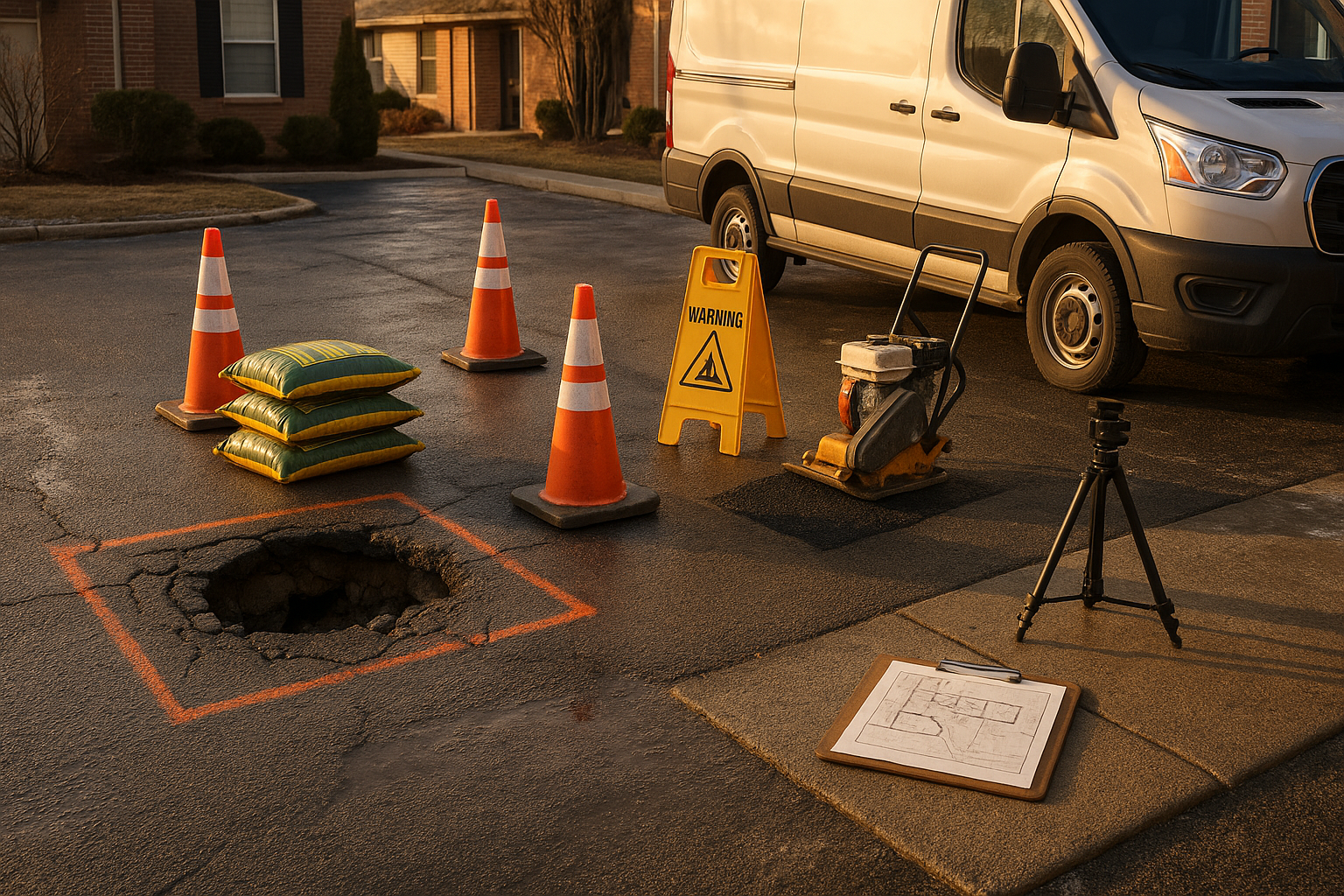
But let's be clear: sealcoating is not a structural repair. It won't fix potholes, birdbaths, or base failures. It's a protective layer. We use a polymer-modified asphalt emulsion, not coal tar. Coal tar has that strong smell and safety concerns. Our stuff is low-odor and driveway-safe. It's got fine sand mixed in for traction so it's not slippery when wet. That sand also helps hide scuffs from basketball hoops and snow shovels.
See our guide on asphalt oxidation and color fading for more on why driveways gray out.
When Is the Best Time to Sealcoat in Indiana?
You want dry, mild days. For Indianapolis, that's usually late May through early October. Aim for temps between 50°F and 90°F. Anything colder and the sealer won't cure right. Anything hotter and it dries too fast and doesn't bond well. Most important: give it 24 to 48 hours of dry weather after application. That means no rain, no sprinklers, no morning dew. In summer, dew can be an issue if we start too early. We schedule start times to avoid that.
Tree-lined streets in Broad Ripple, Meridian-Kessler, or Irvington need extra thought. Shaded driveways cure slower, so we might need a longer window. And watch for leaf drop in fall or pollen in spring—they'll stick to wet sealer and ruin the finish. If you've got sprinklers near the driveway, shut them off for a couple days. We'll barricade the area off anyway.
The Sealcoating Process: Prep, Crack Filling, and Two Coats
Prep is where most DIY jobs go wrong. We start by blowing and power cleaning the surface. Then we pull any vegetation from edges—grass and weeds love to creep into cracks. Oil stains get a special primer so the sealer actually sticks; otherwise it peels off in a few months. Then we fill cracks. Hairline cracks get a hot rubberized crack sealer; bigger ones might need routing first. Skipping this step means water gets under the sealer and the whole thing fails.
After prep, we apply the sealer. We use a combination of squeegee and spray. Squeegee pushes the sealer into the surface for a thick, even coat on open areas. Spray gets the edges tight along pavers, curbs, and garage doors. Two thin coats beat one thick coat. You end up with a smooth, satin-black finish that looks sharp.
Light foot traffic is okay after about 24 hours, but keep cars off for 48 to 72 hours depending on weather. We'll do a rub test—if no black comes off on your finger, you're good to drive. Need more details on edge cracking? Check out edge cracking on parking lot perimeters—the same stuff applies to driveways.
What Does Blacktop Driveway Sealing Cost in Indianapolis?
For a typical two-car residential driveway in the Indy metro, you're looking at a range of about $350 to $800. That includes cleaning, crack filling, two coats, edge cleanup, and barricades. Bigger driveways or ones with lots of prep—like heavy oil staining or deep cracks—can push it higher. But it's still cheap compared to repaving. Most homeowners seal every 2 to 3 years, and that keeps the blacktop looking new and extends its life by a decade or more.
The best way to know your cost is to have someone measure and give you a straight quote. We don't do vague estimates. We'll walk the driveway with you, point out trouble spots, and explain exactly what's included. No pressure, just facts.
Common Worries: Rain, Slipperiness, and Coal Tar
Rain is the big one. If it rains right after we finish, the sealer can wash off in spots. That's why we watch the forecast like a hawk. If there's any chance of rain within 24 hours, we reschedule. Better to wait a week than waste your money.
Slipperiness? Not an issue with our sand-loaded sealer. It gives grip even when wet. Snowplows and shovels? If you seal in late summer and let it cure fully, it'll hold up fine over winter. Just don't scrape with a metal edge right down to the pavement—same thing you'd do with a new asphalt driveway.
And no, we don't use coal tar. That stuff's on its way out. Our polymer-modified emulsion is safer for your kids, pets, and the storm drains that run into the White River.
If your driveway is looking gray or you're tired of patching cracks every spring, get a local pro to take a look. PavementPros offers free on-site assessments for blacktop driveway sealing all over Indianapolis, Carmel, Fishers, Zionsville, Westfield, Noblesville, Greenwood, Brownsburg, Avon, and Plainfield. We'll measure, check your prep, and hand you a clear written quote. Request your assessment here.
Ready for a free lot assessment?
We walk the lot, photograph the problems, and hand you a written plan — no pressure, no obligation.