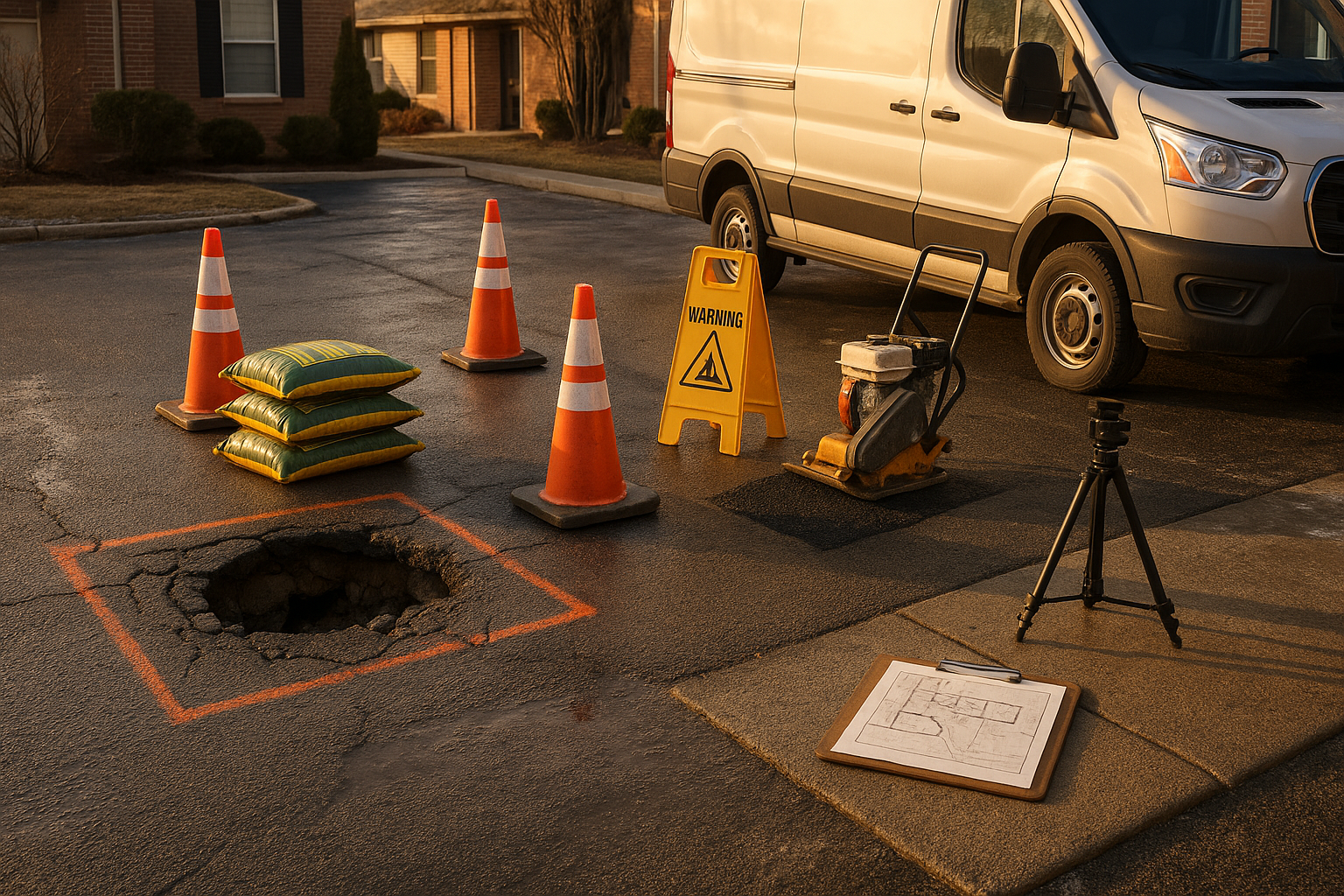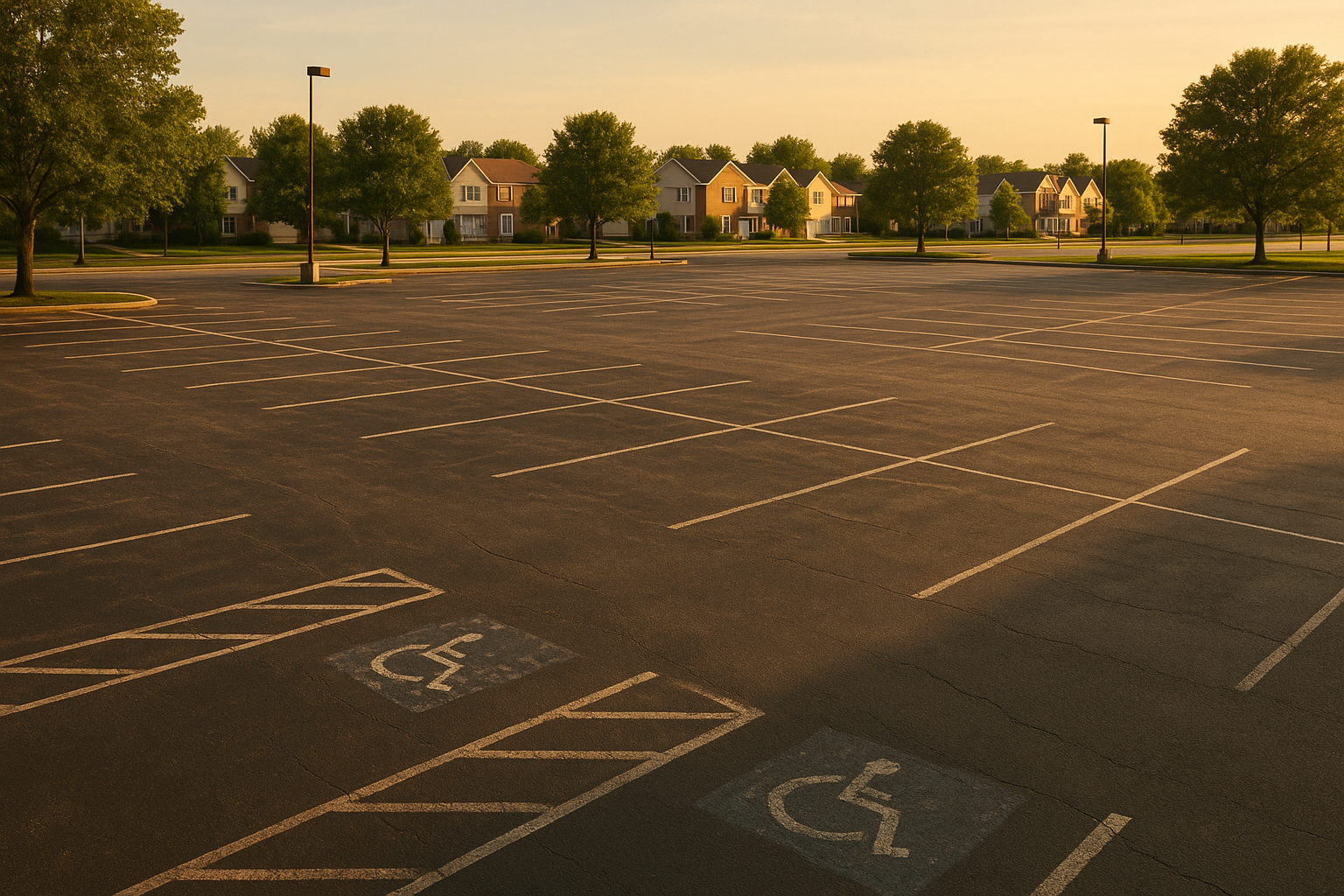
I remember talking with a church trustee in Fishers last spring. He was standing in a faded parking lot, shaking his head. A guest had tripped over a pothole that morning because the lines were so worn you couldn’t tell where the walkway was. That’s the kind of thing that keeps facility managers up at night. Church parking lot maintenance isn’t glamorous, but it’s the first ministry moment many visitors have. If the lot feels neglected, they wonder what else is neglected.
Most churches around Indianapolis—Carmel, Zionsville, Greenwood—are dealing with tight budgets and Sunday crowds that fill every space. That trustee wasn’t alone. I’ve heard the same from dozens of pastors: they need a safe, accessible lot, but they can’t shut it down and they can’t overspend. So let’s talk through a realistic plan that respects both your budget and your sanctuary schedule.
Why Your Church Lot Deserves Attention Right Now
Striping isn’t just paint. It organizes the chaos. When lines are crisp, drivers know where to go, near-misses drop, and families with kids or elderly parents feel safer. I’ve seen lots where an older couple took five minutes just to find a drop-off lane—meanwhile cars stacked up behind them. That’s a Sunday morning frustration you can fix.
Beyond flow, there’s liability. If someone falls or a fire truck can’t get through, your church could be on the hook. Clear markings show you care about safety. And honestly, they just make the property look loved. A freshly striped lot tells the neighborhood, “We’re active, we’re here, we’re ready.” It’s a stewardship issue.
Getting the Traffic Flow Right
Walk your lot on a Saturday when no one’s around. Pay attention to where cars naturally go, where they bunch up, where people walk. Many churches in Noblesville and Westfield have odd-shaped lots with one-way aisles that aren’t marked—confusion during Christmas Eve services is no joke.
Optimizing entrances, exits, and drop-off zones usually means a fresh layout. It doesn’t have to cost a fortune. Sometimes it’s just restriping what’s already there, but maybe adding a crosswalk here or a stop bar there. If you’re considering a full re-design, phasing the work can keep the lot open most Sundays. We often start with the most dangerous spots and build from there.
ADA Rules Aren’t Optional—Even for Churches
Religious facilities might wonder: do we have to comply with ADA? In Indiana, yes. The Americans with Disabilities Act applies if your church is open to the public. And even if not strictly required, it’s the right thing to do. We’ve worked with congregations that thought they were exempt and later faced complaints after a visitor in a wheelchair couldn’t access the building.
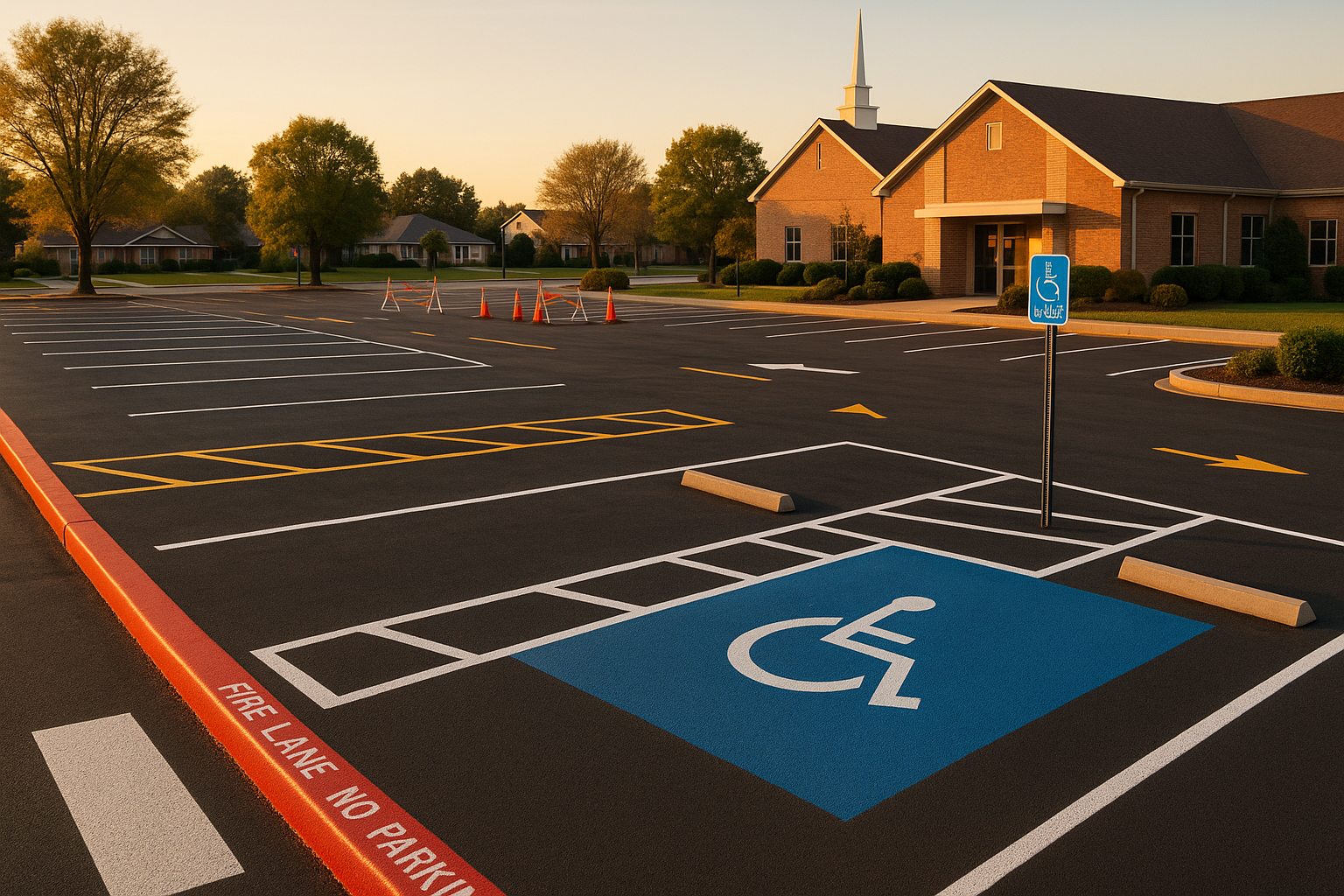
You need the right number of accessible spots based on total parking spaces—usually one van-accessible space for every six accessible stalls. Access aisles must be marked and free of obstructions. Signage should be at the right height and visibility. Blue paint on the asphalt with the International Symbol of Accessibility is standard, but stenciling and proper signs make all the difference. For a full breakdown of Indiana requirements, check out this guide on ADA parking rules.
Fire Lanes and Emergency Access
Most church lots in Marion and Hamilton counties have designated fire lanes near building entrances and hydrants. If those red curbs are faded, you’re risking a fine—and worse, a delayed response in an emergency. Fire lane striping in Indiana typically requires red paint on the curb or pavement and stenciled “FIRE LANE NO PARKING” lettering.
Local fire marshals do inspect, and they’re not shy about enforcement. We’ve seen churches get notices to repaint after just two winters. The harsh freeze-thaw cycles in Indianapolis eat through curb paint fast. So if your red is turning pink, it’s time. And you can’t just slap any paint on there—it needs to be durable, reflective, and compliant. Learn more about the specifics from our fire lane striping requirements post.
Surviving Indiana Weather: Freeze-Thaw and Plows
Anyone who’s lived in Indianapolis knows our winters play dirty. Pavement heaves, cracks widen, and snowplow blades scrape the life out of markings. That’s why church parking lot maintenance here means planning for repainting every 12–24 months—more often if you salt heavily or plow frequently.
When you do restripe, pick materials that can take the abuse. We typically recommend DOT-grade waterborne acrylic with reflective glass beads for night visibility. For high-wear areas like crosswalks and arrows, thermoplastic or epoxy can last longer but costs more upfront. If your budget is tight this year, do the critical areas with premium stuff and the rest with standard paint.
Weather Windows in Central Indiana
You can’t stripe when it’s cold or rainy. The paint won’t adhere and it tracks everywhere—inside the sanctuary, on carpets—nobody wants that. Ideal striping season runs April through October. Spring rain is unpredictable, so we watch the forecast like hawks and use quick-dry materials when we have a short window. If you’re scheduling around services, evening work is common. The lot can often be reopened by morning, but we always cone it off and put up signs so nobody walks through wet paint.
Budget-Friendly Phasing and Priorities
I get it: the budget meeting didn’t go as planned. You might have a few thousand dollars, not twenty. So what do you tackle first? Safety lines, ADA routes, and fire lanes. Those are non-negotiable. Then do directional arrows, stop bars, and crosswalks. Cosmetic stuff like stall numbering can wait.
If you need to stretch the work, phasing is totally doable. Many churches schedule striping in sections: half the lot one week, the other half the next. We work around Wednesday night programs, choir practice, and Saturday weddings. Clear communication with your congregation is key—put it in the bulletin, send emails, maybe even post a cheerful sign: “We’re making your parking safer!” Costs depend mostly on lot size, layout complexity, and whether you’re repainting an existing design or creating a new one. For a detailed breakdown, see parking lot striping costs in Indianapolis.
Don’t Forget the Little Things
Wheel stops seem minor, but they prevent cars from rolling over curbs into landscaping or onto sidewalks. After a sealcoat, they often get removed and not reinstalled properly—or at all. We’ve seen wheel stops floating in the middle of a space, tripping hazards for seniors. Proper wheel stop installation and repair is a quick, affordable safety measure.
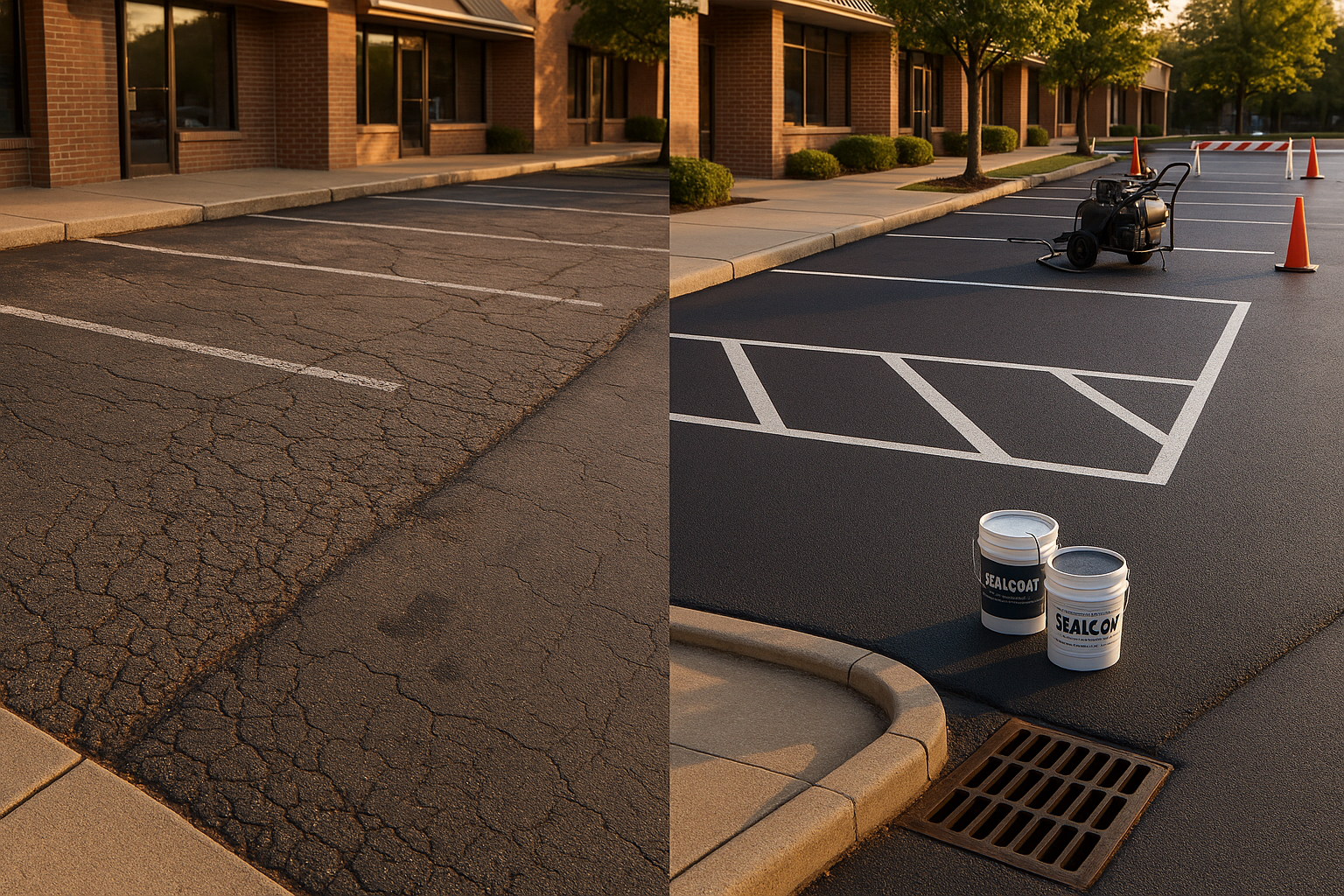
And then there’s sealcoating. In Indiana, sealcoat every 3–5 years to protect the asphalt from moisture and sun. Without it, cracks multiply, and potholes form—right where your greeter’s car parks. If you’re budgeting, combine sealcoat and restriping: seal first, let it cure, then stripe. Fresh lines on a black surface pop beautifully and last longer. For timing, read when to sealcoat in Indiana.
Let’s Make a Plan That Works for Your Ministry
We’ve worked with churches all over the Indy metro—from Plainfield to Brownsburg, Avon to Fishers. Every campus is different. You might have a historic building in Zionsville with narrow lanes, or a massive lot in Greenwood that doubles as a polling place. You need someone who’ll walk the property with you, listen to your concerns, and come up with a phased, budget-conscious striping plan.
At PavementPros, we don’t upsell. We tell you what needs doing now, what can wait, and exactly how we’ll schedule around your ministry calendar. No tracking paint into the sanctuary, no blocking the midweek food pantry. Just a safer, better-looking lot that serves your congregation.
Ready to talk specifics? Get a free, no-pressure site assessment and quote. We’ll bring a layout map and a clear scope so you can present it to your board with confidence.
Ready for a free lot assessment?
We walk the lot, photograph the problems, and hand you a written plan — no pressure, no obligation.