A buddy of mine runs a church over in Broad Ripple. Last December, he calls me up, frustrated. "We just had the lot repainted this summer, and now it's like the lines disappeared once the sun goes down. A couple near-misses in the lot after evening services, and I'm worried about liability." Sound familiar? If you manage a parking lot around Indianapolis, you've probably noticed that standard paint just doesn't cut it once winter hits and daylight fades fast. That's where reflective traffic paint comes in—not some fancy gimmick, but a straightforward upgrade that uses glass beads to bounce your headlights back at you, making lines visible when you need them most.
Now, I'm not gonna pretend reflective paint is magic. It's engineering, plain and simple. But choosing the right materials and getting the application right can make a huge difference in safety, especially during those 5 p.m. sunsets in January when your lot's full of shoppers or families heading out. Let's walk through what actually works, what doesn't, and how to avoid the pitfalls we see all over Marion County.
So What’s Reflective Traffic Paint, Anyway?
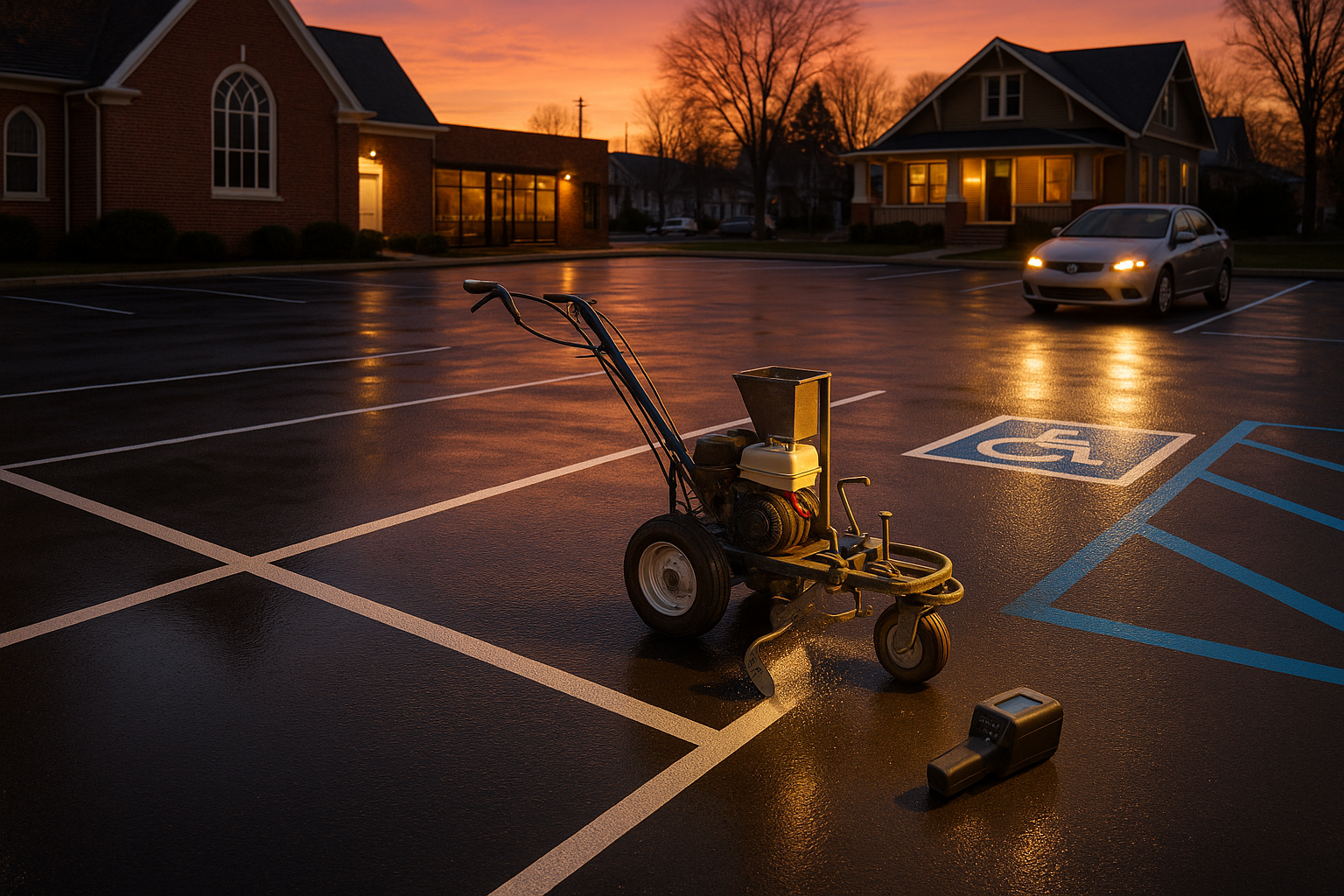
Imagine tossing a handful of tiny glass marbles into wet paint. That's basically the idea. Reflective traffic paint is ordinary striping paint—usually waterborne acrylic—but while it's still wet, we drop on millions of microscopic glass beads. Those beads act like tiny mirrors. When headlights hit them, the light bounces straight back to the driver (that's called retroreflection). Standard paint without beads just scatters light, so at night or in rain, it goes dark.
The difference is night and day, literally. On a dry night, well-beaded lines glow bright. But wet conditions are trickier. Standard beads can get drowned in a film of water, so you lose reflectivity. That's why we often recommend larger "Type III" beads that protrude above the water layer—critical for those drizzly March days or when the snow's melting and everything's slick. If you've ever driven through a lot near Fishers or Carmel in the rain and couldn't see the stall markings, you know exactly why this matters.
The Indy Factor: Why Our Lots Need More Than Basic Paint
Indianapolis isn't gentle on pavement. Our winters mean snow plows scraping across the surface, deicing salt and brine eating away at the paint, and freeze–thaw cycles that make the asphalt crack and shift. Then you add early sunsets from November through February and overcast skies that make 4 p.m. look like midnight. In neighborhoods like Greenwood or Zionsville, where lots might have limited lighting, reflective markings aren't a luxury—they're a safety staple.
Think about high-turnover spots: retail centers around Keystone at the Crossing, medical offices off 86th Street, churches in Westfield, school pick-up zones in Avon. These places see constant traffic, often during dim or wet conditions. I've had facility managers tell me they can tell exactly when the beads are gone because the confusion in the lot goes up. One HOA president in Brownsburg said after re-striping with reflective paint, they actually got fewer complaints about near-misses. And if you're dealing with a lot that serves elderly patients or families with strollers, visibility is a non-negotiable.
That's why we never just slap on cheap paint and call it a day. The local climate and usage patterns demand a smarter approach—like scheduling striping around our fickle Midwest humidity. (More on that later.)
Material Smarts: Beads, Paints, and What Actually Holds Up
Not all reflective traffic paint is created equal. The base paint matters. Waterborne acrylic with drop-on beads is the workhorse for most parking lots—it's fast-drying (often traffic-ready in under an hour), compliant with VOC rules, and bonds well if the surface is prepped right. But in areas with heavy truck traffic, like near IND Airport or Plainfield's logistics centers, we might step up to epoxy or polyurea. Those are tougher, last longer, and resist grease and fuel spills better. The trade-off: they cost more, and polyurea sets so fast you need specialized equipment.
Then there's the bead type. Standard "Type I" beads are fine for dry-night visibility and most lots. But if you've ever driven through a wet lot and thought, "where'd the lines go?", you need Type III (wet-night visibility beads). They're larger and have a higher refractive index, so they peek through the water film. We often blend bead types to get the best of both worlds. The magic number is embedment: you want about 50–60% of the bead buried in the paint. Too shallow, and they pop out quick; too deep, and they don't reflect well. It's a balance that comes from proper application, not guesswork.
And don't overlook thickness. The mil thickness of the paint layer directly affects bead retention and durability. Too thin, and the beads have nothing to hang onto. Too thick, and you're wasting material and risking long cure times. We spec this based on the surface and expected wear.
Getting It Done Right (So You’re Not Back at Square One in Six Months)
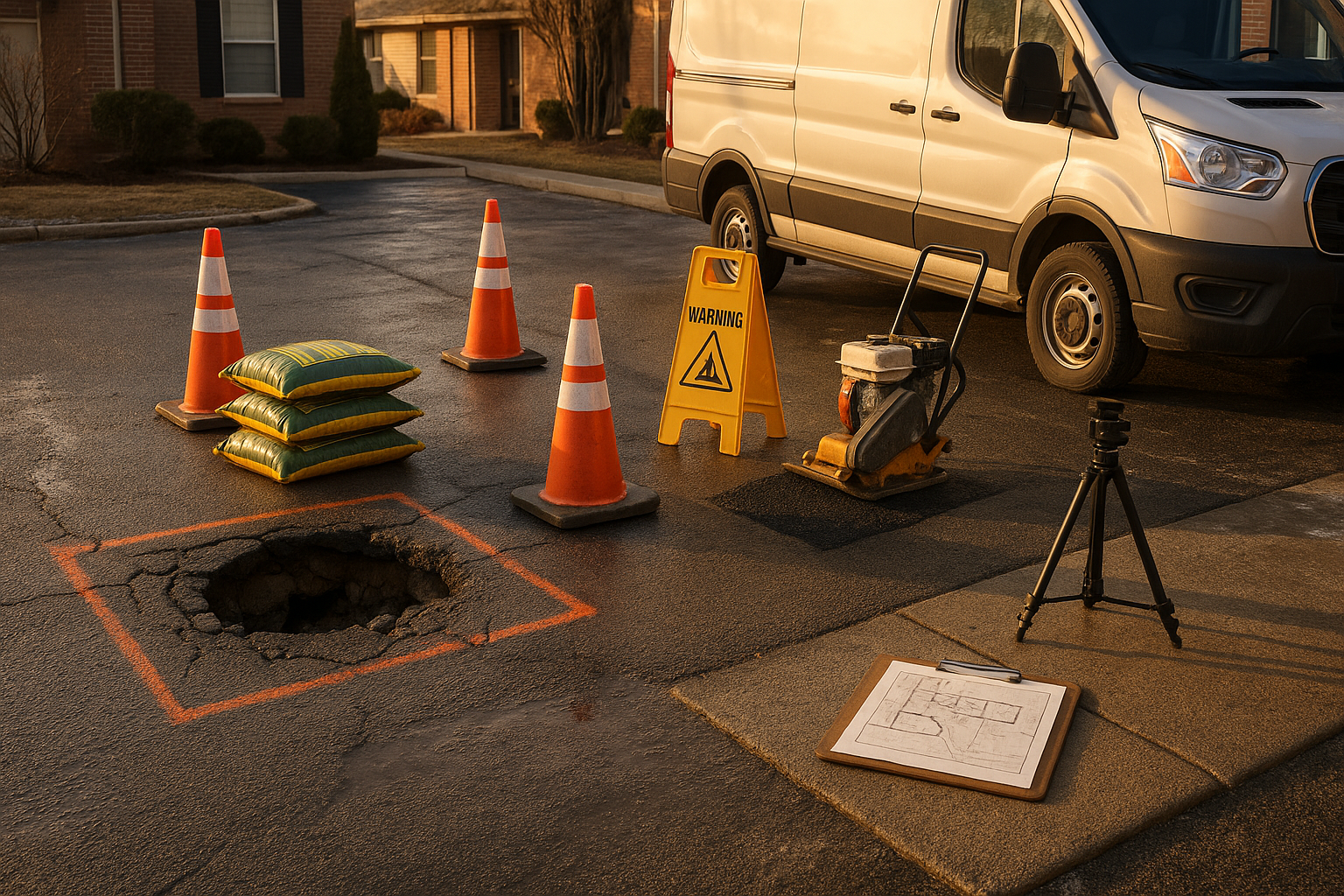
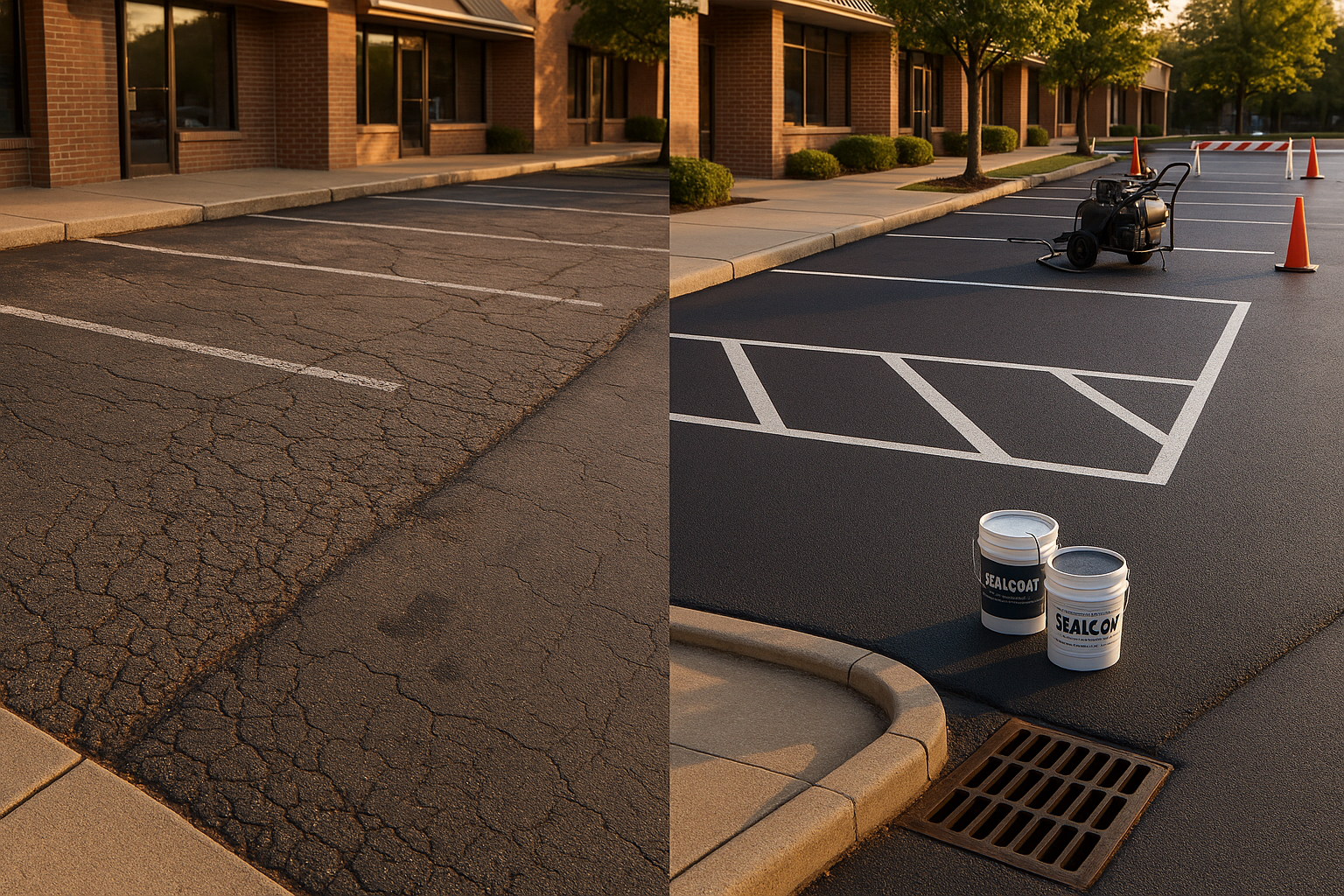
Execution is where most jobs go sideways. You can’t just roll up and start spraying. Surface prep is half the battle: pressure washing and sweeping to get rid of dirt, oil, and old loose beads. (If you skip this, the paint won't bond, and the new beads will bounce off like popcorn.) We wrote a whole post on when and why pressure washing matters /blog/pressure-washing-parking-lot-when-why/. If the lot was just sealcoated, you have to wait for it to fully cure—usually 24–48 hours, depending on weather—or the paint won't stick.
Speaking of weather, in Indiana, you're always dancing around humidity and pop-up storms. We check the dew point: if the surface temp isn't at least 5°F above the dew point, condensation ruins adhesion. Temperature matters too—most acrylics need 50°F and rising, with no rain in the forecast for a couple hours. Summer humidity in Noblesville or Westfield can delay projects until evening when things cool down.
Then there's the disruption. Nobody wants their lot closed during business hours. We've done plenty of jobs where we phase the work—do one section after close, another the next morning before open—so the business doesn't lose a dime. Check out our tips on minimizing disruption /blog/minimize-business-disruption-parking-lot-work/. And for those worried about reopening time: with waterborne acrylic and a proper dry day, traffic can be back in as little as 30–60 minutes. We always give a firm timeline based on conditions.
Surviving an Indianapolis Winter
Alright, let's talk about the elephant in the room: snow plows. They're hell on markings. No paint is plow-proof, but reflective traffic paint with the right bead embedment and a robust paint base can hold up better because the beads are set into the paint, not just sitting on top. Still, you'll likely need a spring refresh—spraying a fresh topcoat and beads to restore reflectivity. We recommend planning for that as part of a year-round plan. For more on preventing plow damage, read our tips on /blog/snow-plow-damage-striping-curbs/.
Deicing salt and brine are another enemy. They chemically attack the paint film, causing fading and chipping. Standard paint yellows and degrades faster under salt assault. Quality acrylics with UV and chemical resistance do better. And that's another reason we might suggest epoxy or polyurea for high-salt areas (think loading docks or main drive lanes near I-465).
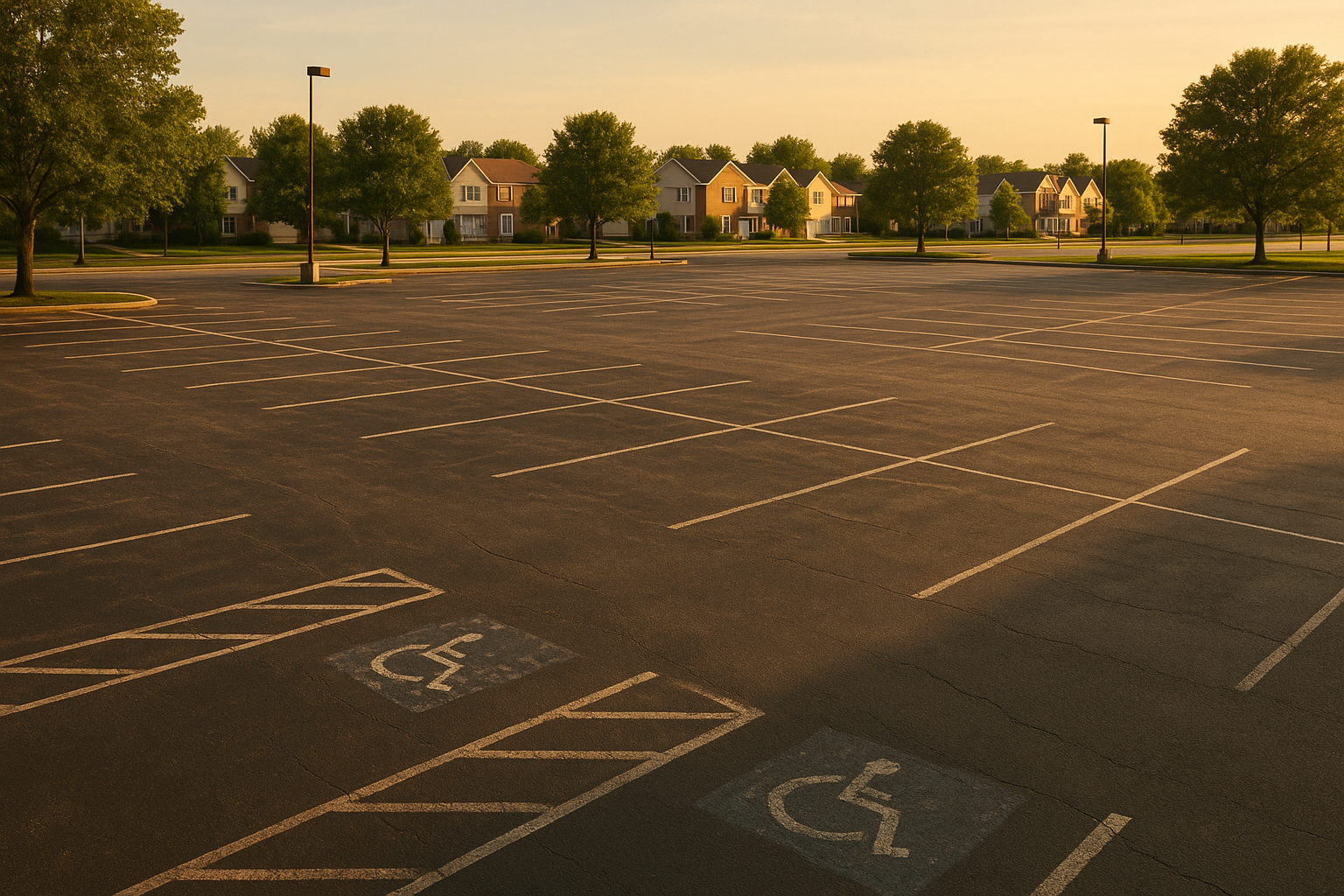
One trick for extending life: after snow season, have us touch up the stop bars, crosswalks, and ADA symbols. Those are your highest-liability areas, so keeping them crisp is smart. And if you're worried about the look—no, reflective markings don't look weird or sparkly during the day. They just look like crisp, clean lines. A fresh lot actually boosts curb appeal, which we've seen matter for retail vacancies. (See our post on curb appeal and first impressions /blog/parking-lot-curb-appeal-first-impressions/.)
The Big Questions: Cost, Durability, and Objections
I get it—reflective paint costs more upfront. But when you factor in liability reduction and fewer touch-ups, it often evens out. A standard paint job might look okay for a year; reflective markings with good beads can stay effective for two years or more, depending on traffic and plowing. Plus, if a slip-and-fall or fender bender happens because someone couldn't see a faded line, that's a whole other cost.
Will it make the surface slippery? No—the beads are embedded, so they're not like loose sand; they add texture, not slickness. Will they pop out? Only if improperly applied or if the surface wasn't cleaned. Do they yellow? High-quality acrylics resist yellowing, but over time, UV exposure will fade any paint. Reflective markings are no worse.
And do you have to restripe from scratch every time? No, we can often restripe over existing lines if they're in decent shape, but we always check for thickness buildup and adhesion. For ADA stalls, fire lanes, and crosswalks, we follow MUTCD standards even on private lots because it's best practice. That means proper dimensions, colors (blue for ADA, white for standard, red for fire lanes), and contrast so everyone can see—including those with mobility challenges.
If you're curious about the actual numbers, we use ASTM E1710 methods to measure retroreflectivity in the field. But honestly, for most property managers, a visual check at night in the rain tells you all you need to know: can you see the lines? If not, it's time.
Let’s Make Your Lot Safer—Without the Headaches
At PavementPros, we’re based right here in Indy, so we know the quirks of local lots—from the brick-paver accents in Broad Ripple to the sprawling church campuses in Fishers. We don’t do high-pressure sales. Instead, we start with a free on-site assessment: we walk your lot, map out what needs to be done, and give you a clear, itemized quote with a phasing plan that fits your schedule. No surprises, no disruption to your business.
If you’re tired of squinting through your windshield on a rainy evening, or just want to make sure your lot is as safe as it can be, let’s talk. Hit the link to request a quote and we’ll come take a look—usually within a few days. Get your no-obligation assessment at PavementPros.com/#quote.
Ready for a free lot assessment?
We walk the lot, photograph the problems, and hand you a written plan — no pressure, no obligation.