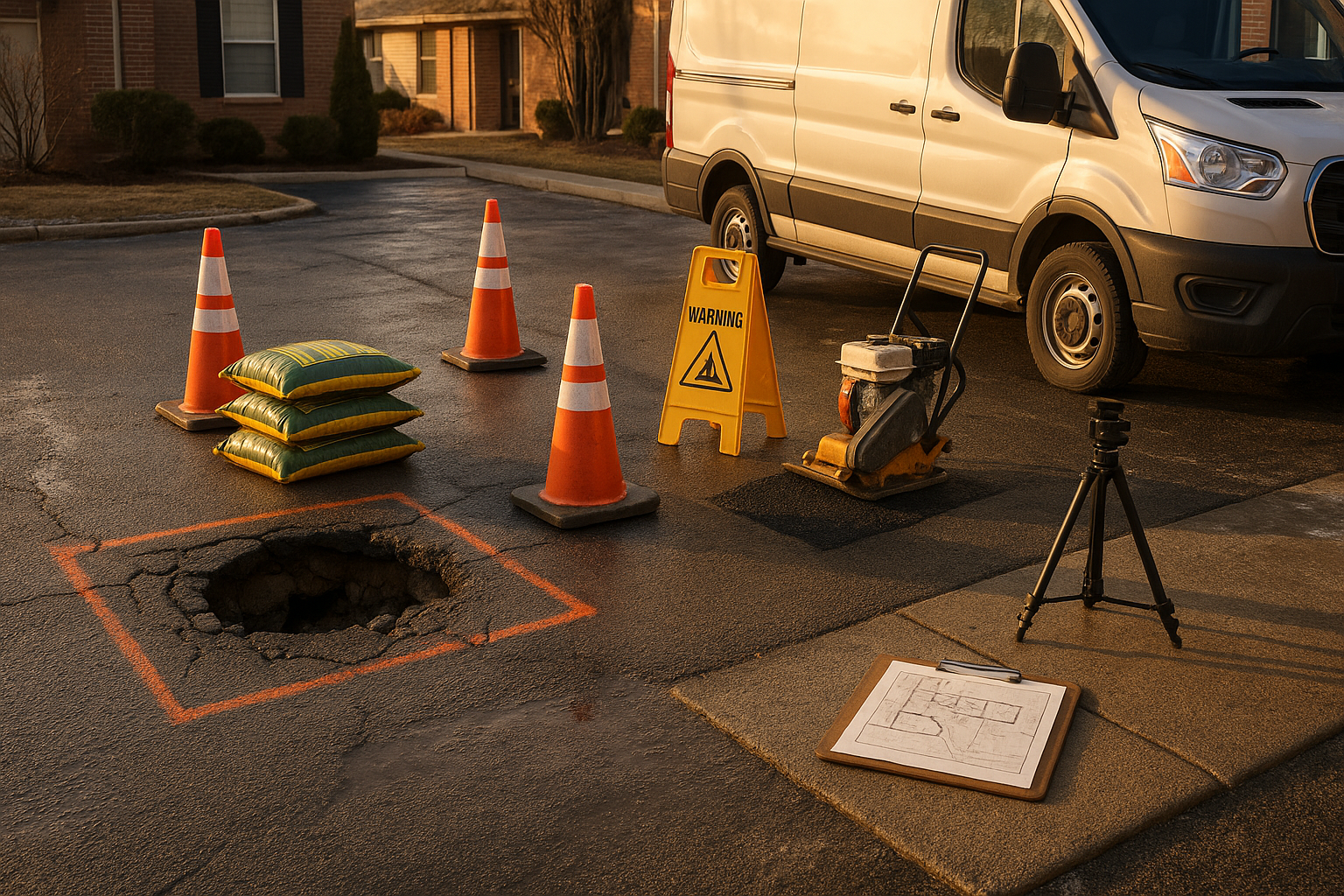
Last fall, a franchise owner in Castleton called us near tears. The drive-thru line at his coffee shop backed up onto 82nd Street every morning. Drivers kept missing the order window because the stop bar and arrows were faded to nothing. Tires had worn the pavement into ruts right where cars idle at the menu board. And after a couple snowstorms, the markings were basically gone. He said, “I’m losing customers because nobody can figure out where to go.” That’s when he realized he needed someone who understood drive thru pavement, not just a guy with a paint sprayer.
That’s what we do at PavementPros. Drive thru pavement in Indianapolis takes a unique beating—constant stopping, starting, tight turns, and winter salt chew it up fast. If you manage a QSR, bank, pharmacy, or any business with a drive-thru, the markings on your pavement are doing way more work than you think. They guide traffic, keep people safe, and actually protect the asphalt underneath. Let’s talk about how drive-thru pavement gets beat up and what you can do about it.
Why Drive-Thru Pavement Takes a Beating
Drive-thru lanes aren’t like normal parking aisles. Cars creep forward, stop, creep again. That slow crawl with weight shifting causes asphalt to rut and shove. Add in SUVs and pickups—and Indy has a ton of those—and you get deeper ruts at order windows and pickup windows. Then winter hits. Snowplows scrape the surface, salting and freeze–thaw cycles pop tiny cracks wide open. By spring, the pavement looks like a roadmap of wear.
We see it all over the metro: Keystone Ave, 86th St, US-31 in Carmel, State Road 135 in Greenwood, Dan Jones Road in Avon. The striping fades first where tires pivot: at the speaker post, the curve around the building, the stop bar before the window. Once the lines are gone, drivers wander. That wandering creates new wear patterns in places the pavement wasn’t designed to handle. It’s a cycle.
Striping That Survives Indianapolis Winters
The right markings can slow down that wear and make your drive-thru safer and easier to navigate. But you can’t just grab a bucket of cheap paint. In Indiana, you need materials that stand up to snowplow blades, road salt, and constant turning. Here’s what we recommend:
- Fast-dry traffic paint is great for quick touch-ups and when you need to reopen the lane in under an hour. For high-traffic QSR lane markings, it’s not the longest-lasting, but it’s perfect for annual refreshes.
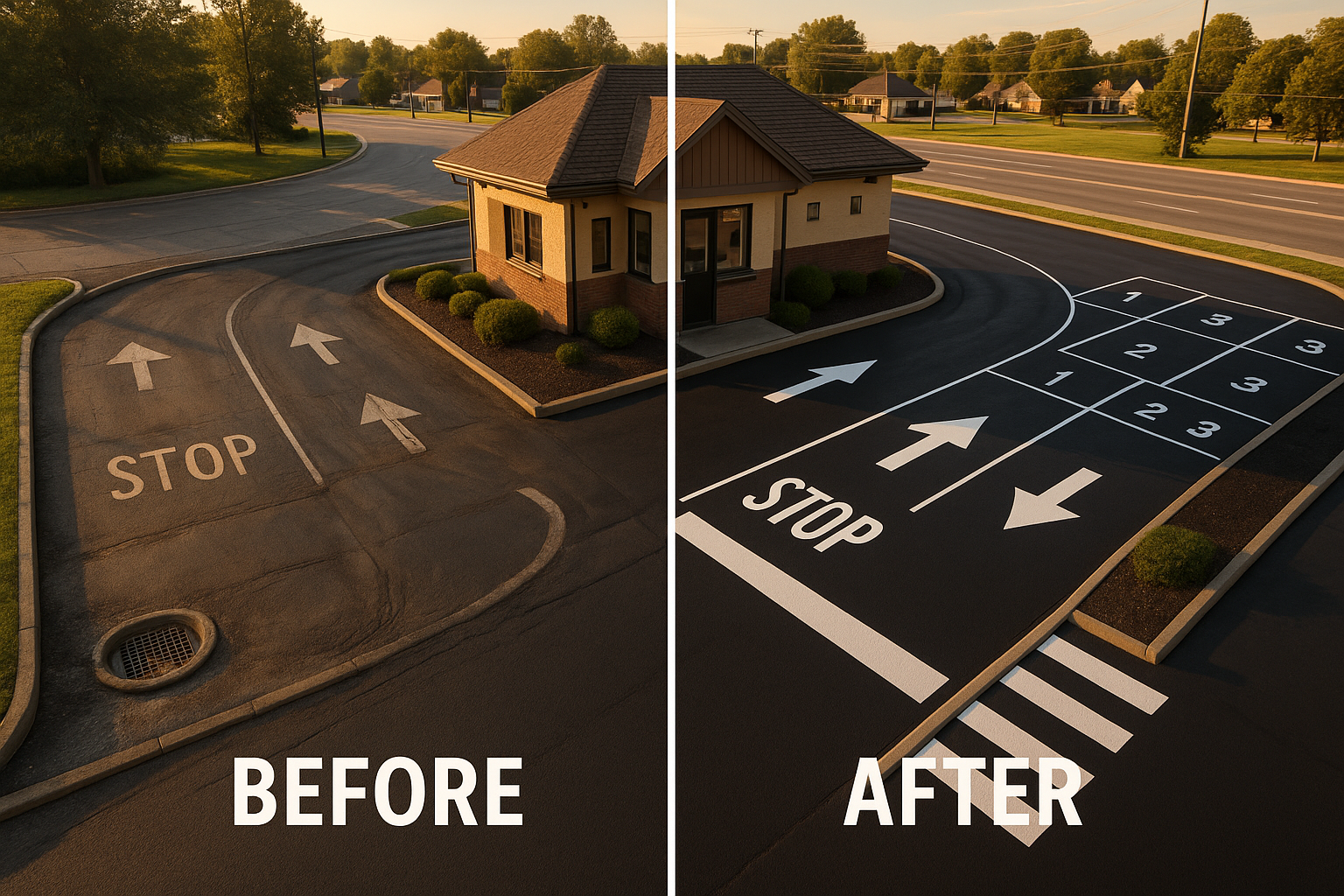
- High-build MMA (methyl methacrylate) is tougher. We use it for stop bars, arrows, and those tight curve areas where tires scrub the most. It bonds to the asphalt and holds up to plow blades better than regular paint.
- Thermoplastic is another durable choice, especially for high-wear markings like crosswalks and stop bars. It needs warmer weather for a good bond, so we usually schedule thermoplastic work between May and September.
We always mix in retroreflective glass beads for night visibility. If your drive-thru runs late (looking at you, 24-hour pharmacies and burger joints), those beads make the lines pop under headlights. That’s a safety win and cuts down on after-dark confusion. And yes, we follow INDOT specifications for striping materials when your drive-thru connects to a state road, because consistency matters.
Layout Mistakes That Accelerate Wear (and How to Fix Them)
Here’s a thing most people don’t think about: bad layout causes more pavement damage. If your stacking lane only holds four cars, then during rush, cars spill into the parking lot and drive over curbs or across pedestrian paths. That extra turning and stopping tears up the pavement in places it shouldn’t. We like to see 8–12 cars of stacking space for a typical QSR. That number comes from watching how many cars pile up during a lunch rush in Fishers or a game-day surge downtown. Too little stacking, and you get chaos.
You also need a wide enough turning radius for those big pickup trucks. Too sharp, and you’ll see the edges of the lane crumble. That’s why we measure the turning path of a full-size truck when we design a bank drive-thru layout or pharmacy drive-thru markings. We also separate entry and exit points where possible, so cars don’t cross paths and cause extra braking.
Drainage is another silent killer. If water ponds near the drive-thru lane—especially off I-465 or in older neighborhoods with flat lots—the asphalt softens and striping peels. Good driveway slope and keeping catch basins clear matter more than you’d guess. In fall, leaves clog drains and hide markings; that’s why we recommend a refresh before the leaf drop gets heavy. Check out our guide on leaf debris and blocked drains for more on that.
And don’t forget about curbside pickup lane striping. If you’re adding mobile order stalls, they need to be clearly marked with numbers and arrows that don’t conflict with the main drive-thru flow. We wrote a whole post on striping layout for curbside pickup that’s worth a read. The last thing you want is a curbside driver cutting across the drive-thru line because the markings overlapped.
Painting Without Shutting Down Your Drive-Thru
I know what you’re thinking: “We can’t close the drive-thru for a day—we’d lose thousands.” That’s fair. Most of the drive-thru striping we do in Indianapolis happens overnight or early morning. We phase the work so one lane stays open while we stripe the other. For fast-dry paint, you can have the lane back in traffic in under an hour after application. MMA takes a bit longer to cure but can often be done in stages with a few hours of downtime. Winter work is trickier, but with the right materials and timing, cold-weather striping is possible—we’ve done it when temps dip into the 40s. The key is proper surface prep and choosing the right product for the weather.
Don’t Forget ADA, Signage, and Crosswalks
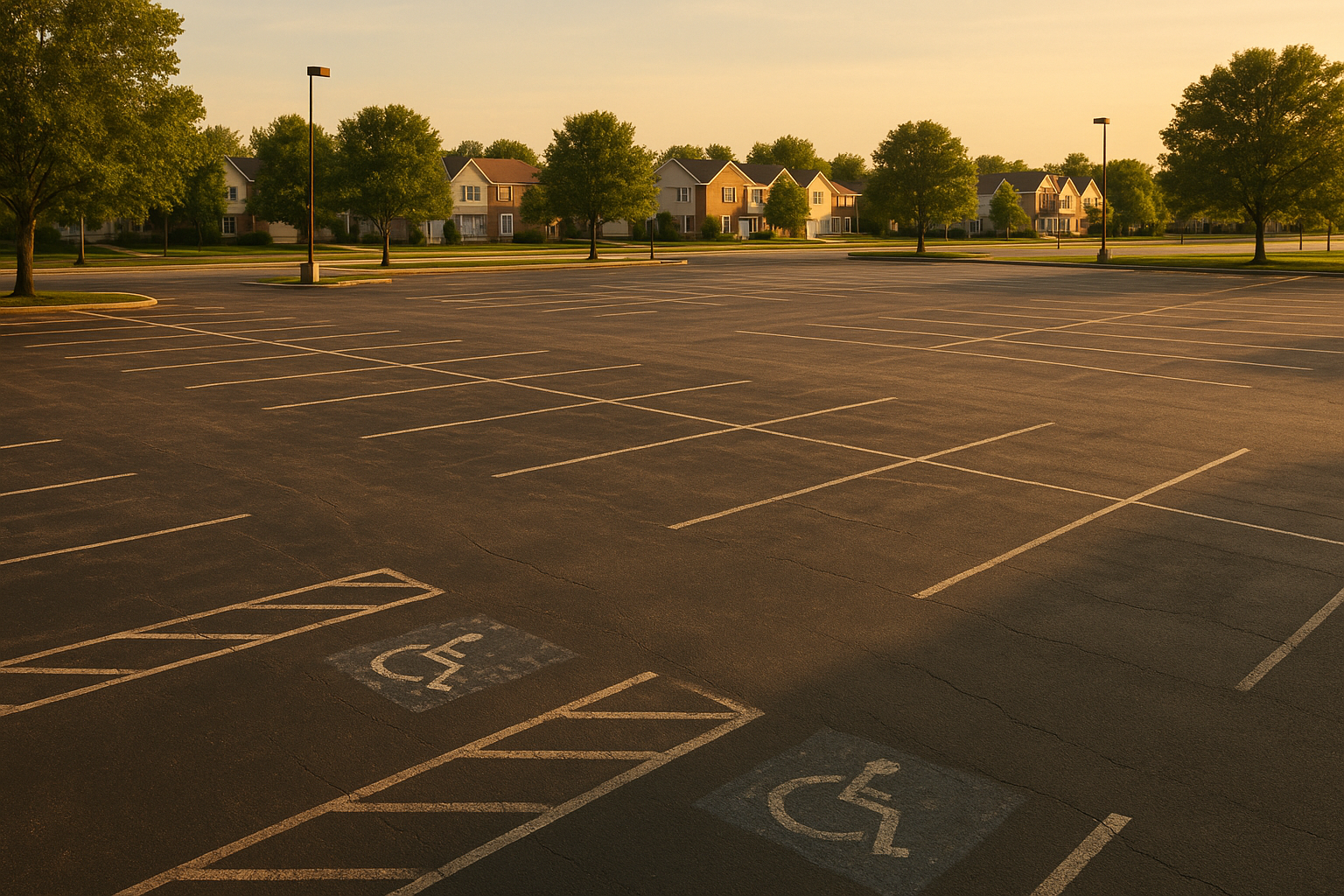
A drive-thru lane cuts right through your property. It can’t block accessible parking or sidewalk routes. We always check that the striping doesn’t interfere with an ADA compliant drive-thru path to the front door. And pavement markings should work with signs, posts, and bollards. If your clearance bar is too low or your stop sign is hidden behind a bush, even perfect paint won’t save you. We coordinate the whole package—pavement markings, signage, wheel stops, and bollards—so it all makes sense together. We’ve got a post on parking lot signage and post repair that covers the non-paint side of things.
One specific thing: mark your pedestrian crosswalk at the drive-thru with high-contrast stripes and retroreflective beads. That’s where customers cross from parking to the building entrance, and it’s easy to miss if you’re not looking. We also use MUTCD compliant markings for consistency, even on private property, so drivers recognize the patterns from public roads.
A Simple Maintenance Plan
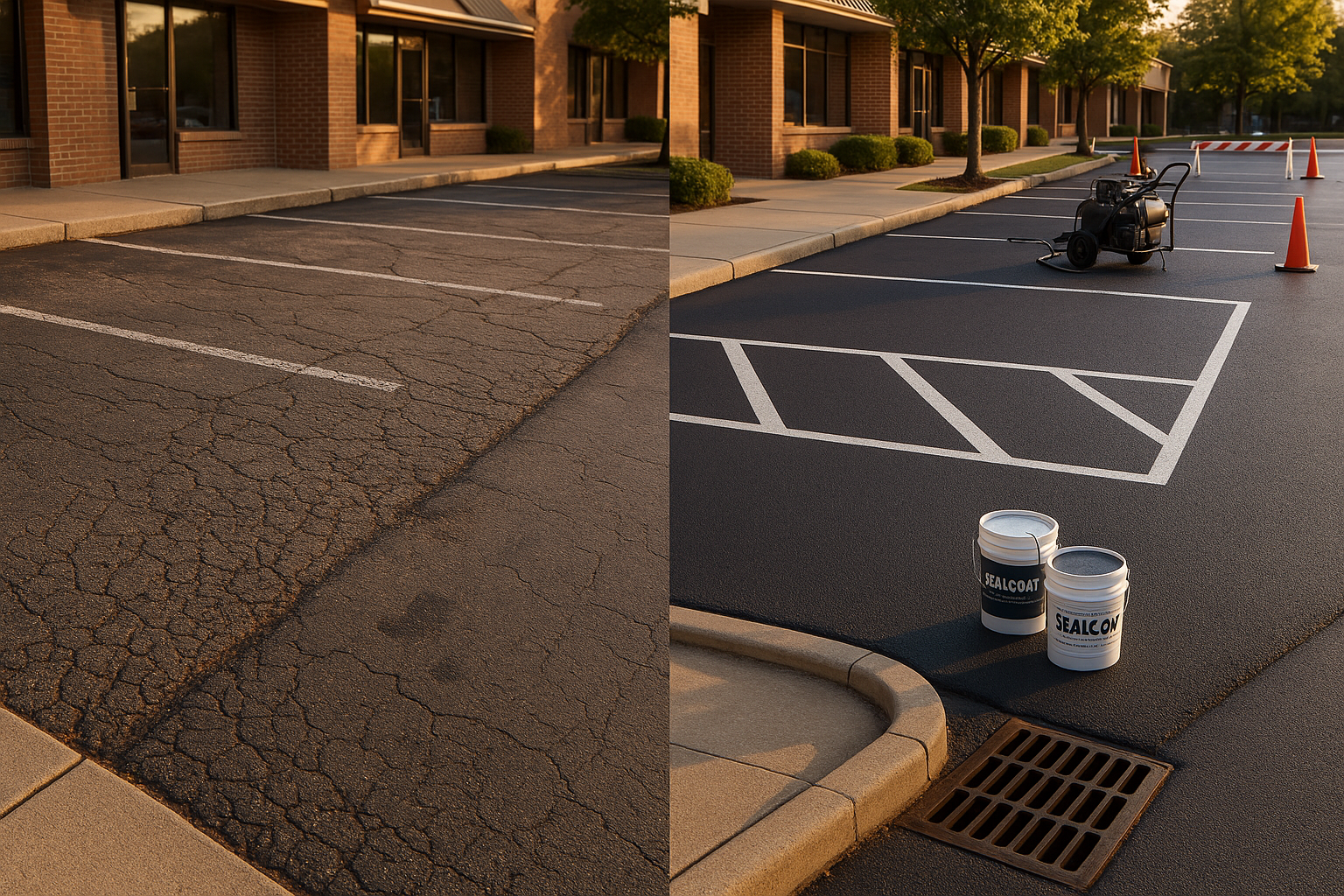
In Indianapolis, most drive-thru pavements need a restripe every year, right after winter. If you sealcoat the lot, wait until it cures, then restripe immediately so the lines are fresh. Check high-wear zones mid-summer—those stop bars and turn arrows might need a touch-up. A little maintenance keeps the pavement from taking a beating and keeps your drive-thru moving.
If your drive thru pavement looks like it’s seen better days—faded lines, ruts, standing water, or driver confusion—give us a call. We’ll come out, measure your stacking, look at the wear patterns, and put together a plan that fits your schedule and budget. You’ll get a clear layout, material specs, and a phasing schedule that keeps your business running. Get your free drive-thru assessment here. No pressure, just straight answers from a local pavement marking contractor in Indianapolis that’s been striping Indy drive-thrus for years.
Ready for a free lot assessment?
We walk the lot, photograph the problems, and hand you a written plan — no pressure, no obligation.