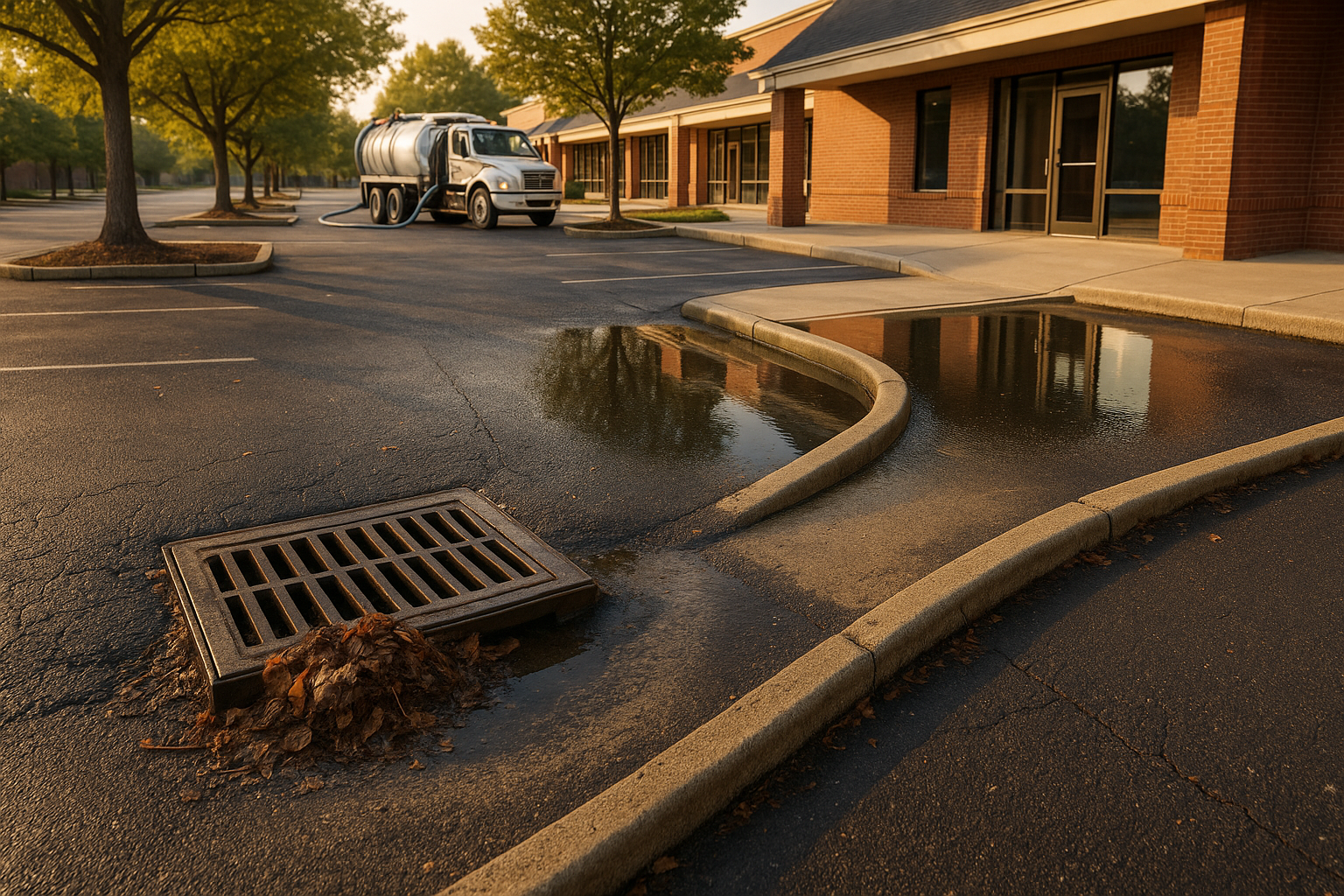
Last October, a restaurant manager in Broad Ripple called me after a light rain. Water was pooling right in front of his door, and customers were stepping through puddles to get inside. He'd swept the lot the day before, but the water just sat there. When we walked the property, the culprit was obvious: a catch basin inlet buried under a soggy mat of leaves and grit. The water couldn't reach the drain, so it became a pond. That's a parking lot drain blockage, and around here, it's almost a fall tradition.
Why Drains Block in Indianapolis Lots
If you manage a strip center in Carmel or a church lot in Zionsville, you've probably seen it. The leaves drop, the wind pushes them into curb lines, and the next rain turns them into a wet blanket over your grates. Add in sand and deicer residue from last winter's plowing, and you've got a recipe for a clogged inlet grate. Oil and grease from cars make it stick even worse. The debris binds together and seals off the grate like a lid. In older neighborhoods like Irvington or Meridian-Kessler, mature trees drop seed pods and leaves that pack down tight. On the west side in Brownsburg or Avon, it's often field dirt and construction silt that flows toward low spots. No matter the source, the result is the same: water can't get into the drain.
Red Flags You Can Spot from the Curb
You don't need a fancy inspection to spot a developing problem. After a normal rain, look for water that ponds for more than a few hours. If you see a ring of algae or a dark stain around a catch basin, that means water has been sitting there long enough to grow things. Another sign: slow drawdown. When rain stops, the water should visibly move toward the inlet. If it just sits, the grate is likely blocked. Also watch for silt or sand piling up in low spots. That stuff washes toward drains and stays. And in winter, standing water freezes. If you have an ADA ramp near a drain that holds water, you're looking at an icing risk that could put someone in the hospital. Freeze-thaw cycles in Indianapolis make it worse. A small puddle today becomes a sheet of ice tonight.
The Real Cost of Ignoring a Clogged Inlet
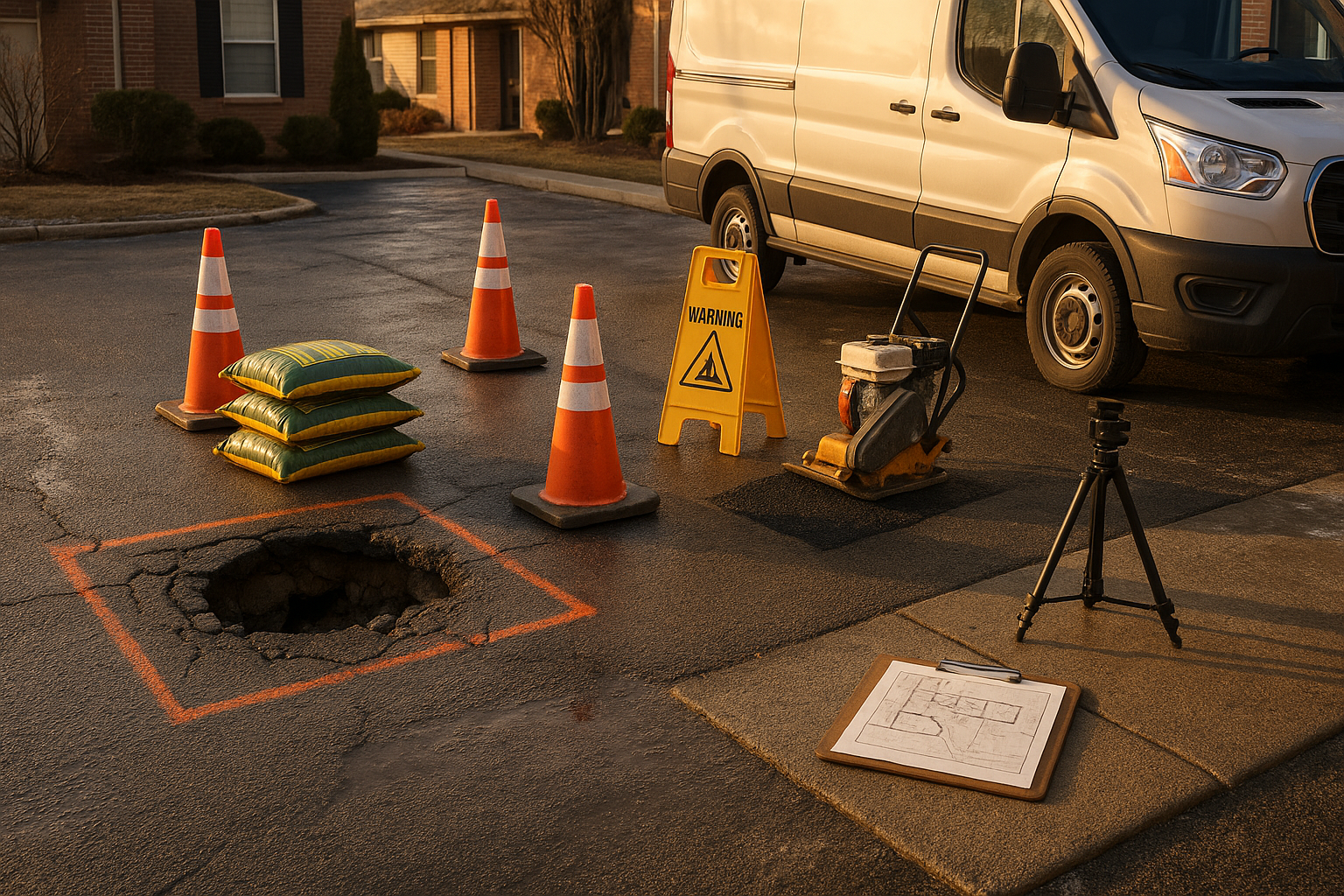
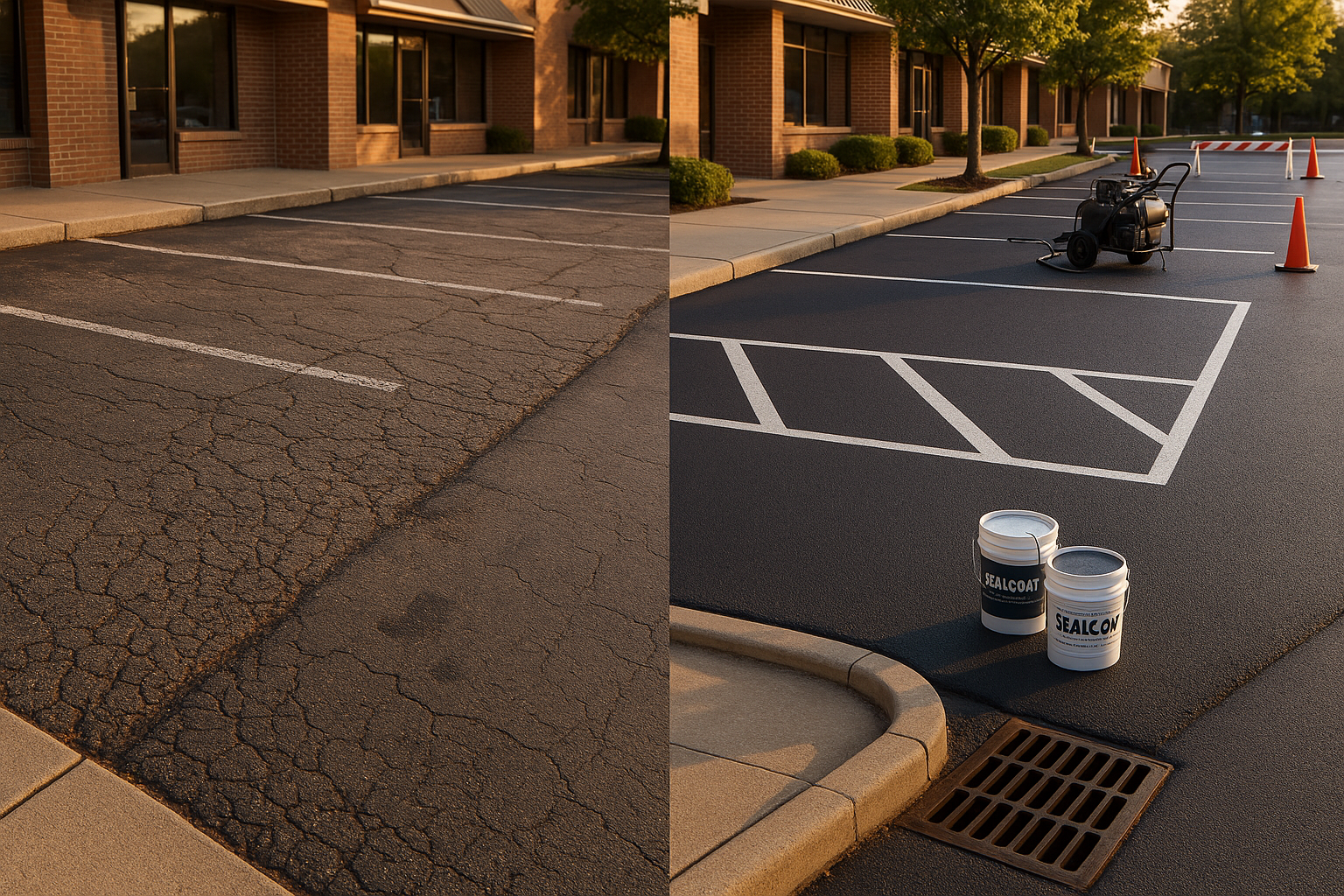
Standing water is the enemy of asphalt. When water sits on the surface, it seeps into tiny cracks and softens the base over time. In winter, that water freezes and expands, prying the asphalt apart. Come spring, you'll see raveling (little rocks coming loose) or even potholes. I've seen lots where a failed drain led to an asphalt patch popping out within months. That's why we often tell property owners that fixing drainage is step one before any patching or sealcoating. If water is trapped under a new patch or coating, the patch will fail early. The same goes for striping. Fresh paint or thermoplastic won't stick to a surface that's constantly wet or covered in fine silt. So if you're already thinking about asphalt patch failure and why patches pop out, look at your drains first. It's usually the hidden reason.
A Quick On-Site Checklist (Before You Call Us)
If you want to try something yourself, grab a rake and a pair of gloves. Here's a simple checklist:
- Clear leaves and trash off the grate. Even a small opening helps.
- Lift debris from the curb line for a few feet on each side of the inlet.
- Check that the grate is seated correctly. A shifted grate can let debris fall in and cause a deeper clog.
- Look for broken frames or missing bolts. That's a safety issue and a sign the basin needs attention.
- Take photos of any area that still holds water 24 hours after a rain. That's proof of a drainage problem.
This is not a permanent fix, but it buys you time. And it gives us a better idea of what we're dealing with when we show up.
Where Pressure Washing Fits In
A broom or blower only moves loose stuff around. Pressure washing gets the packed-in junk off. We use hot water and a degreaser on oily spots around inlets. That oily film is what glues leaves and grit to the pavement. Once it's broken down, the water can flow. We also flush the curb line channels that lead to the drain. If your lot has a low spot that always ponds, we pay extra attention there. This kind of surface prep is not just about looks. It's about making sure water goes where it's supposed to. And it's perfect before you sealcoat or restripe. A clean, dry surface means the coating or paint will actually last. We wrote about striping layout for curbside pickup a while back, and the same principle applies: clean pavement makes everything stick better.
When a Garden Hose Isn't Enough: Vacuum Trucks and Hydro Jetting
If you clear the grate and water still backs up, the clog is probably inside the pipe or the catch basin itself. That's when you need a vacuum truck or hydro jetting. A vacuum truck sucks out the muck from the basin. Hydro jetting uses high-pressure water to blast through clogs in the pipe. Most small commercial lots don't own this equipment, and that's okay. We don't either. But we work with partners who do. If your lot needs more than surface cleaning, we can coordinate that as part of a larger scope. We'll prep the area, tell you what needs to be vacuumed, and then do the pressure washing and surface prep after the line is clear. One call, one plan.
Preventive Rhythm for Indianapolis Lots
Here's what I tell every property manager: think in seasons. In late fall, after the leaves drop, do a leaf cleanup around all drains. In early winter, have us do a pre-winter wash and inspection. That way you start snow season with clear drains. When the plows come through, they'll push snow, sand, and trash toward the low points. If your drains are clear, they can handle the snowmelt. If not, you'll get ice dams and ponding. Then in spring, after the snow season, do a reset. Remove sand and deicer residue that migrated to the drains. This rhythm takes a few hours per year but saves thousands in asphalt repair. And it keeps your lot safer. We wrote about what to look for in a snow removal contract because plowing and drainage go hand in hand.
Keeping It Legal: Stormwater Rules and BMPs
A lot of property owners ask, "Isn't the city responsible for these drains?" On public streets, yes. But on private property, you own the catch basins and inlets. The city of Indianapolis expects you to maintain them. Under local MS4 stormwater rules, you're also responsible for what goes into the storm sewer. That means when we pressure wash, we have to contain the wash water. We can't just push dirty water into the drain. We use a controlled rinse to a collection point, or we block the drain and pump the water to a safe disposal area. We never introduce detergents into a storm inlet. That's an illicit discharge and can get you fined. We document everything as part of your Best Management Practices (BMPs). If you ever get audited, you'll have a paper trail showing you're doing the right thing.
How We Approach Your Lot (Planning First)
When you call PavementPros about drainage, we don't just show up with a pressure washer. We walk the lot with you. We map where water flows. We take photos of every inlet and low spot. Then we give you a written scope that says exactly what we'll do, what materials we'll use, and what we won't do. We're honest about limits. If your basin needs a vacuum truck, we'll tell you. If you need a full repave next year, we'll help you plan a temporary fix that won't be wasted money. That's why we like to schedule these assessments in the fall, before winter hits. It lines up with our fall bidding season for spring paving advice. You get a clear picture of what's needed, and you can budget accordingly.
So if your parking lot has a drain that's turning into a swamp, don't wait. Leaves are falling now. Give us a call or request a quote online. We'll come out, take a look, and give you a straight answer. No pressure, no jargon. Just a plan to keep the water moving and your lot safe.
Ready for a free lot assessment?
We walk the lot, photograph the problems, and hand you a written plan — no pressure, no obligation.