Last January, a buddy of mine who manages a small retail strip in Fishers sent me a photo. His parking lot looked like a war zone after the plow guy made his rounds. The sealcoat was scraped down to bare asphalt in long streaks, and a chunk of curb had been chewed up near the dumpster. The contractor said it wasn't his problem — the contract only said "snow removal." No specs about blade type, no marking for obstacles, no rules about stacking. My buddy learned the hard way that a snow removal contract isn't just a piece of paper. It's a set of promises that protect your pavement, your people, and your budget.
Why a Snow Removal Contract Matters for Your Pavement
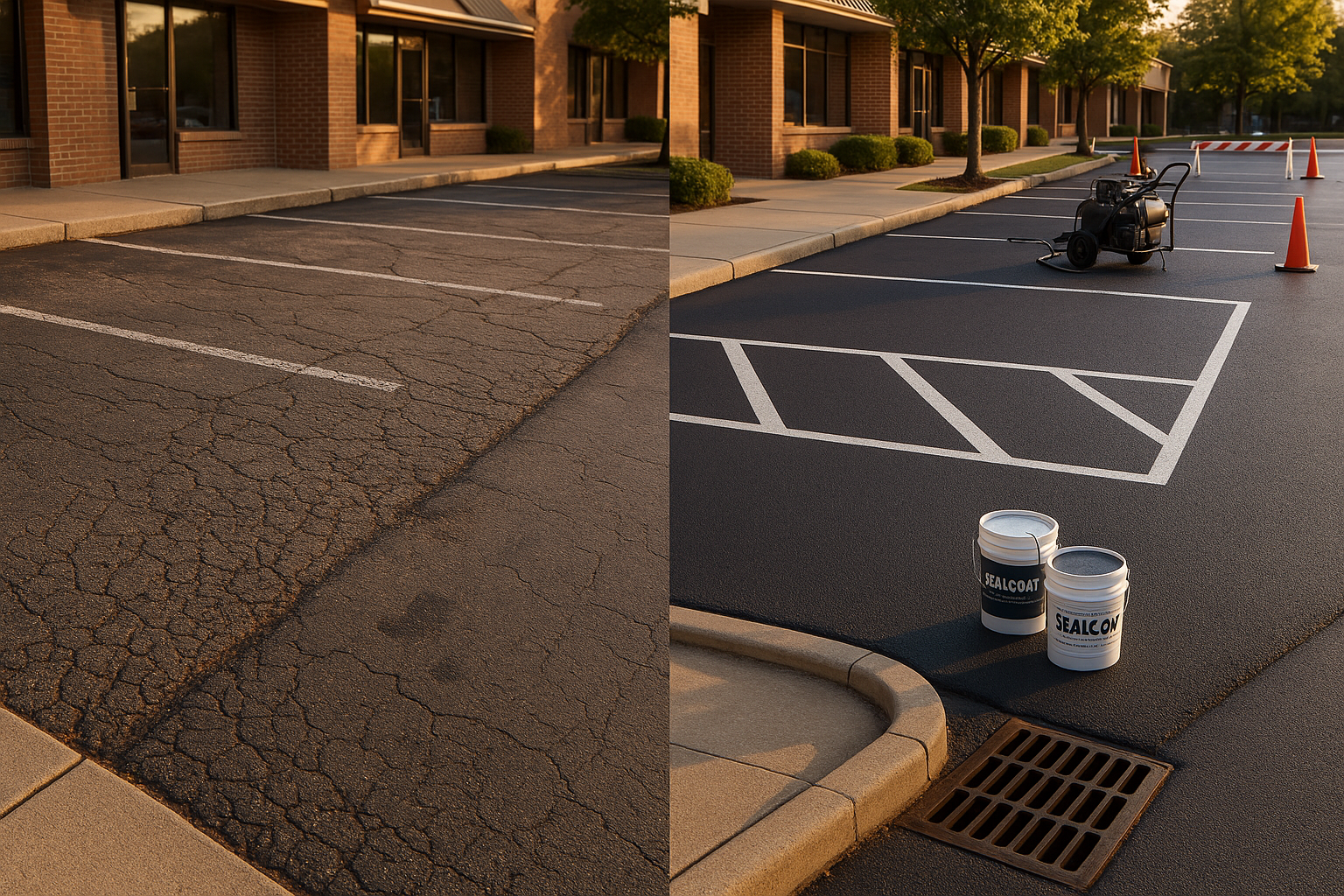
If you own or manage property in Indianapolis, Carmel, or anywhere in the metro, you know our winters do a number on asphalt. The freeze-thaw cycle is relentless. Water gets into tiny cracks, freezes, expands, and pops out chunks. Then a plow blade comes along and scrapes off even more. If your snow removal contract doesn't specify how the work gets done, you could end up with a spring full of potholes and faded striping. That's why the contract details matter so much. It's not just about clearing snow. It's about clearing snow without wrecking your investment. Check out our post on blacktop driveway sealing to see why sealcoat protection is a big deal.
The Important Parts of a Snow Plowing Agreement
Here are the sections you need to look at before you sign. I've seen too many property owners skim over these and regret it later.
Scope and Service Levels
This is where you list every area the contractor will clear. Not just the parking lot. What about sidewalks, entrances, fire lanes, loading zones, and the area around the dumpster? If you run an HOA, list the roads, driveways, and common walkways. If you have a clinic or a shop that opens early, write down when the lot needs to be cleared and salted. A commercial snow removal Indianapolis contract should never leave you guessing if the back entrance will be plowed.
Trigger Depths and Response Times
In Indy, a 1-inch trigger is pretty standard. That means the crew shows up when snow hits one inch, not when they feel like it. But you can set whatever depth works for your property. Ice-only events? Pretreatment rules? Overnight thresholds? Put them in writing. If you want salt down before the snow starts, say so. And if you need the lot clear by 5 a.m. for your first customers, spell that out. Without a response time, you're at the mercy of their schedule.
Equipment Specs That Protect Your Asphalt
This is a big one. A steel plow blade can chew up freshly sealcoated asphalt like a cheese grater. That's why we recommend poly or rubber edges, and plow shoes on first-season sealcoat. Plow shoes keep the blade a tiny bit off the surface so it doesn't scrape off the sealcoat. You can read more about how asphalt edges crack and break in our post on edge cracking. If your contractor says "poly edges won't scrape clean enough," they're probably thinking about heavy, wet snow. But trust me, a good operator with a poly edge can clear just fine while protecting your lot.
De-icer Standards
Salt is not salt. Some salts eat away at concrete and asphalt faster than others. For asphalt, treated salt or calcium/magnesium blends are usually safer. Your contract should say what materials they'll use, how much they'll apply per square yard, and where they'll store the piles. You don't want salt runoff killing your landscaping or ending up in the storm drains. Ask about liquid vs granular. Liquid de-icers can work well but need to be applied correctly.
Damage Hotspots and Snow Stacking
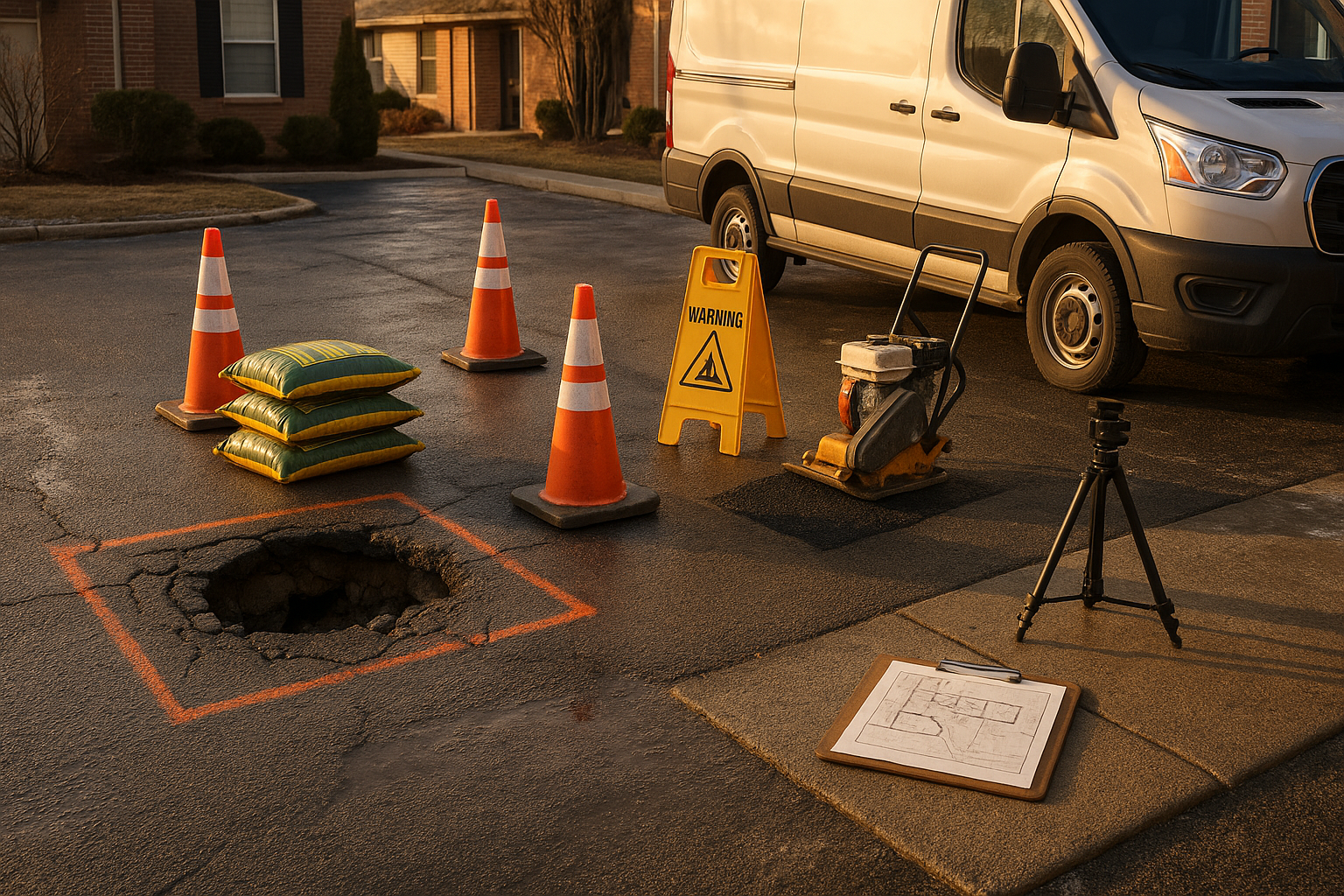
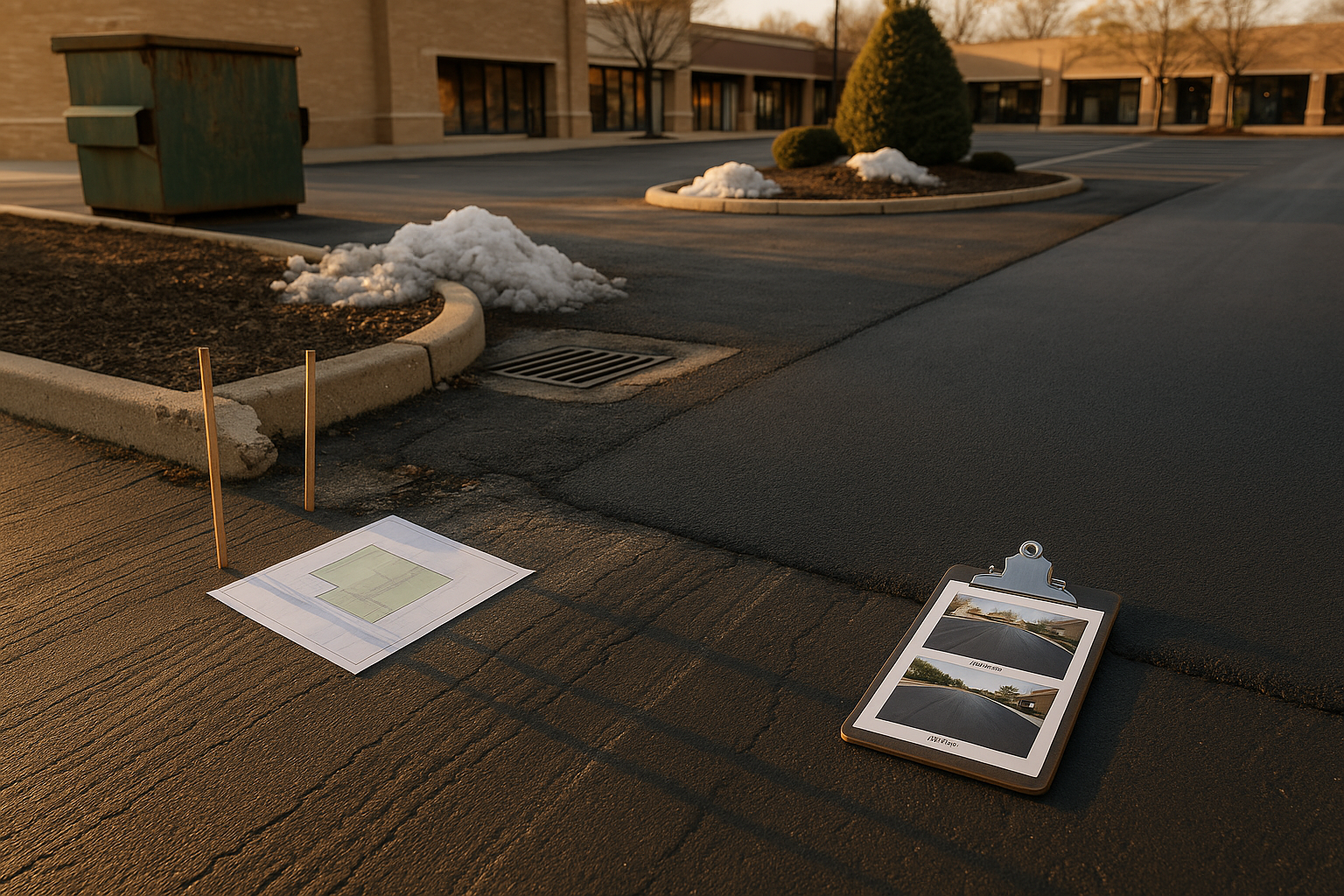
Every lot has hidden hazards: curb inlets, speed humps, utility covers, raised structures. If the plow driver doesn't know where they are, they'll hit them. Require staking before the first snowfall, and attach a site map to the contract. Also, decide where snow gets piled. Stack it away from drains, fresh sealcoat, and landscaped edges. I've seen piles of salty snow melting right onto new asphalt and staining it. That's avoidable.
Documentation and Accountability
Before winter, do a walkthrough with the contractor and take photos of the pavement condition. That way, if something gets damaged, you both know what it looked like before. During the season, ask for storm logs: when they arrived, what they did, when they left. After a big storm, give them a checklist to confirm they hit all the priority areas. If there's damage, have a simple process to report it within a few days. This protects you if someone slips and falls, too.
Pricing Models: Per-Push, Per-Event, or Seasonal?
There are three main ways to pay for snow removal. Per-push means you pay each time they come out. Per-event means one price for the whole storm, no matter how many times they revisit. Seasonal or flat-rate means you pay a lump sum for the whole winter, and hope it snows a lot or a little. For small lots, per-push can feel cheaper, but if we get a heavy winter, it adds up. Seasonal gives predictability, but if it's a light winter, you might pay more than you would have. Ask what counts as an "event" and what triggers a return visit. Make sure you're comparing apples to apples.
Insurance and Liability: Don't Skip This
I'm not a lawyer, but I've seen too many contracts without proper insurance language. You want a certificate of insurance that names your company or HOA as additional insured. You want a hold-harmless or indemnification clause that says the snow contractor takes responsibility for damage they cause. And you want a clear way to report slip-and-fall incidents. If someone slips on ice in your lot, you could be on the hook. The contract should spell out who does what.
Coordinating Snow Removal with Asphalt Maintenance
Snow removal and asphalt maintenance go hand in hand. In the fall, you should crack seal and maybe sealcoat. Check out our fall parking lot checklist for ideas. If you sealcoat in late fall, tell the snow contractor. Fresh sealcoat needs time to cure before plowing. Usually 30 days, but ask your pavement pro. Your snow removal contract should require plow shoes or poly edges for the first season after sealcoating. That way, you're not undoing your investment.
Communication and Quality Assurance
A good snow removal contract includes a communication plan. Who do you call if the lot isn't cleared by 6 a.m.? Who authorizes extra salt applications? What happens if there's a blizzard? Having one point of contact makes a huge difference. After each storm, do a quick inspection. Look at the entrances, fire lanes, and any areas that tend to ice over. If something's wrong, report it right away.
If you're looking at a snow removal contract for your property in Indianapolis or the surrounding areas—Carmel, Fishers, Zionsville, Westfield, Noblesville, Greenwood, Brownsburg, Avon, Plainfield—don't just sign the first paper that comes your way. Take a few minutes to check the specs. Or even better, let us help you review it. PavementPros can look at your lot, your sealcoat condition, and your plan, and give you a clear winter-safe asphalt spec. Give us a call or hit the quote button — it's free and it might save you a spring full of asphalt repairs.
Ready for a free lot assessment?
We walk the lot, photograph the problems, and hand you a written plan — no pressure, no obligation.