I still remember the call from a property manager in Broad Ripple. One of his tenants had almost been hit by a driver speeding through the lot to shortcut between College and the alley. The manager was shaken, not just because of the close call but because he’d been putting off speed bumps for two years. That afternoon, we walked the lot together. Two weeks later, the bumps were in, and the complaints turned into thank-yous.
Speed bumps aren’t glamorous, but they work. For Indianapolis property managers, HOAs, and business owners, parking lot speed bumps are often the simplest way to dramatically reduce risk and calm traffic. Whether it’s a busy retail strip in Greenwood or a condo complex in Carmel, the right bump in the right spot can stop a tragedy. But picking the wrong one—or installing it poorly—can bring a whole new set of headaches. Let’s break down what actually matters when you’re thinking about slowing cars down.
What’s the Difference? Bumps, Humps, and Tables
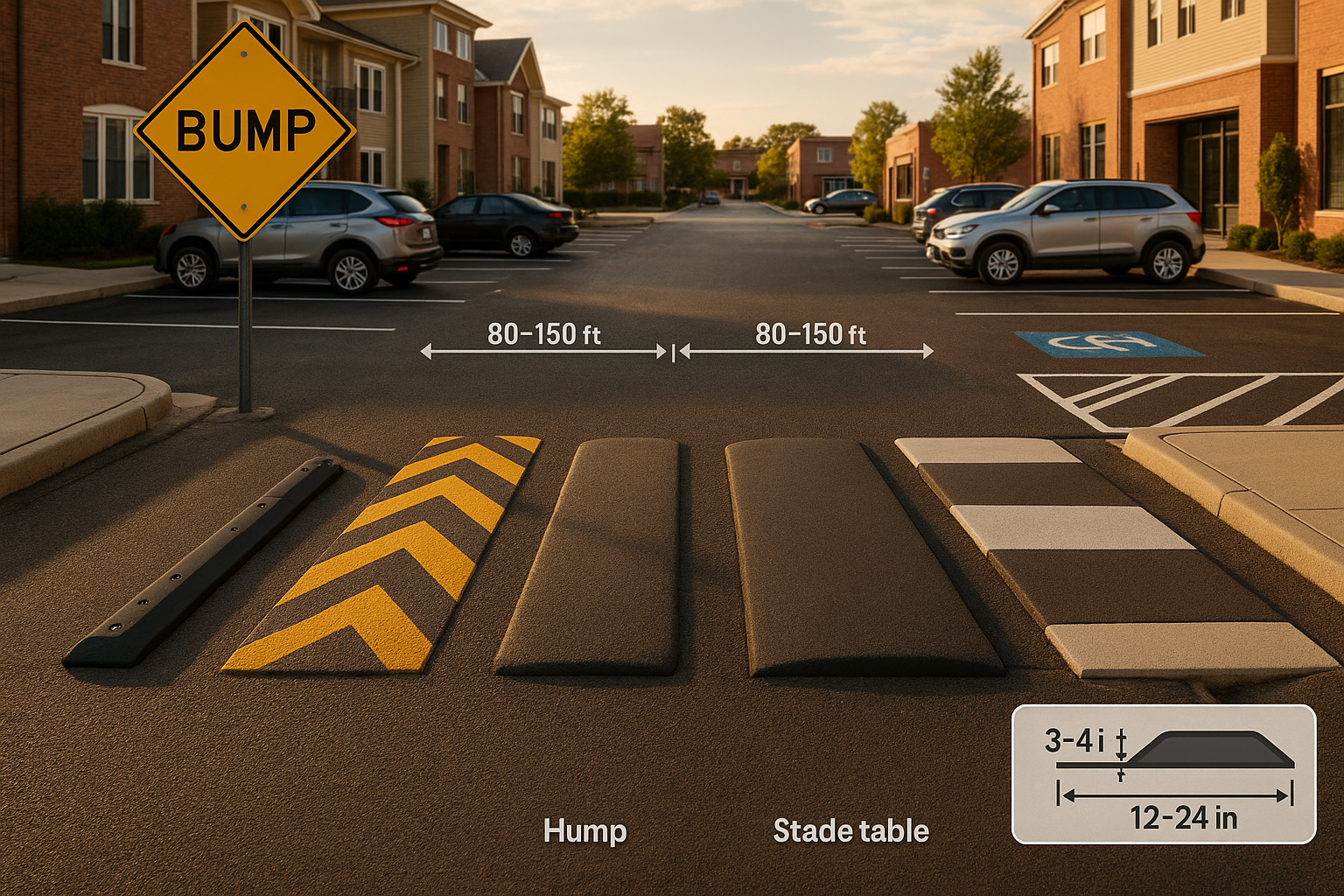
First off, not all lumps are created equal. A speed bump is the sharp, narrow ridge you usually see in parking aisles. It forces drivers down to 5–10 mph. Great for lots with tight turns and heavy foot traffic. A speed hump is wider and gentler, often used on private drives or through-streets inside a community—think the entrance to a neighborhood pool lot. It drops speeds to about 10–15 mph, so emergency vehicles and delivery trucks don’t bottom out. Then there’s the speed table, basically a long, flat-topped hump that can double as a raised crosswalk. In places like school drop-off lanes around Noblesville or church campuses in Fishers, speed tables for parking lots and connecting roads make perfect sense because they force slowdowns right where kids are walking.
Getting the Dimensions Right
If you go too small, drivers barely notice. Too tall, and every sedan scrapes. The sweet spot for most commercial lots is a speed bump height and width of about 3–4 inches tall and 12 to 24 inches wide. That profile reliably brakes traffic to walking speed without turning your lot into an obstacle course. And you can’t just drop one bump and call it done. Speed bump spacing guidelines tell us to set them 80 to 150 feet apart along a long straight aisle. Any farther and drivers will accelerate between devices, which just shifts the danger zone. We’ve seen lots in Plainfield where one lonely bump at the entrance became a launch pad—drivers gunned it right after.
Material Choices: Rubber vs. Asphalt
The choice usually boils down to rubber bolt-down speed bumps or formed asphalt. Rubber kits from brands like Grainger or recycled-rubber suppliers go in fast. You drill into the pavement and anchor them with hardware. They’re great if you want removability—say, a seasonal lot that needs the bump gone for winter snow storage. On the flip side, asphalt speed bump installation is permanent. We form them right on the surface using hot mix, then compact and stripe. They hold up incredibly well to Central Indiana’s freeze–thaw cycles and, if painted right, survive the plow blades that rubber sometimes doesn’t. I’ve seen asphalt bumps in a Zionsville retail lot that looked brand new after five winters because the owner went with a two-coat MMA system.
Markings That Pop
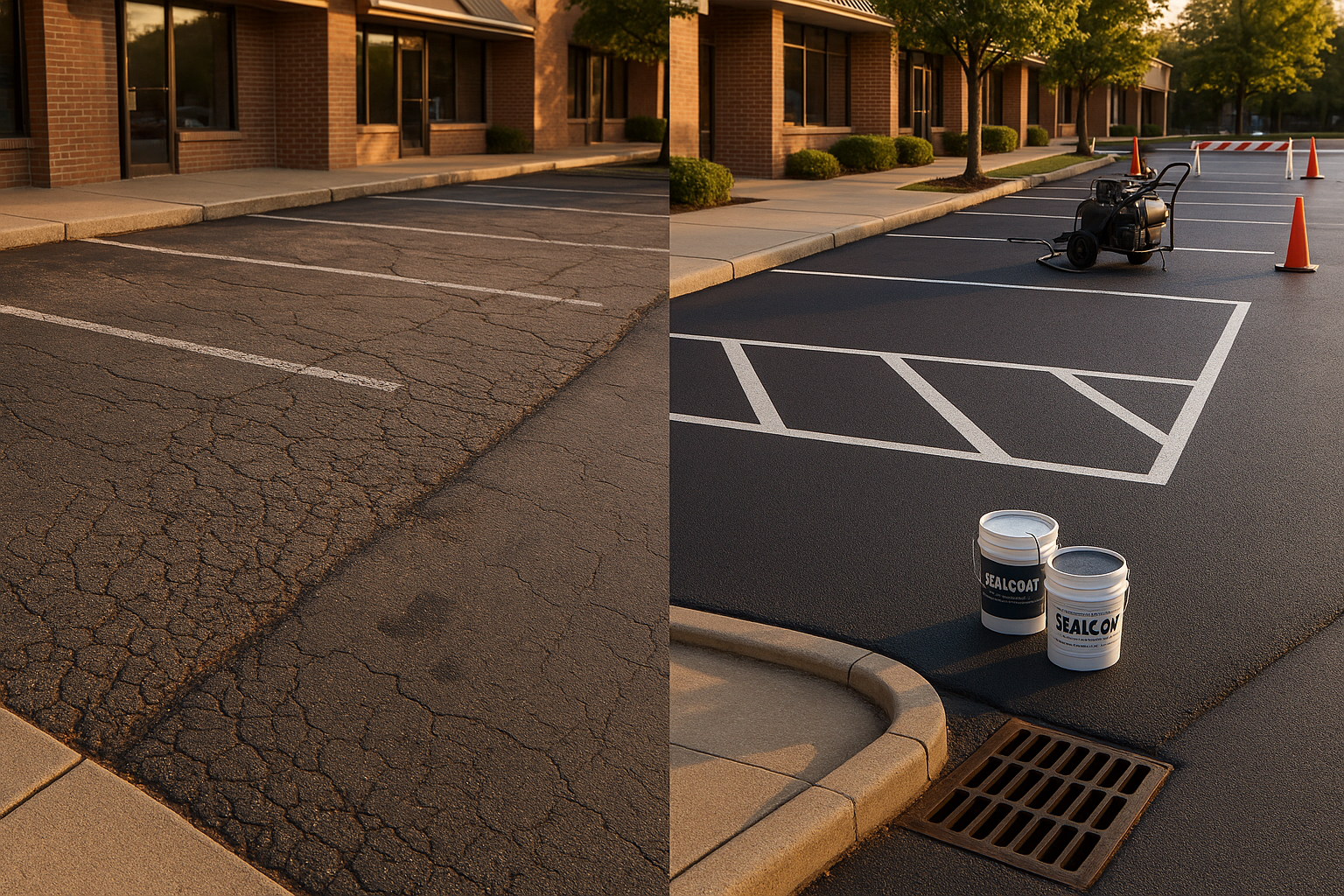
A bare black speed bump is a trip hazard and a lawsuit waiting to happen. Speed bump markings and paint aren’t just decorative—they’re what drivers (and walkers) see day and night. We always push for high-build traffic yellow with reflective chevrons on speed bumps painted at a diagonal. That pattern signals “slow down” from a distance. For the longest-lasting results, thermoplastic pavement markings or MMA and high-build traffic paint give you a thick, durable film. Embed glass bead reflectivity in markings and those chevrons shine bright in wet-night conditions, which matters from October through April here in Indy. And like any pavement marking, these need refreshing—see our advice on restriping schedules. Downtown lots often gather leaf debris, so extra contrast helps.
Signs Are Your Backup
Even with bold markings, a sign adds that extra mental nudge. Signage for speed bumps—like the standard yellow diamond with “BUMP” or a warning legend—should go a few feet in advance. We like to pair it with a pavement marking legend too (think “BUMP” stenciled right on the asphalt). Consistent messaging keeps drivers from slamming the brakes at the last second, which reduces noise and wear.
Keeping It Accessible and Legal
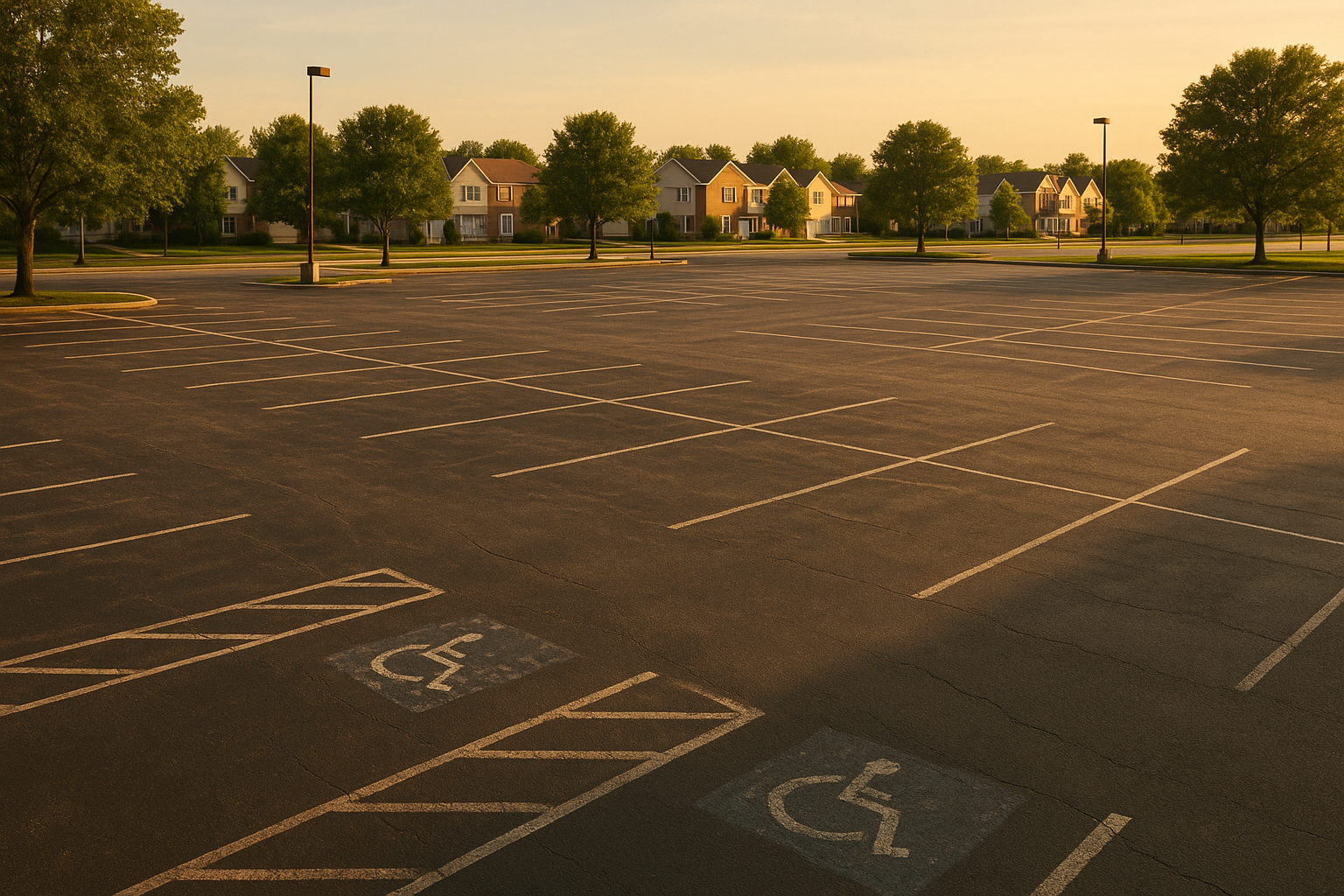
One thing we drill into every property owner: ADA considerations near speed bumps. Never put a bump inside a marked accessible route or crosswalk. Accessible stalls and their aisles need to stay smooth. Also, fire lane access and speed control is a big deal. You can’t block fire lanes or turn radii with a bump that might delay a truck. We coordinate with local fire marshals—something we’ve done on Broad Ripple and downtown jobs. And while Indiana parking lot regulations don’t dictate private-lot bumps like they do public roads, following MUTCD-style markings keeps you out of trouble.
Winter and Water: Two Indiana Realities
Our freeze–thaw cycles are brutal. Water that ponds around a poorly placed bump will freeze and ruin the asphalt. Drainage around speed bumps is non-negotiable: we notch the bump or leave a gap at the gutter to let water flow. Combine that with a snow plow and winter durability plan—tell your plow crew where the bumps are, set plow shoes to skip over them, and choose materials that won’t delaminate under salt. We’ve fixed too many rubber bumps that looked like they’d been chewed up by a snow blade. For more on how our weather beats up pavement, check out freeze-thaw damage explained.
Putting It All Together
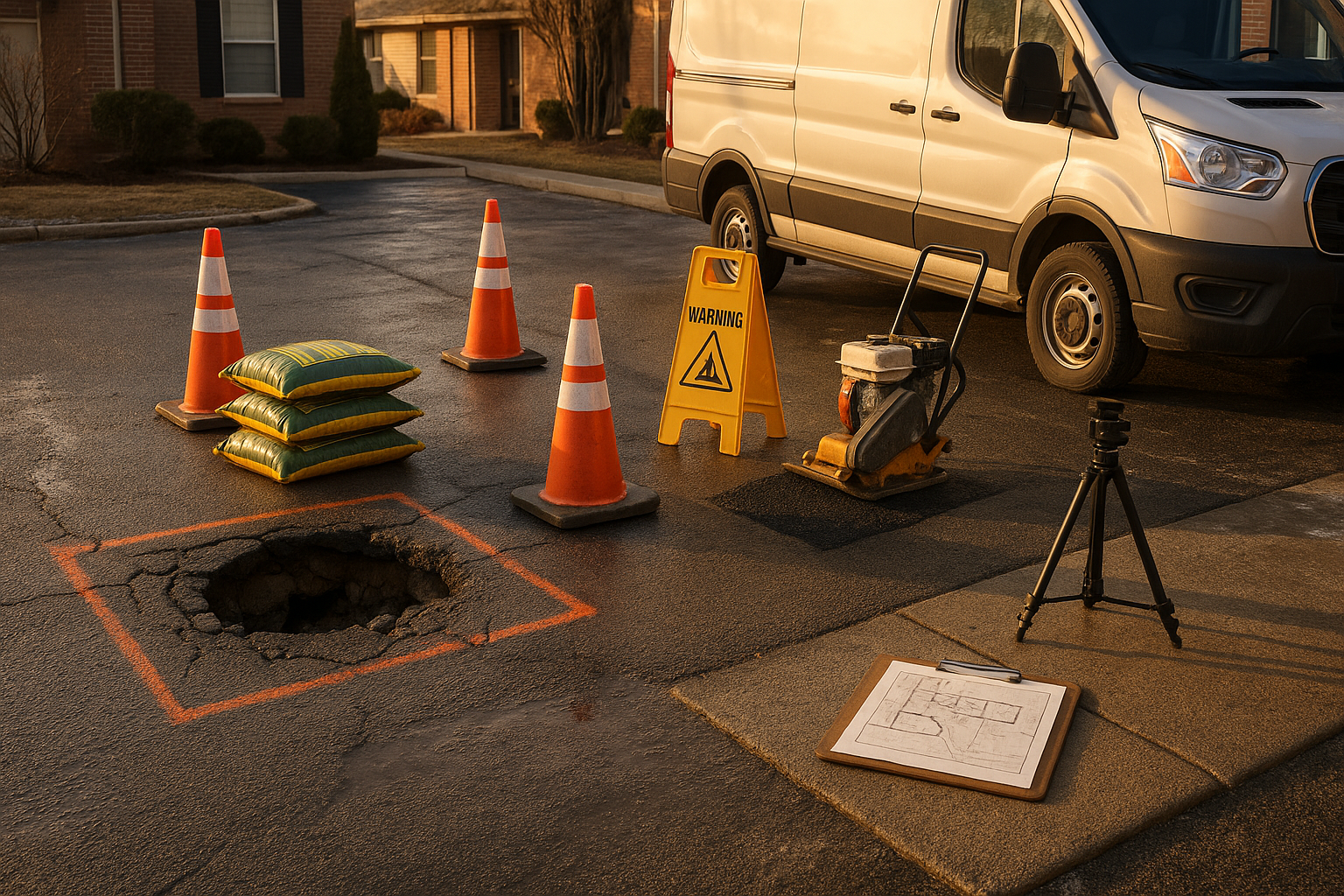
There’s a fair bit of planning behind a good speed-control layout. We start with a site walk, measuring aisles, noting conflict points, and checking slopes. Then we draw up a plan that shows each device’s type, spacing, markings, and signage. This isn’t a cookie-cutter thing. An HOA in Westfield might want traffic calming in private lots with humps to keep noise down near homes, while a busy strip center in Avon might need aggressive bumps in the main drive aisles. Once the plan’s set, installation usually takes a day or two, and we time it to avoid crazy business hours—yes, we know to steer clear of Colts home-game weekends.
What Does It Cost?
The price tag depends on how many devices, material choice, surface prep, marking system, and signage. Bundling the work with other pavement maintenance—like filling cracks or refreshing stripes—saves money. For a ballpark, rubber bumps run cheaper upfront but may need more frequent replacement. Asphalt bumps cost more but blend into the pavement better and last longer. Check out our post on budgeting annual parking lot maintenance to see where speed bumps fit.
Ready to Slow Things Down?
If you’ve been on the fence, think about that near-miss I mentioned earlier. The cost of a speed bump is nothing compared to a lawsuit or an injury. We’d love to walk your Indianapolis-area property and show you exactly where a bump, hump, or table would make the biggest difference—with zero pressure and a clear, itemized quote. Head over to our quick quote form to schedule a site assessment. Let’s turn your lot into the safest one on the block.
Ready for a free lot assessment?
We walk the lot, photograph the problems, and hand you a written plan — no pressure, no obligation.