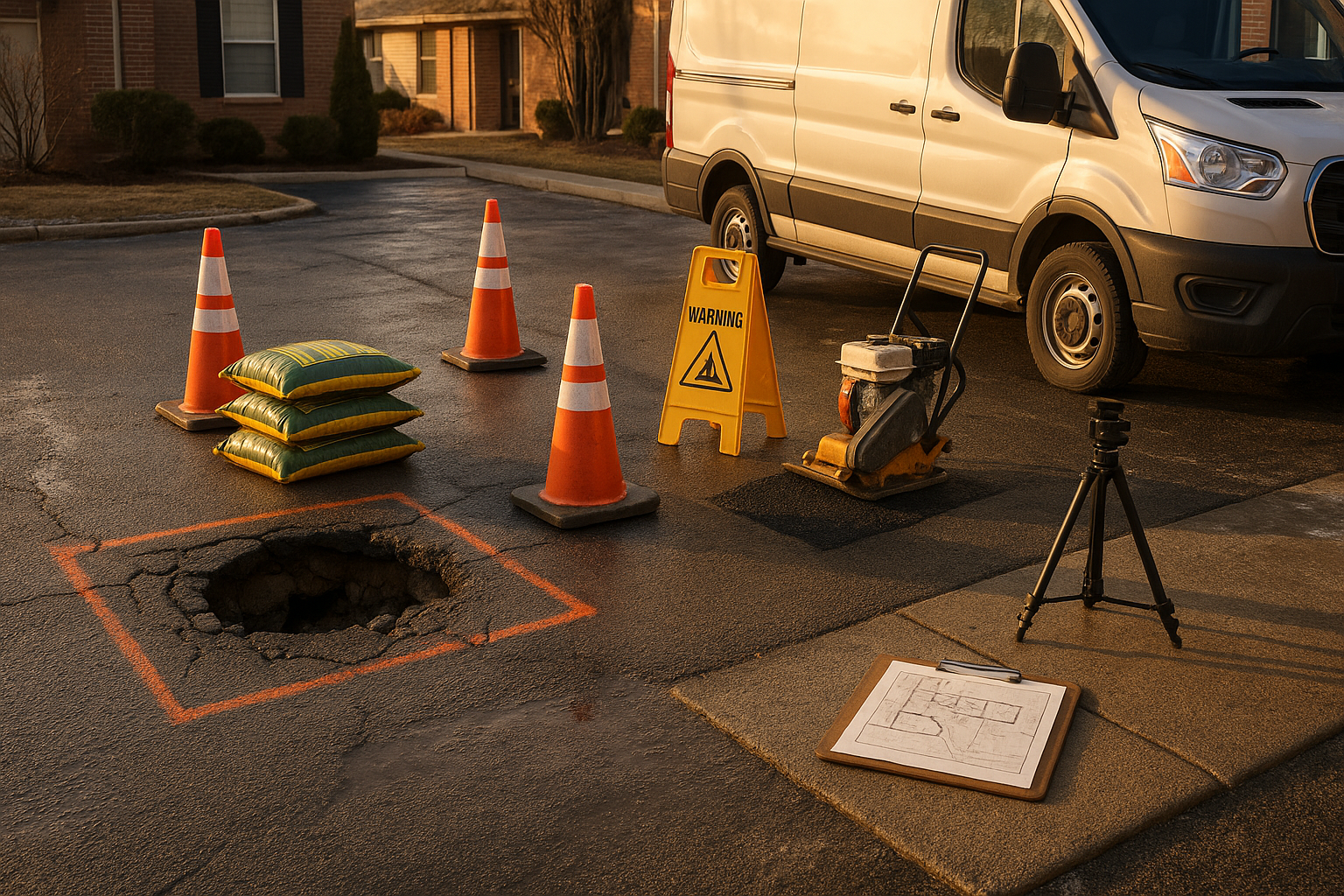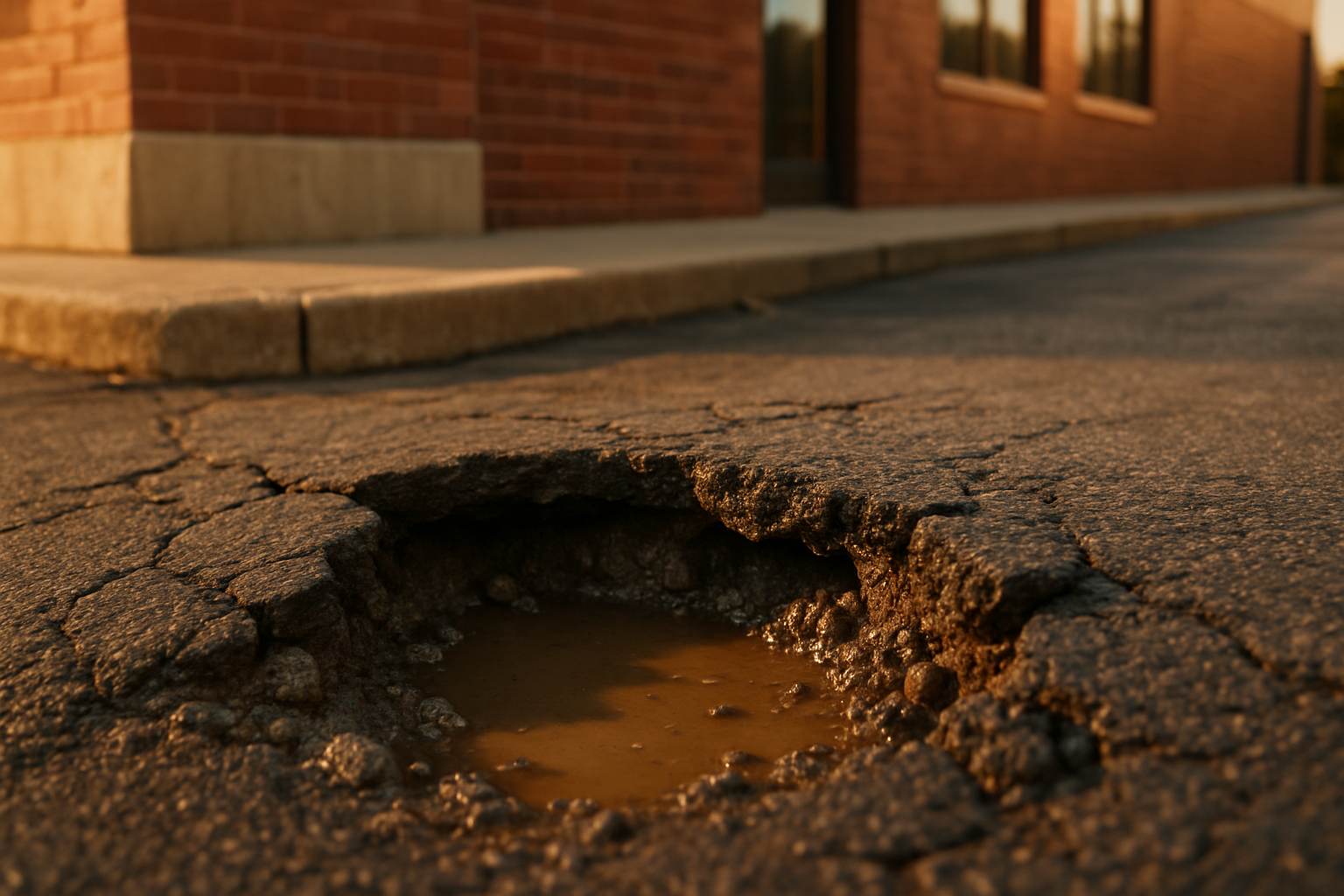
My buddy Marcus runs a small retail strip in Greenwood. Every March, the same pothole shows up in the drive lane, right where delivery trucks back in. He’s had it patched four times. Twice with cold patch, once with infrared, once with a bag of stuff from the hardware store. It always comes back by April. Last year he finally let us cut out a section to see what was going on underneath. The asphalt was 3 inches thick, but the soil below was mush. Water had turned the clay into soup, and the base stone was gone. That’s subgrade failure, not an asphalt problem.
What Subgrade Failure Actually Means
Think of your pavement like a sandwich. The asphalt on top is just the bread. The subgrade is the plate underneath. If the plate turns to jelly, the bread will crack no matter how much you patch the surface. Subgrade failure in asphalt happens when the soil and base layers below the pavement lose their strength. The asphalt can’t hold weight on its own. It flexes, cracks, and then you get potholes, alligator cracking, and ruts. In Indianapolis, the clay soils hold water like a sponge. Add freeze-thaw cycles, and you get a cycle of heaving and settling that wrecks the base.
Signs It’s the Subgrade, Not Just Surface Cracks
Surface cracks are like wrinkles. They look bad but don’t always mean structural trouble. Subgrade failure shows up differently. Here’s what I tell people to look for:
- Alligator cracking that forms a web of small blocks. This is the classic sign of base failure vs surface failure.
- Pumping fines. After a rain, you might see muddy water oozing up through cracks when cars drive over. That’s the subgrade pumping up.
- Standing water that never drains. Low spots that hold water are a red flag.
- Potholes that come back in the same spot within months, even after filling.
- Sinking or rutting in wheel paths, especially near loading docks or dumpster pads.
If you see any of these, a surface-only fix like crack fill or infrared repair won’t last. You’re dealing with a structural problem. If you've already had patches pop out, read this.
Why Indianapolis Parking Lots Are Prone to This
Our local soil is heavy clay. It expands when wet and shrinks when dry. Spring in Indy means freeze-thaw cycles every few days. Water gets under the pavement, freezes, and lifts the asphalt. Then it thaws and leaves a void. Repeat that for a few years, and the subgrade is mush. Plus, we have a lot of older lots built before anyone thought about proper drainage. Downspouts discharge right at the pavement edge. Catch basins clog with leaves every fall. Delivery trucks and snowplows add extra stress.
I did a walkthrough at a church parking lot in Carmel last fall. The potholes were in a line right where the downspouts from the roof dumped water. The gutters were overflowing. The soil under those spots was so soft you could push a screwdriver in by hand. No amount of asphalt patching in Indianapolis would have fixed that. We had to extend the downspouts and rebuild the base.
The Only Fix That Lasts: Full-Depth Patching
For a true subgrade failure, you can’t just mill and overlay. Milling shaves off the top layer and puts new asphalt on the same weak base. That’s like putting new carpet over a rotten floor. Eventually it sags and cracks again. A full-depth asphalt patch is the real solution.
Here’s what it looks like step by step:
- We sawcut a rectangle around the failed area, cutting several feet beyond the visible cracks into sound pavement. This keeps the new patch from separating at the seams.
- We remove the old asphalt and dig out the weak soil underneath. Often we undercut down to 12–18 inches or more until we hit firm ground.
- If the soil is still wet or soft, we may lay down geotextile fabric to separate the subgrade from the stone. This fabric stops the stone from sinking into the mud over time.
- We backfill with dense-graded #53 stone, compacting it in 6–8 inch lifts. Proper compaction is not optional. We proof-roll the stone to make sure it doesn’t deflect.
- We place hot-mix asphalt in lifts and roll it to grade. The patch should be level with the surrounding pavement.
- We seal the edges of the patch to keep water out.
This isn’t a one-day DIY job. But done right, a full-depth patch can outlast the rest of the lot.
Drainage Comes First, Always
You can rebuild a base perfectly, but if water keeps getting under it, you’ll be back in the same spot. That’s why we always look at drainage before we patch. Clogged catch basins, low spots, and downspouts that dump water onto the asphalt are common culprits. In fall, leaf debris blocks drains in neighborhoods all over Fishers, Zionsville, and Westfield. We wrote a whole post about that here: leaf debris and blocked drains. If water is pooling near the repair area, we might recommend regrading, adding edge drains, or extending downspouts.
Timing Matters in Central Indiana
Hot-mix asphalt needs warm weather to compact properly. In Indianapolis, the best window is late spring through early fall. If you get a pothole in January, your options are limited. Cold patch is a temporary safety stopgap. It will buy you a few weeks, but it won’t survive heavy traffic or freeze-thaw. If you have a structural failure in winter, we often recommend a temporary patch and then a full-depth repair in May or June. For more on winter repairs, check out our post on cold weather crack sealing.
Stop the Cycle: Prevention That Actually Works
The cheapest repair is the one you never need. A few simple habits can keep subgrade failure from spreading:
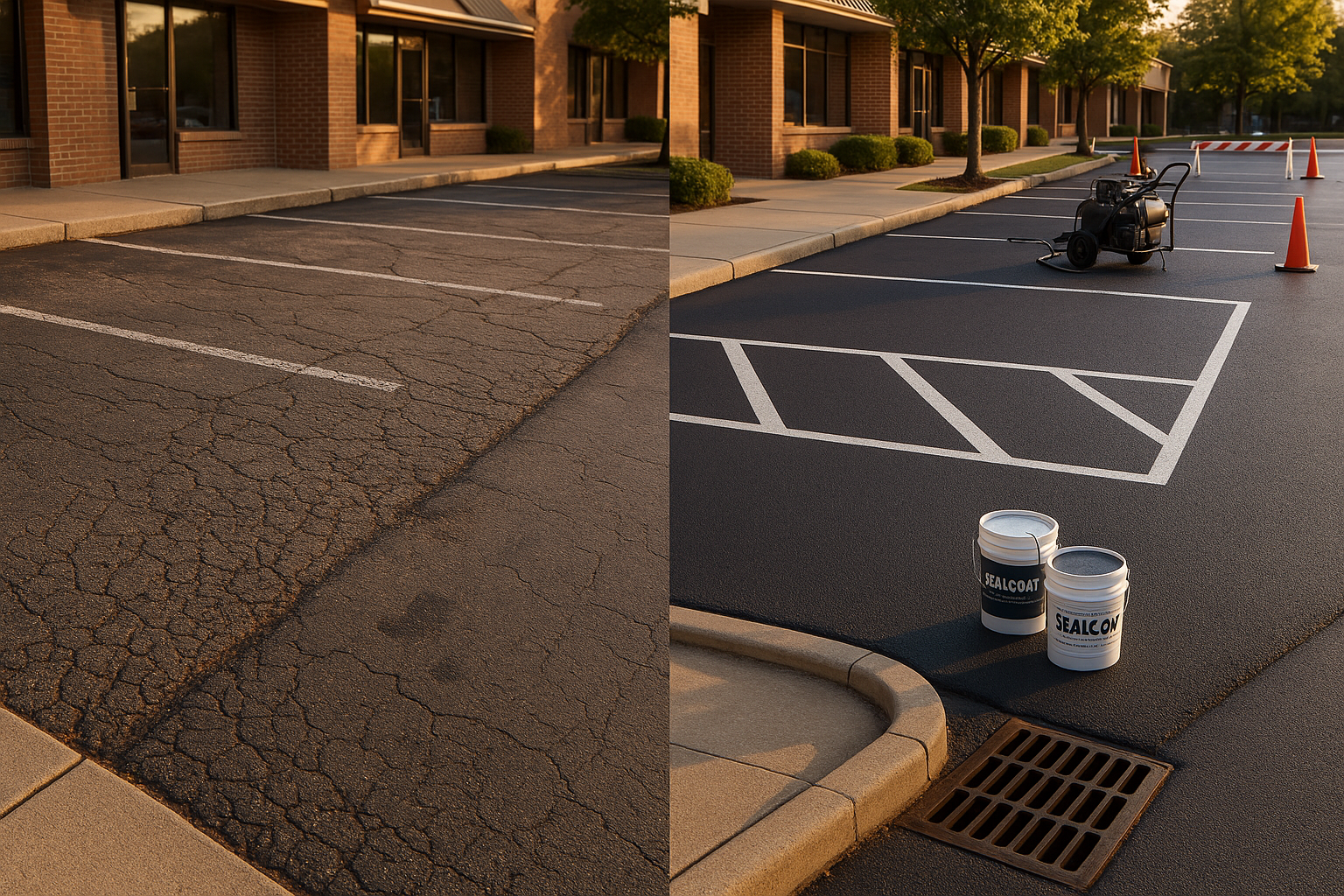
- Seal cracks every year, especially before winter. Water entering cracks is the number one cause of base failure. Here’s a guide to crack sealing in cold weather.
- Keep drains and catch basins clear. Schedule a fall cleanup and a spring check.
- Apply sealcoating every 2–3 years to protect the surface from oxidation and moisture. Get driveway sealcoating costs here.
- Watch for downspout discharge and regrade as needed.
These small steps won’t fix an existing subgrade failure, but they’ll stop new ones from starting.
Ready to Find Out What’s Underneath?
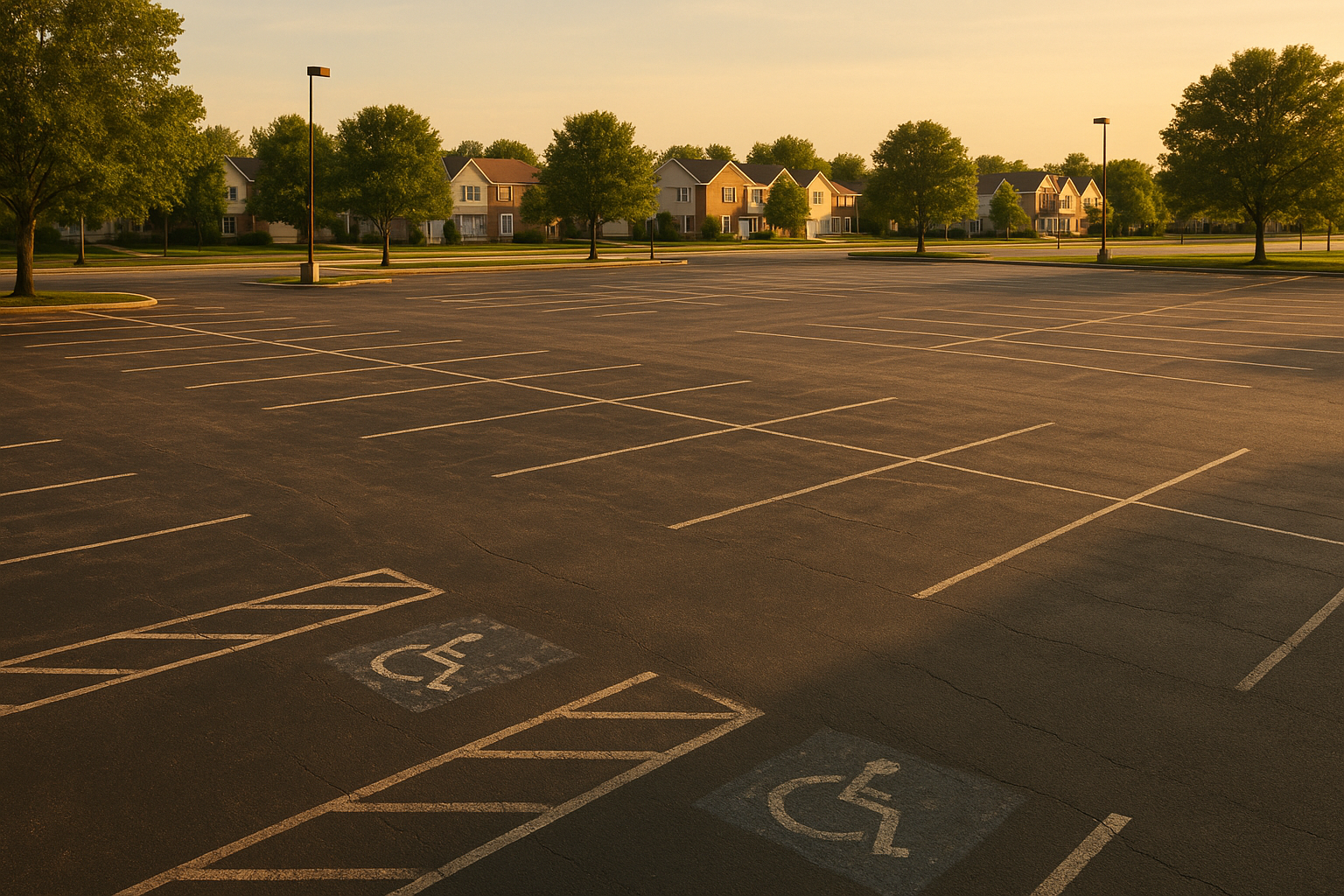
If you’re tired of patching the same pothole every spring, let’s dig a little deeper. We can do a site walk, proof-roll the area, and even take a core sample to see the asphalt thickness and base condition. No guesswork. No sales pitch. Just a straight answer and a phased plan that fits your budget. Schedule a walkthrough and we’ll tell you if it’s really the subgrade—or just a surface issue.
Ready for a free lot assessment?
We walk the lot, photograph the problems, and hand you a written plan — no pressure, no obligation.