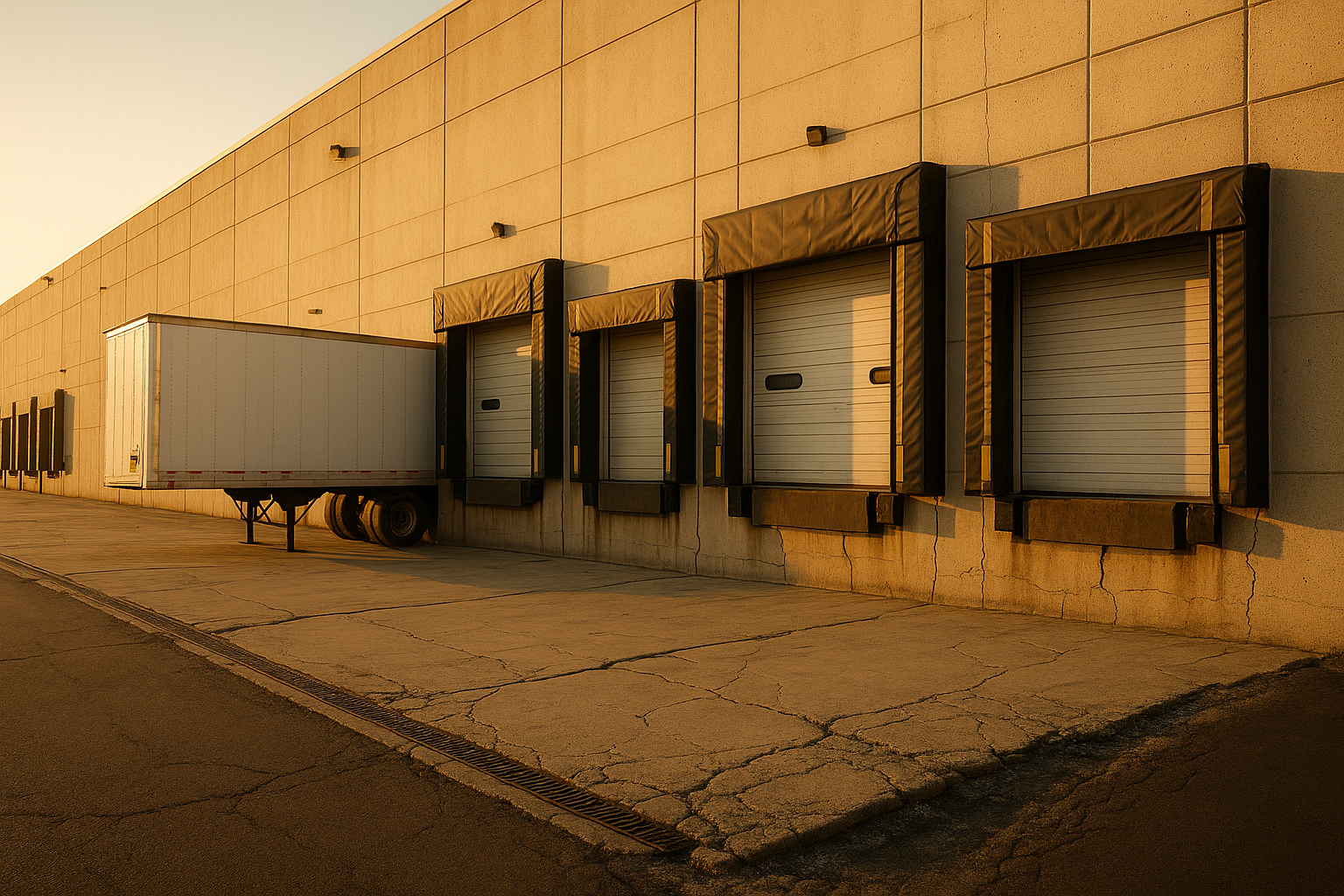
Last March, I got a call from a warehouse manager in Plainfield. His forklift drivers were bouncing so hard over the dock apron they were spilling pallets. Turns out the concrete at the dock face had cracked into a jigsaw puzzle. Every time a semi backed in, the slab rocked and pumped muddy water out the joints. He was afraid a truck would drop a wheel into a hole.
That's a loading dock apron for you. It's the concrete strip right outside your dock doors. It takes a beating every single day. Heavy trucks, forklifts, turning wheels, braking forces. Add in Indiana's freeze-thaw cycles and clay soil that holds water, and you've got a recipe for cracks, spalls, and settlement.
If you manage a warehouse, distribution center, or any building with a loading dock in Indianapolis, Carmel, Fishers, Zionsville, Westfield, Noblesville, Greenwood, Brownsburg, Avon, or Plainfield, you know this pain. The good news? A proper loading dock apron repair can fix it for the long haul. Not just patch it, but build it back stronger.
Why Dock Aprons Fail Around Here
The reasons are pretty simple. First, the load. A loaded semi can put 20,000 pounds on one axle. When it turns on the apron, that weight twists the concrete. Over time, the slab cracks at the joints or edges. Second, the base. Central Indiana has a lot of clay soil. Clay holds water and expands when it freezes. That pushes the concrete up. When it thaws, the soil softens and the slab sinks. This pumping action makes slabs fault (one side higher than the other) and creates voids under the concrete. Third, deicing salts and snowplows. Salts eat away at the concrete surface, causing spalling (small pits and flakes). Snowplow blades catch the edges of the apron and chip them. Fourth, poor drainage. If water pools at the dock face, it seeps into joints and under the slab. Freeze-thaw damage then does its worst.
What We Look For During an Assessment
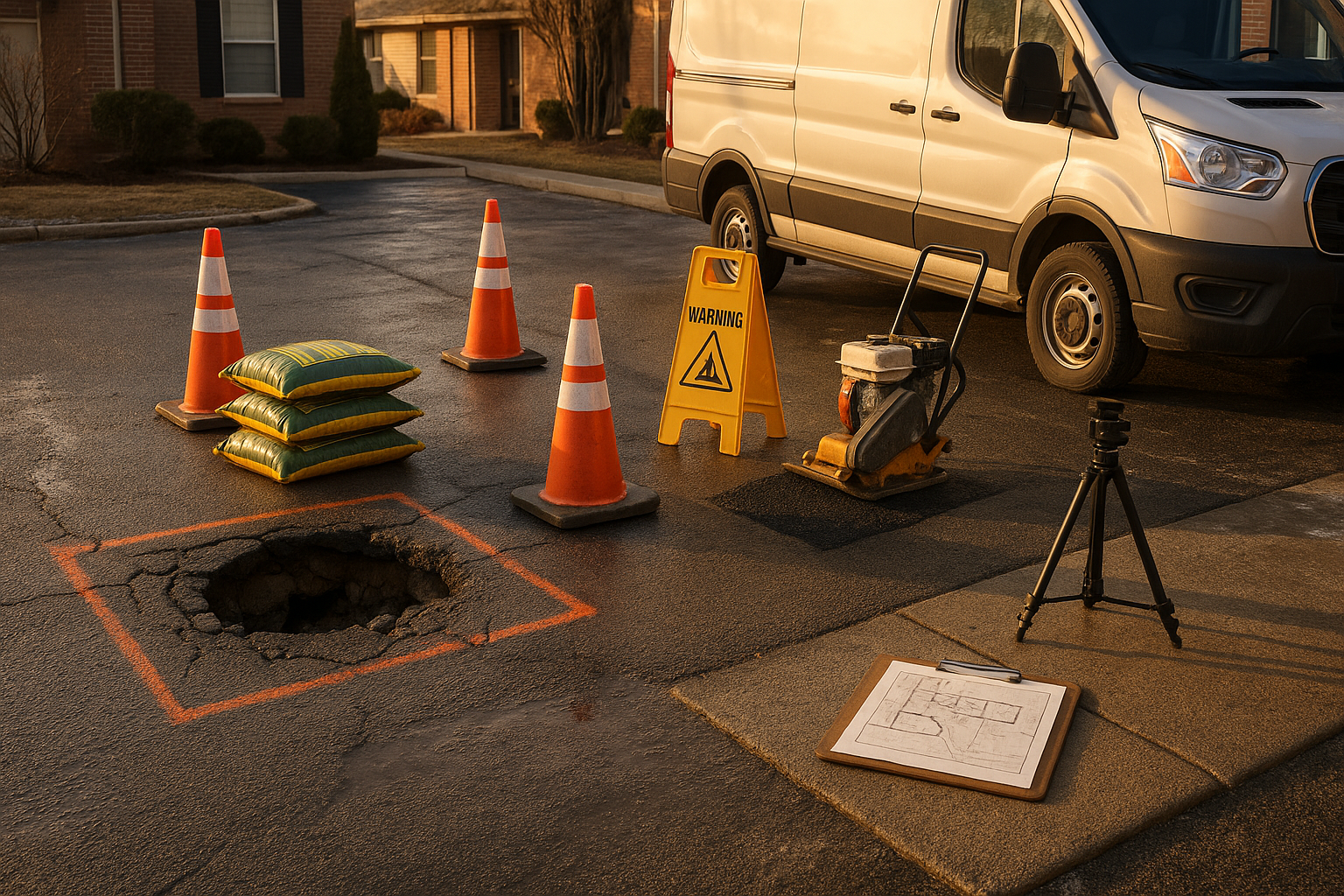
Before we give you a quote, we walk the site. We look at the cracks, the joints, the edges. We check for rocking slabs (push on one corner and see if it moves). We look at the drainage: where does water go when it rains? If there's no slope or the trench drain is clogged, that's part of the problem. Sometimes we take core samples to see the concrete thickness and base condition. We also check the dock leveler pit area because that's a common failure point. Then we map out a repair plan that keeps your docks running.
Repair Options That Match the Damage
Not every apron needs a full rip-out. Here's what we typically do, depending on what we find.
Partial-depth patching works for surface spalls and small cracks. We chip out the loose concrete, clean it, and apply a bonding agent before pouring a polymer-modified patch. This is quick and cheap, but it won't fix structural issues.
Full-depth concrete repair is for panels that are cracked all the way through, faulted, or have lost support. We saw cut the bad section, remove it, fix the base, install rebar and dowel baskets, and pour new concrete. For loading dock aprons, we use air-entrained 4,500 psi concrete (sometimes 5,000 psi) and make it at least 8 inches thick, often 10 inches. That's heavy-duty stuff. We also add dowels at the joints so the slabs move together and don't rock. This is what we call a loading dock apron replacement or full-depth concrete repair.
Sometimes the concrete isn't cracked but it's sinking because the base washed away. In that case, we can do slab stabilization by pumping a cement grout underneath to fill voids and lift the slab back level. Then we seal the joints so water can't get back in. We also fix the base. If the subgrade is weak, we might dig down and put in a thicker aggregate base (#53 stone) and maybe a geotextile fabric to keep the stone from mixing with the clay. We've written about that before — check out our post on geotextile fabric for base stabilization and why aggregate base matters.
For the dock leveler pit, we often repair the surrounding concrete and the pit walls. That's a separate but related job.
Keeping Docks Open During Construction
I know you can't shut down your loading dock for two weeks. Most places can't even shut down for one day. So we phase the work. We do a few panels at a time, often at night or on weekends. Your busiest dock doors stay open while we pour the next section. We use fast-setting concrete or add accelerators in cold weather so trucks can roll on the apron sooner. How long before a semi can use it? Usually 3 to 7 days for a full-strength cure, but we can get light forklift traffic on it in 24 to 48 hours with the right mix design and curing methods. We also cover the new concrete with curing blankets in cold weather and monitor the temperature. We've done plenty of pours in February, it just takes a little more planning.
Asphalt Meets Concrete: Fixing the Weak Spot
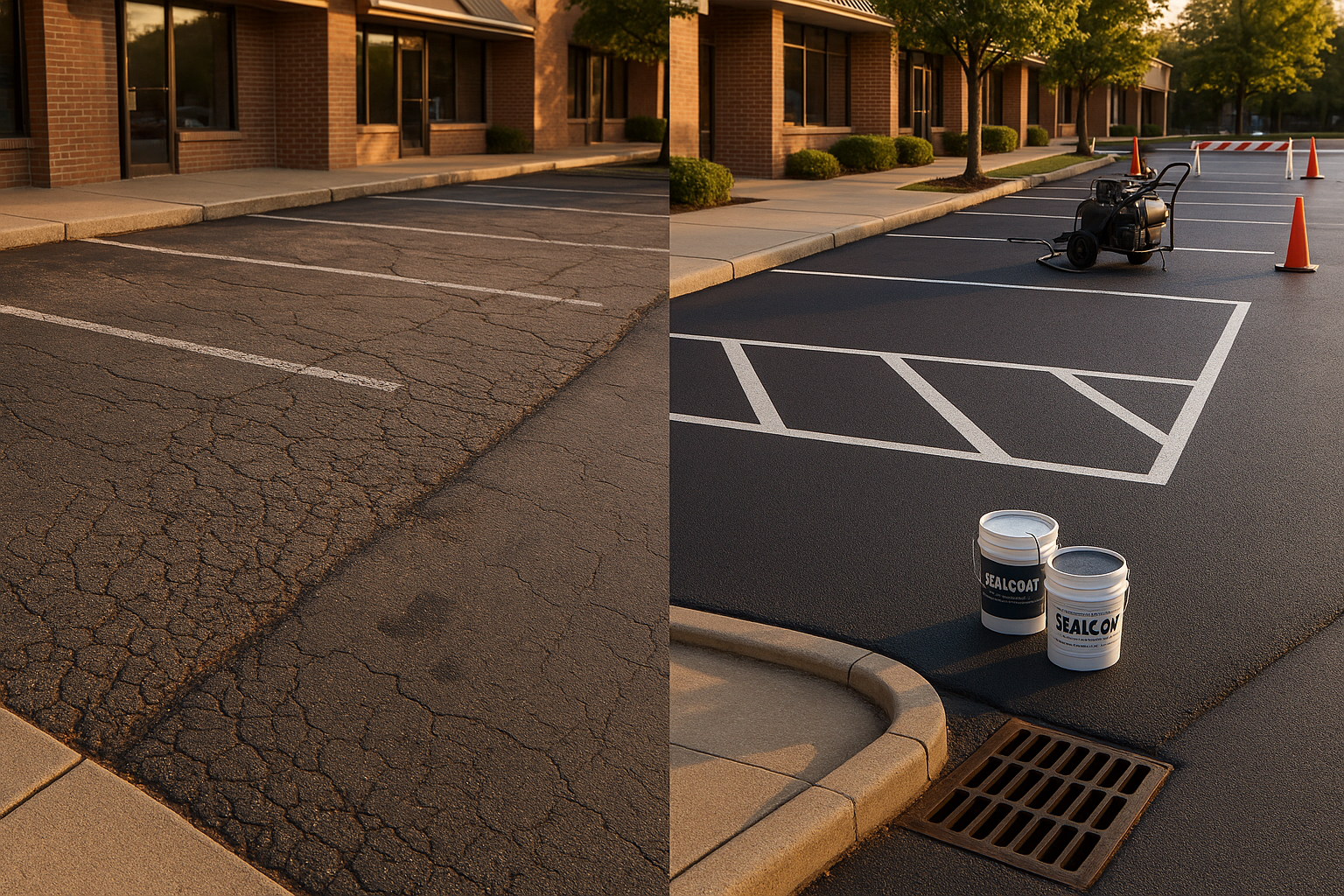
A lot of Indiana loading docks have an asphalt approach that meets the concrete apron. That meeting point is a classic pothole spot. The asphalt gets soft from fuel spills and heavy turning, and the edge of the concrete gets chipped. When we do a loading dock apron repair, we often rebuild that asphalt-to-concrete tie-in. We saw cut a clean line in the asphalt, remove the soft material, recompact the base, and pour a reinforced concrete edge or lay new asphalt with proper thickness. For asphalt thickness recommendations, see our post on asphalt thickness for commercial lots. This stops the potholes from coming back.
Don't forget drainage. If water pools at the dock, your repair won't last. We might regrade the area to slope toward an inlet, add a trench drain, or repair an existing one. On flat sites, a new trench drain right along the dock face can make a huge difference. We also make sure the water drains away from the building, not into it.
Make the Repair Last
After we finish, we seal the joints with a good sealant. We also recommend sealing the concrete surface with a penetrating sealer to resist salt and moisture. Then it's up to you: check the joints every spring and fall, keep drains clear, and call us if you see any new cracks. A little maintenance goes a long way. You can also read our post on snow plow damage to striping and curbs to see how winter affects your whole lot.
If your loading dock apron looks like the one I described at the start, give us a call. We'll come out, assess the damage, and give you a straight answer on what needs to happen and what it costs. No pressure, no upsell. Just a plan that works for your schedule and your budget. Request a site assessment here.
Ready for a free lot assessment?
We walk the lot, photograph the problems, and hand you a written plan — no pressure, no obligation.