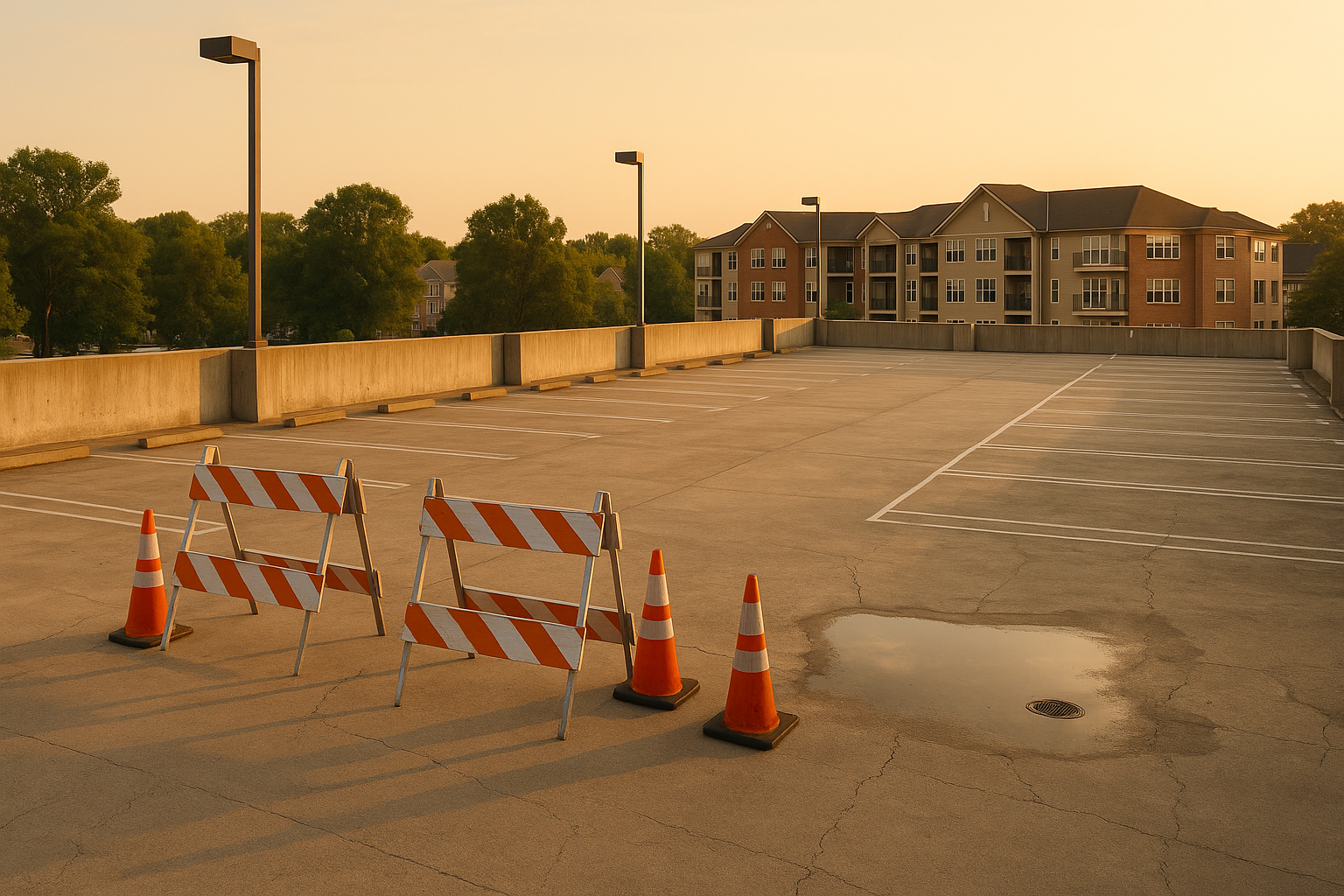
Last April, I got a call from a condo board treasurer in Carmel. Their five-story parking garage had a top deck that looked like a cracked pie crust. The board had skipped parking garage maintenance for two winters, thinking the concrete would hold. Now they had spalling near the drain and a puddle that never dried. The fix wasn't cheap, but it could have been a lot worse if they'd ignored it another season. That call taught me something: parking garages are like teeth. You can skip the cleanings, but the cavities don't forget.
The Real Cost of Ignoring Your Garage's Cracks
Most parking garages in Indianapolis don't fail all at once. They die a death of a thousand paper cuts. A small crack here, a clogged drain there, some salt sitting in a low spot. Then January hits with a freeze-thaw cycle that repeats 30 times before spring. Water gets into a crack, freezes, expands, and pops the surface a little wider. Do that enough times and you've got chunks of concrete spalling off and rust bleeding from the rebar.
I saw this happen at a garage near Broad Ripple. The manager thought the top deck was "just concrete, it's fine." But the drains had been blocked by leaves for months. Water ponded near the ramps, and every car that drove through splashed saltwater into the expansion joints. By April, the joints had opened up so wide you could stick a finger in them. That's when a simple crack sealing job turned into a full rehabilitation project. The board had to choose between paying for preservation now or paying for reconstruction later. We wrote a post comparing pavement preservation vs. rehabilitation that breaks down the cost difference in plain terms.
The point? Parking garage maintenance isn't about making things look pretty. It's about keeping water out of places it shouldn't be. And water always wins if you give it enough time.
Asphalt vs Concrete: What Needs What on Your Deck
Understanding what surface you've got is step one of smart parking garage maintenance. When you look at a typical Indiana parking garage, you'll see a mix of surfaces. The entry and exit lanes, the ramps, and sometimes the first level are asphalt. The upper decks and structural slabs are usually concrete. They need very different treatments, and mixing them up can cause expensive mistakes.
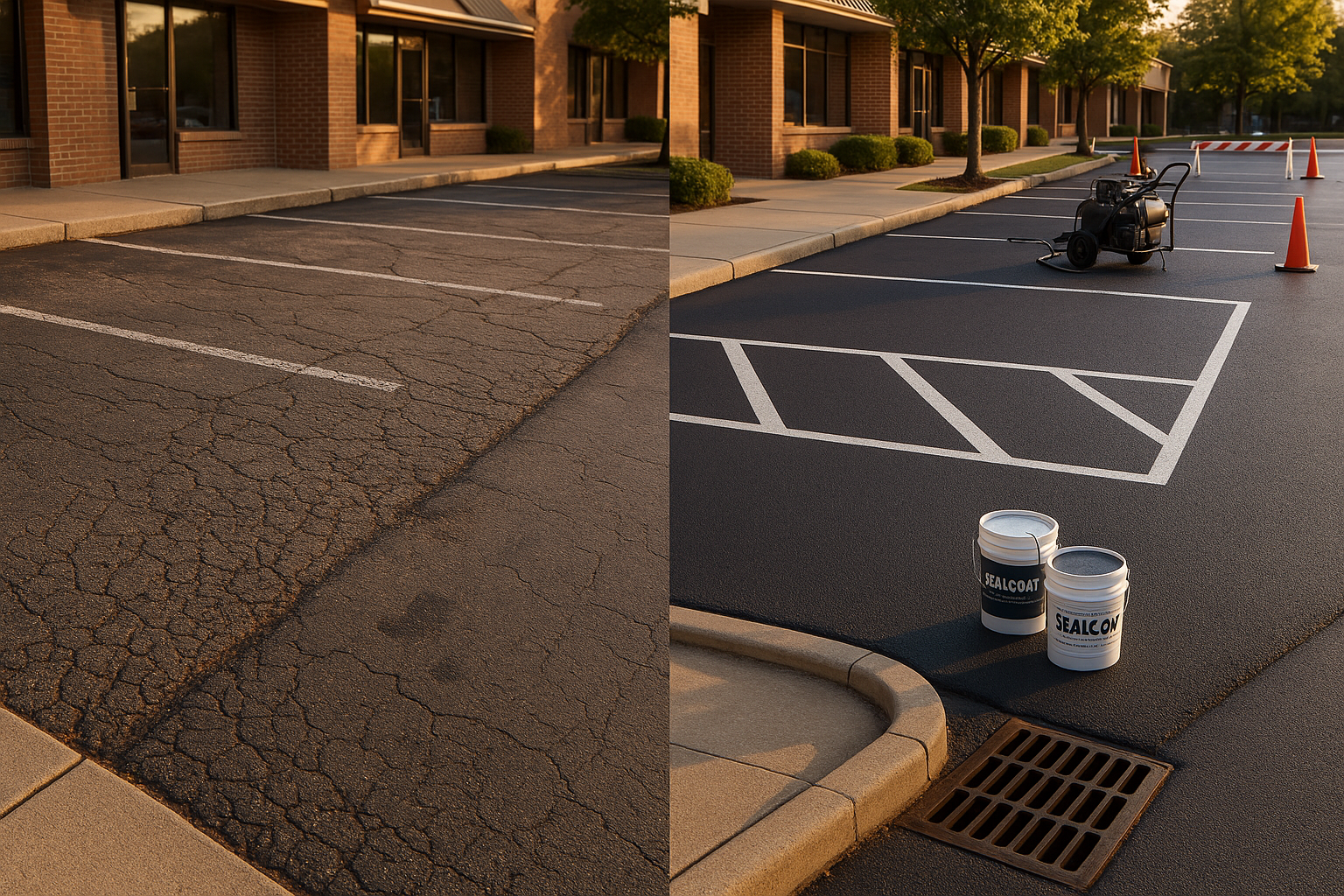
Asphalt ramp sealcoating is not just cosmetic. A polymer-modified, sand-loaded sealcoat does three things: it blocks deicing salt from eating the asphalt, it adds traction for tires, and it slows oxidation from the sun. Without it, asphalt ramps turn gray, get brittle, and start raveling. You'll see little loose stones everywhere. That's the surface dying.
Concrete doesn't get sealcoated. It gets crack sealing and, if needed, a traffic coating. Traffic coating vs sealcoating is a common question. A traffic coating is a thicker, elastomeric system made for concrete decks. It waterproofs the top deck, handles expansion joint movement, and gives you a skid-resistant surface. Sealcoat is thinner, made for asphalt, and won't last on concrete.
Expansion joint maintenance matters more than most people think. Those joints are where the concrete slabs move. When they fill with dirt and salt, the sealant pops out. Then water goes straight into the structural system. We tell managers: treat your expansion joints like the caulk around your bathtub. Replace it before it fails, not after.
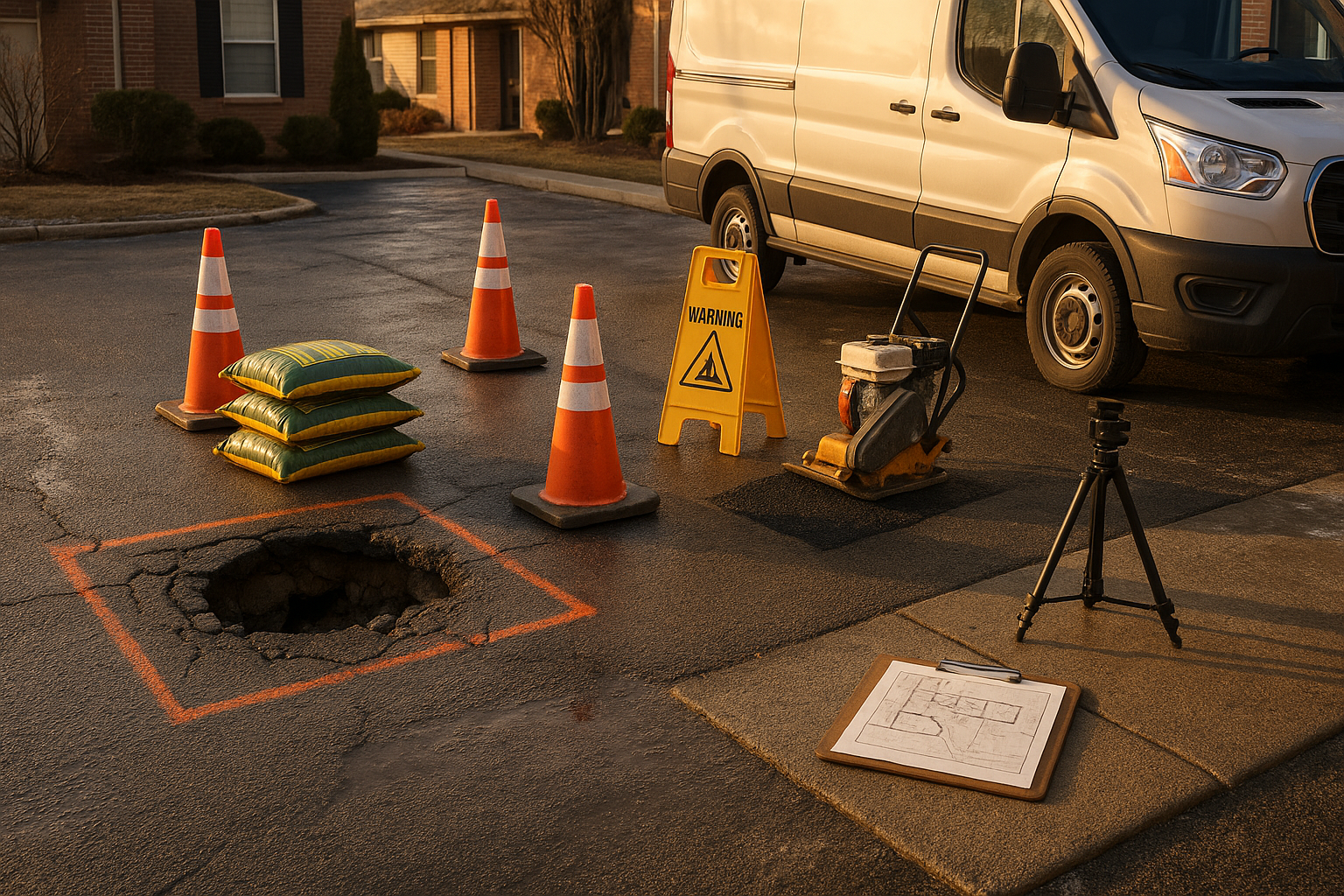
Don't forget the entry and exit lane asphalt repair. Those spots take the most abuse from vehicles stopping, starting, and turning. At a gate arm or keypad, you'll often see ruts and potholes. Those need patching before you put any sealcoat down. Otherwise, you're just covering up a weak spot.
A Parking Deck Maintenance Checklist for Indianapolis Weather
Here's a simple preventive maintenance schedule we give to property managers from Greenwood to Westfield. It follows the seasons.
Spring: Inspect and Clean
After the last freeze, walk the whole garage. Look for new cracks, spalled concrete, and standing water. Clean the drains. A lot of garages have scuppers and trench drains that are packed with winter sand and debris. Drain cleaning in parking garages is the cheapest insurance you can buy. If water can't escape, it sits on your deck and does damage all year.
Summer: Sealcoat and Stripe
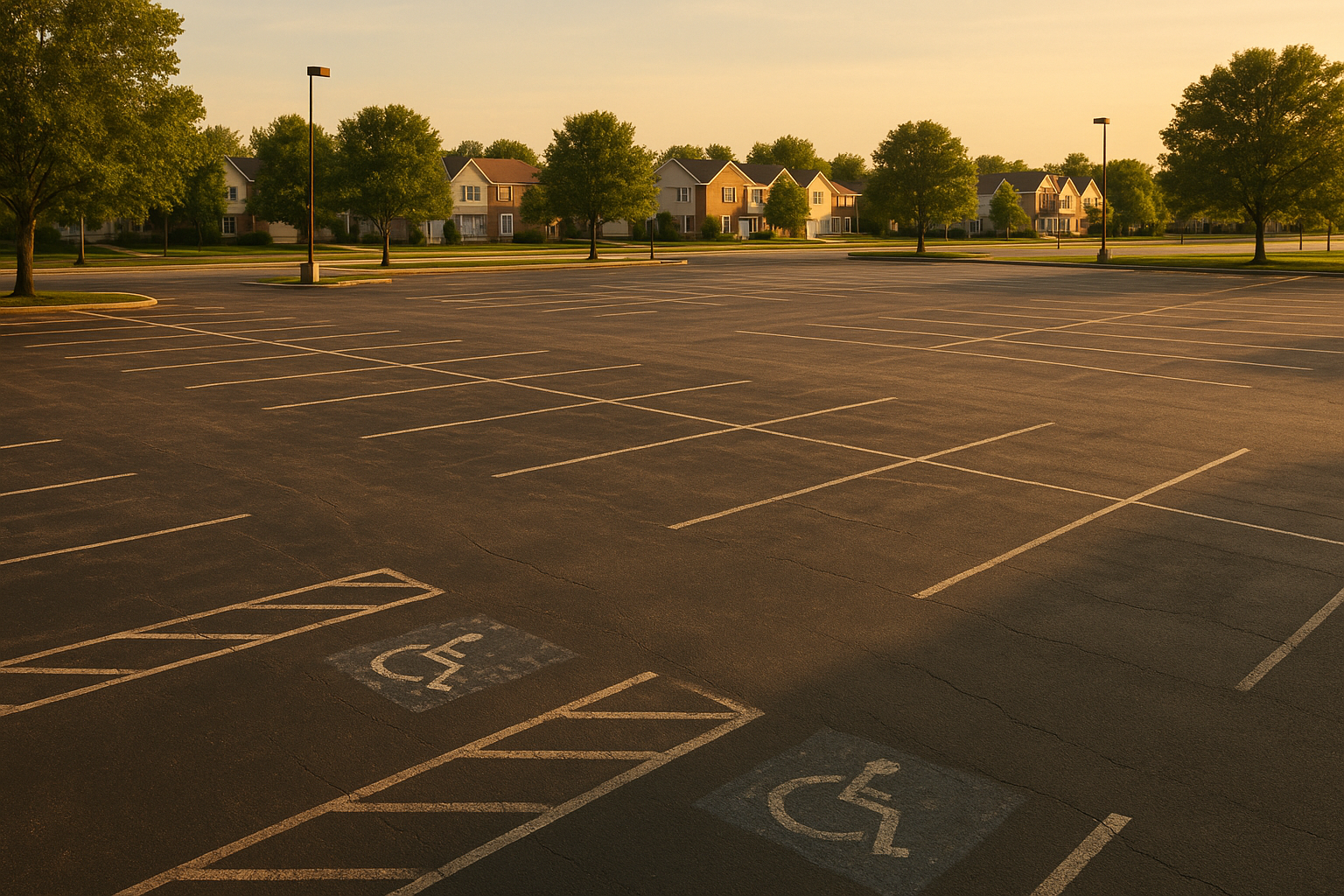
This is the time for asphalt ramp sealcoating. You want temps above 50°F and a dry forecast. We schedule sealcoating on entry lanes, ramps, and any adjacent asphalt lots. After the sealcoat cures, we re-stripe. Parking garage line striping in Indianapolis is not just about looks. Fresh lines keep people in their lanes and reduce fender benders. Make sure your ADA striping and signage is up to code. If you have a lot of traffic, you might need to re-stripe every 2-3 years. We wrote about parking lot signage and post repair if you want to see common mistakes.
Fall: Clear Leaves and Check Drains
Come September, the leaves start falling in Avon and Noblesville. They end up in drains. We wrote a whole post about leaf debris and blocked drains in fall — it's a bigger problem than you think. One good downpour during leaf season can flood a ramp, and then the first freeze turns that water into a skating rink.
Winter: Salt Smart
You can't avoid deicing salt in an Indiana winter. But you can protect against it. Sealcoating before winter helps. Sweeping up salt residue after storms reduces how much gets tracked onto the deck. And try to use sand or calcium chloride instead of pure rock salt on your garage's asphalt areas. Salt is hard on everything.
But Can We Keep the Garage Open? And Other Objections
Every property manager asks the same thing: "We can't shut down the whole garage." We get it. That's why we phase the work. We do one level or one lane at a time. We'll set up cones and barricades to guide cars around the fresh sealcoat. Yes, it takes a little longer, but your tenants still get to park. Following this kind of parking garage maintenance plan keeps minor issues from turning into major headaches.
What about odor? We use low-odor, quick-cure products when we're working in an occupied garage. Some coatings can be nasty, but we've got options that won't gas out the building. We'll tell you how long before cars can drive on it — usually 24 hours for sealcoat, but it depends on the product and weather.
"Salt and snowplows will just ruin it again." True, if you skip maintenance. But a good sealcoat and joint sealing plan will get you 5-7 years before you need to do it again. That's a lot cheaper than repaving an entire ramp.
"Isn't sealcoating only for driveways?" Nope. That's a myth. Sealcoating is for any asphalt surface that sees traffic and weather. Driveways get it, but so do ramp lanes, loading docks, and parking areas.
If your garage has structural issues like big spalled concrete, exposed rebar, or a slab that's sinking, that's a sign to call an engineer. We'll tell you when that's the case. We're not going to sell you sealcoating if you need a structural fix. Check out our article on what a pavement core sample tells you if you want to know what's going on below the surface.
Let's Build a Plan for Your Garage
Every Indianapolis parking garage is a little different. The one in Zionsville with the asphalt entry might need a different schedule than the all-concrete deck in Plainfield. But they all need regular attention. If you're tired of chasing cracks and puddles, give us a call for an on-site assessment. We'll walk the garage with you, point out trouble spots, and put together a phased plan that fits your budget and your operating hours.
No pressure, no jargon. Just a straight answer about what your garage needs to survive the next Indiana winter.
Ready for a free lot assessment?
We walk the lot, photograph the problems, and hand you a written plan — no pressure, no obligation.